


Poet Tusiata Avia on keeping the darkness at bay.
A friend of mine said she has a copy of my latest book, Giving Birth To My Father, but she can’t bring herself to read it. Yet. She didn’t need to explain why. I understand completely because I have the same experience myself. Not with my own books, of course. That is energy going out. That is me expressing some of the tough stuff; whether that be global events, national, local or personal ones. Writing is my place to square up to the demonic machineries of racism, colonisation and David Seymour (see Big Fat Brown Bitch for the Seymour poems) and have it out with them.
Giving Birth To My Father was my place to express and look at my grief at the death of my dad. It was my place to hold members of my family – and, by extension, Samoan funeral culture gone bad – to account. To be angry about how destructive they/it can be.
It took me nine years to finish that book.
The book was great for me, but not for my friend. Not at the moment. It is too painful for her; maybe a bit later it will be easier for her. I know there are poems in there that are loving, and that can be soothing. And there are poems that are angry, and that can help support our own anger.
Poorhara by Michelle Rahurahu was my favourite book of 2025. It burrowed under my skin and will stay forever alive inside me. It is a great book and it wasn’t easy for me to read. I had to keep stopping and having a break. I can’t read books the way I used to. I have to keep having a rest, sometimes a very long rest. Sometimes I can’t cope with being inside the heads of characters who are suffering; of a world that is cruel. It all feels too close to my own darkness that I am, on the daily, trying to keep at bay.
One of the things I do, to manage this, is watch Schitt’s Creek.
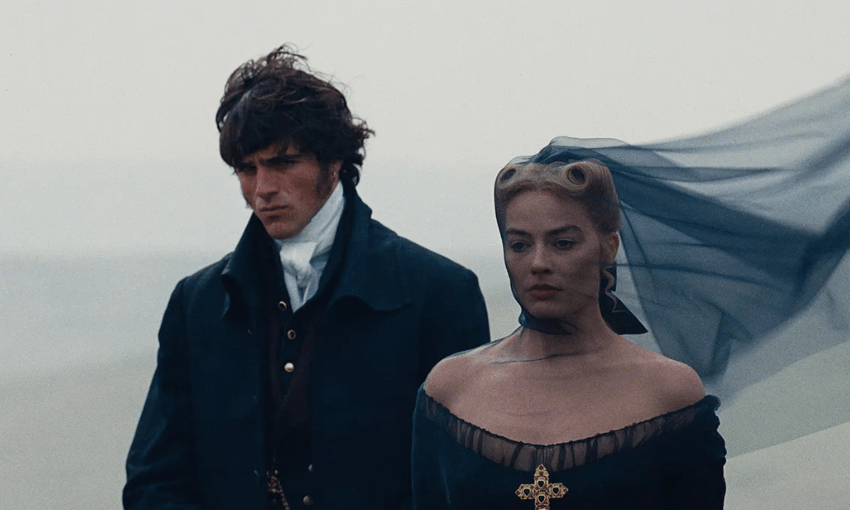
As I’m writing this, I’ve turned Schitt’s Creek on to play in the background. Alexis (bubbly, former socialite with vocal fry), one of my favourite characters, is flouncing about with her hands hanging, held out limply in front of her as if her wrists are broken. If you haven’t come across this posture, it’s a whole look.
“Alexis-face” has, almost without my knowledge, transmuted itself onto my face. Alexis-face is what I call the expression she makes when she is faux-sad. It looks cute on her in an emoji-sad-kitten-face kind of way. On me, it’s goblin-face. I can’t seem to stop myself from doing this goblin-face in response to any very minor sadness; usually other people’s, which is probably not a great experience for my friends. At least Alexis is only alive in my face. My wrists and hands remain my own.

This is my 43rd watch of Schitt’s Creek. The maths around that: 13 episodes per season x six seasons x 42 watches + 40 episodes (of the 43rd watch) = 3, 400 episodes x 22 minutes per episode = 74,800 minutes or 1,246 hours. Those 1,246 hours don’t count the many one-off, out of order episodes I’ve watched or the hours I’ve spent googling Schitt’s Creek or Schitt’s Creek adjacent info.
I know a good amount of the dialogue and can parrot lines, with correct intonation, in time with the actors. I’ve scrutinised the wardrobe, the hair and make-up, the sets, the props and the extras. The writing is brilliant – clever, funny – both biting and heartwarming. The writing has even entered pop culture language. The two most famous quotes, in my opinion, are:
- “I like the wine and not the label” – a metaphor for one’s gender-choice of sexual partner coined by David, Alexis’ queer, fashion-forward brother.
- Alexis’ famous “Eew, David” – which has been made particularly good use of here.
My only “pet peeve” (quoting Ted, the pun-prone vet) about the show is that although there are a few – well, only two – actors of colour in the cast; there are, comparatively, a very large number of people of colour among the non-speaking extras. I wonder if this is an attempt to make up for the whiteness of the cast? If so, eew, David!
1,246 hours, the equivalent of 52 solid days spent watching Schitt’s Creek. Am I an obsessive time-waster? Or have I found something beneficial to my life? I vote for the second option.
When I feel low on waking up in the morning and can’t get myself out of bed (which is almost every morning), I watch Schitt’s Creek. When I can’t make myself turn the lights off at night and go to sleep (which is nearly every night), I watch Schitt’s Creek. When I’m making breakfast, lunch or dinner (which I hate doing), I watch Schitt’s Creek. When I’m having a shower, I listen to Schitt’s Creek. The things that I think most people can do easily, give me dread. The dread can make me freeze, unable to do what needs to be done. I watch Schitt’s Creek to get through the tasks of life.
Lately, though, I’ve been able to half the dose of the antidepressant I’m on (under my doctor’s supervision, just in case you’re wondering). Could Schitt’s Creek be responsible?
There have been studies. The Journal of Consumer Research asserts that “returning to familiar stories can help ease stress, soothe the nervous system, and restore a sense of emotional balance”.
Beloved stories provide comfort, perhaps particularly for people (like me) who struggle with anxiety, emotional sensitivity and a raft of difficult feelings. Ick, the feelings! Apparently, when people (like me) watch and rewatch the beloved story, it’s not so much about the repetition as much as it’s about the renewal.
Some more research for you: Jay Derrick, in their 2012 study in the journal of Social Psychological and Personality Science, reckons: “… people have a limited pool of these valuable mental resources”. While you are watching the familiar story… “you are not exerting the mental energy required for self-control or willpower. At the same time, you are enjoying your ‘interaction’ with the TV show’s characters, and this activity restores your energy.”

Schitt’s Creek, and comedies in general, have probably replaced books for me – for now anyway. Schitt’s Creek is a sure-fire mood lifter. Books are a risk. Books that make you feel good are hard to find. Books that make you feel good and are well written, are very hard to find. The reader in me is not pleased about this turn of events. I’ve always been a bookworm. Not reading feels like a betrayal of my reading self.
I’m no psychologist; all I have to go on is my own experience. It seems to me – just from living in my own body and dealing with my brain for the last 59 years and watching those around me – that some people are better at self-control and emotional regulation (and all those other things) than others. Some have access to those resources from somewhere invisible inside themselves. And some of us need a boost – or a number of boosts – to access them.
Schitt’s Creek is one of those boosts for me. Watching another show would not do for me what Schitt’s Creek does. Even after 1,246 hours (and counting) the writing and the acting (and the wardrobe) still helps regulate me; helps me with motivation and self-control.
I hope I will go back to reading the way I used to. I hope you are still reading books: books from outside your lived experience and books that are telling stories you relate to; books that will soothe you, shock you, make you angry and make you cry. But, we all deserve a break so we can keep our heads above water. In the words of Patrick (David’s partner): “We do what we have to.”
Giving Birth to My Father by Tusiata Avia ($30, Te Herenga Waka University Press) is longlisted for this year’s Ockham New Zealand Book Awards, and is available to purchase from Unity Books.