What are you on about? We don’t have an oversupply of housing

Image: The Spinoff
We don’t have too many houses, and even if we did, having ‘too many houses’ is like having ‘too many bowls of Kiwi onion dip’. It’s not a real problem.
Christine Fletcher and Troy Churton’s recent treatise on why we shouldn’t let people build so much housing in Auckland is mostly standard fare. The Albert-Eden-Puketāpapa councillor and her partner in urban crime from the Orākei Local Board worry for the city’s special character areas. They argue our existing plans are sufficient. But then, a surprise. The pair deliver a warning that would have been unheard of just a few years ago, when renters were clambering over each other to lease mould-ridden houses in the back blocks of Blockhouse Bay. If the government insists on making them legalise apartments near train stations, they intone, the city could end up with an oversupply of housing.
Fletcher and Churton aren’t the only ones cautioning about the risk of us overindulging and becoming engorged on homes. Property coach Steve Goodey has complained repeatedly to RNZ about what he sees as a growing glut of townhouses in Auckland. The situation is so severe that in some cases it’s resulting in house vendors reducing their asking prices, or even more sickeningly, landlords offering discounts to tempt tenants into their investment properties.
![Property investment coach Steve Goodey said a number of property investors were struggling. "It's a classic oversupply, we added so many houses to the market with the Ardern [government's] incentives, that we have too many homes and renters have so many options. "Add to that the massive increase in the cost to supply a home to market and you get a situation where landlords will have to discount to get homes full and we have a renters' market. If you have a $700-per-week house empty for eight weeks you're $5600 down so it's better to take it down to $600 per week and get it rented in two weeks."](https://images.thespinoff.co.nz/images/01a030c3-250c-734f-aa41-ed47035b1e25?w=800)
Bank economists have also tentatively raised the spectre of us having “too much of a good thing”. Real estate firms go even further, bullying our weighty and “bloated” property market.
These concerns are notable for being what scientists would term “total bullshit”. Auckland’s median house price is still just shy of $1 million. That’s 7.7 times the city’s median household income, and though that ratio has come down in recent years thanks to a classic one-two combo of a construction boom and crippling recession, it still comfortably rates as severely unaffordable on the scale set up by the Demographia International Housing Affordability Survey.
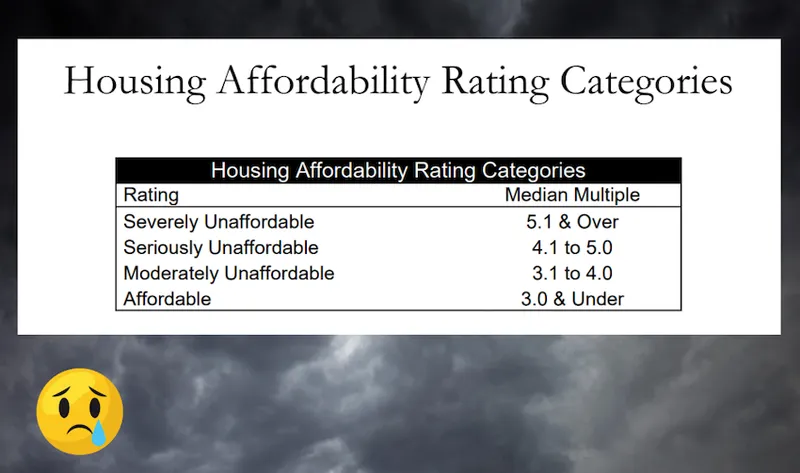
The rest of the country isn’t faring much better, with a median multiple of 6.3. In Queenstown, that rises to 12.5, a number so high that just thinking about buying a house there will bankrupt you.
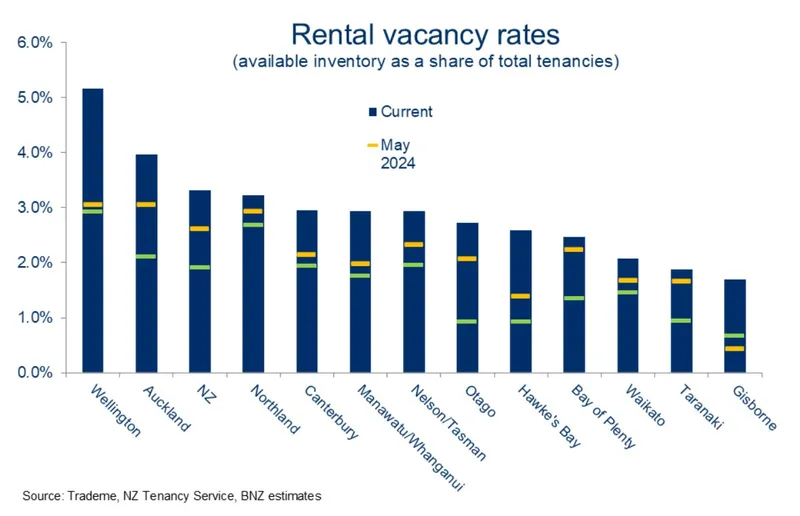
These are not the hallmarks of a market awash in surplus housing. Landlords might point instead to our “soaring” rental vacancy rates. But even those still top out at a tick over 5% in Wellington, 4% in Auckland, and about 3% in the rest of the country. We’ve got a long way to go before we get to the 10% vacancy rate studies set as a benchmark for rental price stability.
New Zealand has had a malfunctioning property market for so long that the first glimmer of normality is being treated like a catastrophe. Could it be that the problem isn’t so much housing oversupply, but instead that our property-owning class is experiencing unfamiliar pangs of withdrawal after having the needle of untaxed capital gains partially removed from its arm? Is it possible that investors are screaming, not because the market has gone bung, but because tenants no longer have to sacrifice their firstborn to get a barely maintained bungalow?
Even if they’re right though, and we’re in the midst of a massive housing glut, what’s the problem again? Having too many houses is like having too many bowls of Kiwi onion dip. All it means is that you have a lot of delicious options to choose from at the post-funeral snack table.
The urban economist Stu Donovan uses another, more disgusting, food as an illustration. He compares housing stocks to the baked bean section at the supermarket. “You go into the supermarket and the shelves are stocked. Those tins of baked beans on the shelves are effectively like vacant housing in the housing market,” he says. “When there are vacancies, you can walk into the supermarket and there’s a bunch of beans on the shelves and you just grab one if you need it.”
For the last few decades, the shelves have been all but bare in New Zealand’s housing market. Now there are some options available. There could be a few downsides to that so-called oversupply. Slowing demand may cause a downturn in the construction sector until the market picks up, especially if the government is doing something weird like cancelling dozens of public infrastructure and housing projects during a recession. Some landlords and property speculators might lose money for pretty much the first time in our nation’s history. But for the rest of us, it means no longer exchanging a kidney for the first rental that comes along, or competing against hordes of moneyed investors at almost every auction. It means finally walking into that supermarket, finding a range of affordable beans on offer, and maybe, just maybe, even getting a decent bargain. That sounds like a good problem to have. You might even say it’s not actually a problem at all.

Hayden Donnell
Hayden Donnell is a senior writer for The Spinoff. He previously worked at RNZ, TVNZ and the New Zealand Herald, alongside other media companies that have since closed down or been renamed. His primary passions are local politics and the Big Fresh animatronic fruit and veggies.


