‘I was sleeping on the floor’: Kāinga Ora taken to tribunal over tiny-bedroom dispute

A Christchurch man is taking Kāinga Ora to the tenancy tribunal over a bedroom-based discrepancy that has seen him evicted from his home of 13 years.
To the naked eye, it definitely doesn’t look like a bedroom. It’s not just that the room doesn’t have a bed in it, it’s that it is objectively tiny. There’s enough room for a small desk and a chair, along with a guitar and a ukulele mounted on the wall next to a United Tribes flag. But despite its unassuming size, this 4.85m2 space nestled in the heart of Aranui has become something of a battleground for Robert Kara and Kāinga Ora over the last few months.
According to the New Zealand building code, bedrooms should have a minimum width of 1.8 metres, and no smaller area than 6m2. The one exception for this is if the bedroom is occupied by a person under 10 years of age, in which case it can be as small as 4.5m2. It’s a set of rules that has made headlines in recent years, from tiny windowless rooms being reprimanded on The Block NZ, to potentially illegal ‘cosy’ $170 a week Wellington sunrooms.
Kara moved to Aranui after the 2011 quakes to become the full-time caregiver for his mother Donna, who had been living alone in the Kāinga Ora property since 2005. “Her memory was going a bit and she was physically incapable of doing some things,” says Kara. “We couldn’t get easy access to things like doctors because a lot of them had closed shop after the earthquakes, so I was helping with accessing those services.” Donna’s health started to decline in 2014, when she was hospitalised with fluid in her lungs and suffered multiple heart attacks.
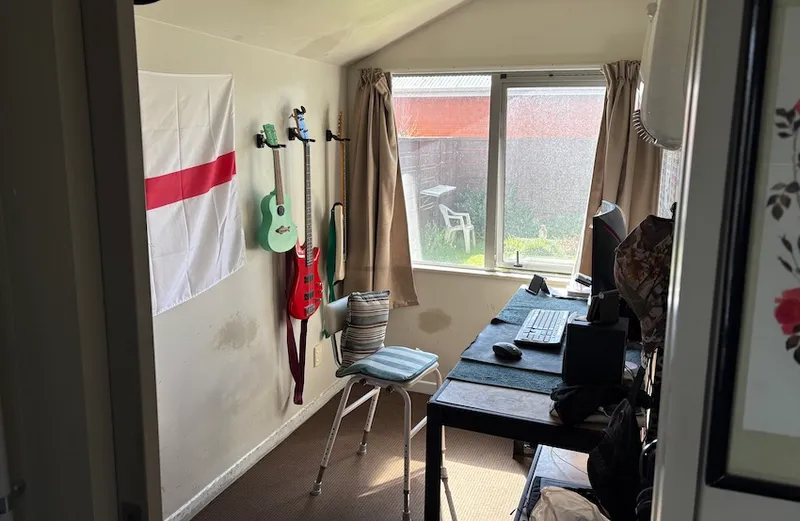
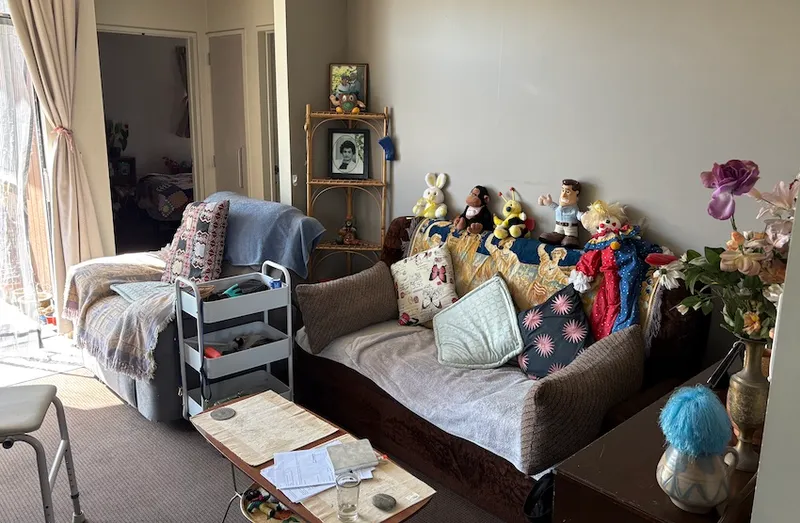
Her house only had one bedroom and the aforementioned 4.85m2 study. When Kara moved in, his mum told him he could not use the study as his bedroom, because Kāinga Ora had strictly advised her that nobody was allowed to sleep in it due to its size. This meant that Kara, who is 51 years old now and over six feet tall, slept on a foam mattress in the lounge and garage for over a decade while caring for his mum. “I didn’t think this place would be big enough for the both of us, and subsequently I found out that it wasn’t,” he laughs.
In fact, it was only in February this year that Kara realised they could apply to go on the waitlist for a two-bedroom home through Kāinga Ora. “When I moved in here in 2012 to care for mum I said to them, ‘this space is so small’ but they never actually mentioned that we could apply to get on the waiting list for a two bedroom,” he says. “If I had known, I would have done it immediately – clearly I needed my own bedroom because I was sleeping on the floor.”
Earlier this year, Kara requested to become co-signatory on the tenancy agreement, which would allow him to take over the tenancy in the event that his mum passed away. Accompanying the request was this note from his housing manager acknowledging the inadequacy of the one-bedroom home: “the property is a 1 bdm property and Rob sleeps on the floor in the common room as there is no room for him. Can you please check if there is a current transfer request to a 2 bdm property in place?”
What Kara hadn’t realised is that, after being added to the tenancy agreement, their rent was doubled from $120 to $247 a week. At the time, his mum was accessing superannuation and Kara was on the supported living payment, and life was already a “struggle” before the rent increase. “We literally could not afford it. We were barely even managing to pay her board with the cost of living and everything,” he says. He also felt it was unfair that he didn’t even have a bedroom to pay for.
Responding to inquiries about the rent increase, Kāinga Ora regional director for Canterbury Liz Krause says that social housing rent is determined by MSD by income, not by the size of the house. After discovering the increase, Kara removed his name from the tenancy agreement. Even without being co-signator, he says his Kāinga Ora housing support manager had given him reason to believe he could still take over the tenancy in the event of his mum’s death.
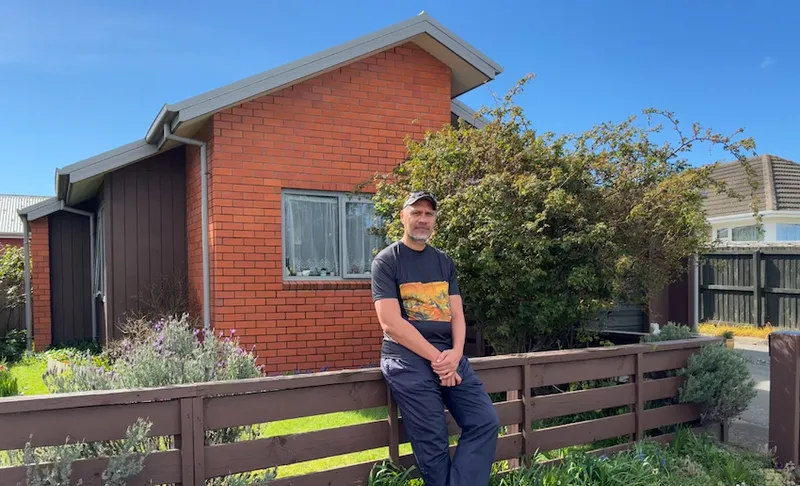
On July 7, 2025, Donna Kara passed away after suffering a severe stroke. “She was my best friend,” Kara says from his mum’s lounge of 20 years, a single candle flickering in front of a framed photo of her beaming face. “This place has so much meaning to me, I just love it here. Mum planted all the flowers in the garden and I built all those vege boxes for her. There’s so much sentimental value, this whole space has huge mana and wairua to me.”
In the application for his tenancy takeover, sent on July 10, Kara’s Kāinga Ora housing support manager outlined the situation: “Rob has been living at this property caring for his mum for a number of years. It would be suitable to have him continue to live in the property as he will eventually have to be housed otherwise.” Four days later came this response from Kainga Ora: “He is not eligible for tenancy takeover as he is only eligible for one bedroom.”
This information was delivered to Kara as an eviction notice, just two days after his mother’s funeral. He describes himself being in “the fog of grief” when two Kāinga Ora representatives knocked on his door. “Because Donna has passed away and we received written notice of the death, we are required to respond in writing to advise you of the tenancy end date,” the letter reads. “We acknowledge receipt of your written notice and advise the tenancy for the property will end on 30 July 2025.”
Deeming him ineligible to live in his mother’s house due to him only qualifying for one bedroom, Kāinga Ora offered up a different one-bedroom property elsewhere in Aranui, which he declined. “I don’t want to move from here. This is a single-bedroom house’,” he says. “Mum and I always paid our rent on time, we’ve always kept the property immaculate, we’ve been excellent tenants. And now they give me my 21-day notice because this is suddenly a two-bedroom house?”
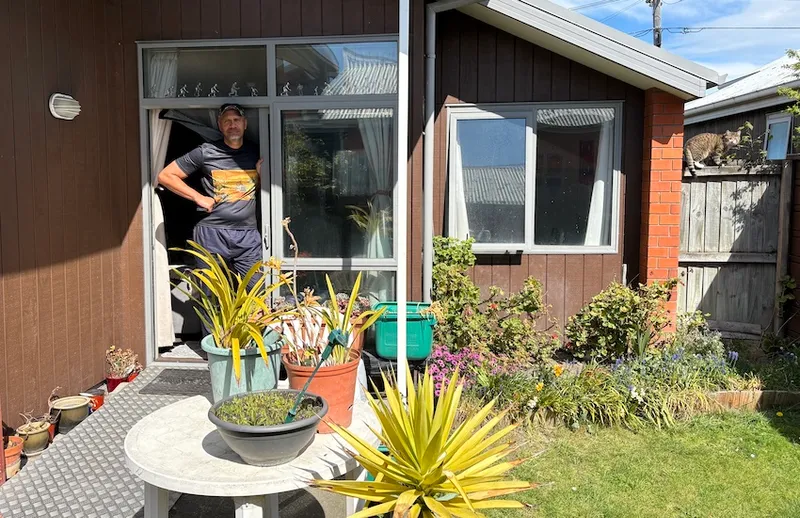
Krause from Kāinga Ora maintains that the property is a two-bedroom home that is fully accessible with space for a caregiver to stay if required. “The second smaller room in the home… meets the standards of a single bedroom and is fully code compliant because of the other fire safety measures in the house,” she says. “The house is therefore classed as a two-bedroom home and Mr Kara is only eligible for a one-bedroom home.”
Having attempted to sleep in the second room as a caregiver himself, Kara insists that the room is a breach of the building code and too small for an adult. “I wouldn’t say this is suitable for caregivers to sleep in at all,” he says. “It’s a study that doesn’t classify as a bedroom.” Over the course of his communication with various people from Kāinga Ora and MSD, the property has been referred to as a one-bedroom house, a 1.1-bedroom house, a 1.5-bedroom house and a two-bedroom house.
Krause adds that Kara’s request to take over the tenancy was “carefully considered” but ultimately not deemed suitable due to the high demand for fully accessible housing. “The house is considered fully accessible as it has level access and many features – such as a wet area shower and an entry ramp – that make it suitable for people with disabilities,” she says. The latest figures from MSD confirm that there are 2,178 people waiting on the housing register who require a modified property.
Kara says he was not made aware of the demands for accessible housing in any of the communication from Kainga Ora around the decision, and is now challenging his eviction through the tenancy tribunal. “There’s a discrepancy here which is bigger than just me. Some people are calling the house one and a half, others are calling it two bedrooms, and they need to sort it out.” He’s even submitted a petition to parliament calling for clearer classification of these smaller rooms in social housing.
“I also just feel so angry because I haven’t had any time to properly grieve,” says Kara. “I wake up every morning feeling the earth moving under my feet, like I’m not on solid ground any more.” Krause says that Kāinga Ora will continue to assist him in finding a housing solution. For the moment, he is still living in his mum’s house awaiting the tribunal hearing, where the question of whether it is indeed a one-bedroom or a two-bedroom home will be answered once and for all.

Alex Casey
Alex Casey is a senior writer at The Spinoff with over a decade of experience writing about popular culture and social issues in Aotearoa. She lives in Ōtautahi and likes watching reality TV and walking the dog, occasionally at the same time.


