Back to the streets: Rotorua’s enduring homelessness crisis

Abuse, public defecation, and sex on the streets that will soon be welcoming crowds of summer tourists – this is the reality in Rotorua. Once the emergency housing capital of the country, the last government-contracted motel is set to close in December. But, as Kristin Hall found out, that doesn’t mean homelessness in the city has gone away.
This feature was made with the support of the Auckland Radio Trust, sponsors of the Vince Geddes In-Depth Journalism Fund.
It’s lunchtime on a Wednesday, and George Mohi is barefoot, wearing a tattered dressing gown, sipping from a can of Cody’s 7% bourbon and cola.
He sits on the concrete outside the Salvation Army in Rotorua, the scene of an early morning trespass operation by police and council in June. Mohi wasn’t caught up in the sweep – “I’m not a troublemaker,” he says – but he and several others have moved to the other side of the building as a precaution. His crew of friends are snoozing or slumped over on the ground, several are sick from lingering winter illnesses, and our interview is punctuated with wet, hacking coughs.
Mohi is 53 years old and has been homeless, off and on, since he was five.
“All I remember is that my mother and father had an argument on the phone, my father went to go pack a box of clothes and said ‘we’re going for a ride’. My uncle took me down to the bus stop with the box of clothes, said he wouldn’t be long. He didn’t come back.”
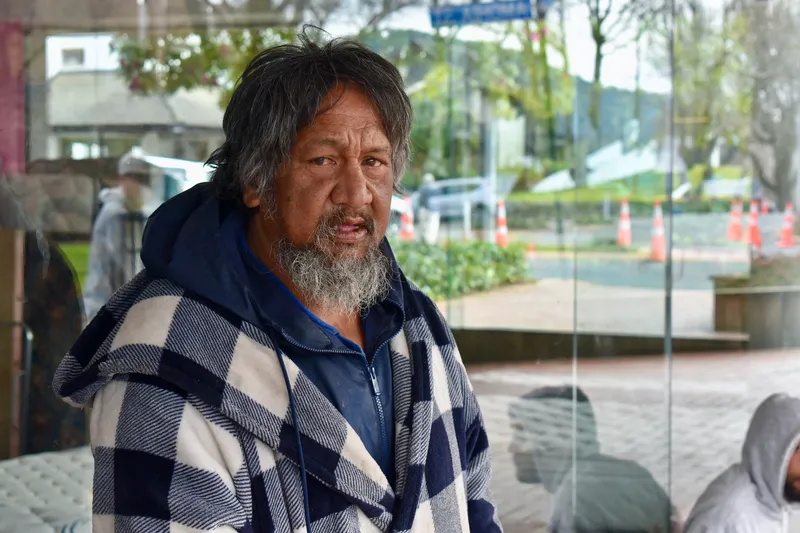
From there, he ended up in state care, bouncing between boys’ homes and eventually jail, moving from Christchurch to Auckland, Invercargill and back up north. “But here I am back in Rotorua,” he says with pride and affection, “found my roots.”
Like many now back on the streets, Mohi was in emergency housing motels during the pandemic. He rattles off the names of five different motels he stayed in over that period. “I went in there for a little bit, but I came back here… I felt safer out on the streets than inside those emergency housing places sometimes.”
He’s hesitant to reveal the reason why, as if he’ll get in trouble for narking. Eventually, he does.
“A girl that’s a friend that was in the motels said she had to give a guy blowjobs just to get out of the motels at night to go and get her habit…My girl friends in there, they got habits, you know what I mean? But to get their habits, they had to perform favours… on the security guards.”
It’s a shocking story, but one that’s not uncommon among those who’ve called motels home.
A 2022 report by the Human Rights Commission found that nationally, emergency housing was “seriously failing” those it set up to help. Among many other horror stories, the commission heard testimonies from residents about stalking and rape threats. One resident detailed being sexually propositioned by an emergency accommodation property owner on multiple occasions.
But it’s easy to forget the hardships people have endured when they’re urinating on the footpath, and thanks to the behaviour of some of Mohi’s fellow streeties, the community’s tolerance for Rotorua’s rough sleepers appears to be at an all-time low. As Mohi speaks, a man getting into a nice car yells at us, a look of pure contempt on his face.
“Don’t even waste your time, girl. They’ve got whānau here, don’t be a busybody!”
Mohi does have whānau in Rotorua, but living inside four walls hasn’t exactly worked out for him in the past. He says it reminds him of the abuse he endured in various boys’ homes as a child.
“I dealt with heaps of it. I am the story of Once Were Warriors… I’m so used to living on the streets and the life that I’ve lived, to me it’s just another day.”
Does he want to live in a home one day? He already looks much older than his 53 years. The nights are cold and the concrete is hard on ageing bodies.
“Yeah, eventually I would…I have to deal with all my issues…This is why I’m still here.”
Emergency housing: boom to bust
In mid-2020, charities and social services across Aotearoa were celebrating an unlikely milestone: rough sleeping had been all but eliminated in New Zealand’s major centres.
For years, New Zealand had been battling a growing homelessness crisis. A 2018 University of Otago study on severe housing deprivation had found that more than 3,600 New Zealanders, including 576 children, were sleeping on the streets, in cars, or in “improvised dwellings”. When Covid-19 hit, it transformed homelessness from a social issue into a major public health risk. To slow the spread of the virus, rough sleepers as well as workers, families and others in insecure housing were moved into government-funded emergency accommodation. A problem that had been simmering away for decades was fixed, at least on the surface, in a matter of weeks.
“On the face of it, almost the entire street living community is now housed,” Wellington City Missioner Murray Edridge said at the time. “Potentially, we may be the only capital city in the world that doesn’t have a street living community right now.”
It was a remarkable accomplishment, but it was always pitched as temporary. When emergency housing grants were first introduced in 2016, they were supposed to fund a week-long stay in temporary accommodation while the recipient looked for something permanent. But by November 2021, just before New Zealand moved from lockdowns to the much more relaxed “‘traffic light system”,’ – emergency accommodation numbers peaked at 4,983 households – more than 10,000 people in total, including 4,600 children. What’s more, nearly 400 of those families had been in emergency accommodation for more than a year. Those figures didn’t include government-contracted hotels and motels in Rotorua, which were accommodating a further 300 households.
Arguably, no city benefitted more, and suffered more, from the government’s emergency accommodation scheme than Rotorua. The birthplace of tourism in Aotearoa, Rotorua has a two-kilometre stretch of road, once referred to as the “Golden Mile”, that is dedicated almost entirely to housing visitors. The empty hotels and motels of Fenton Street seemed the perfect place to put a large number of people at short notice, and it was a way to help keep the desperate hospitality sector afloat.
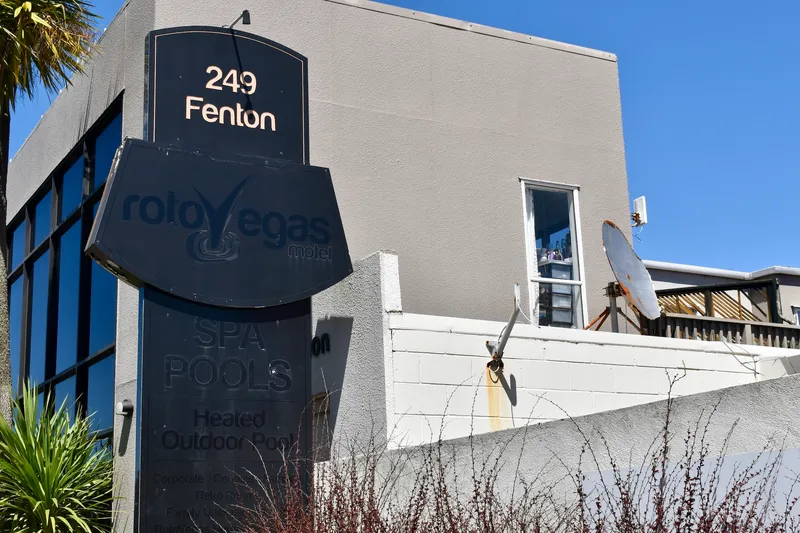
There were millions of dollars to be made in emergency housing grants, and some motels started advertising to residents in Tauranga and Whakatāne via Facebook Marketplace. A Ministry of Social Development report found that in 2021, nearly a third of emergency housing clients had come from out of town – 19% from neighbouring areas like Taupō, South Waikato and the Western Bay of Plenty, 12% from other parts of the country.
By 2022, the manaakitanga of Rotorua residents was running dry. There were fires – at least eight in two years at emergency housing motels – as well as regular reports of violence and aggression. In May 2022, Rotorua Lakes Council revealed a third of the 120 weekly family harm calls in the city came from emergency housing motels.
And then there were the accommodation and service providers. In September 2022, I investigated emergency housing in Rotorua for TVNZ’s Sunday programme. Our team found squalid, cramped conditions at motels charging more than $1,400 a week.
Clients of emergency housing provider Visions of a Helping Hand said they felt threatened by security guards at the motels. Security workers reported that gang-affiliated and unlicensed guards were being hired, a claim which was later proven in a licensing authority investigation. Former Tigers Express Security owner and Visions founder Tiny Deane was fined and ordered to step away from the business.
It is no surprise then, that emergency housing became a hot topic for opposition parties in the lead-up to the 2023 election. National campaigned on ending emergency housing motels in Rotorua within two years, and while the coalition hasn’t quite reached that goal, it’s very close – the last contracted motel in the city will close in December. But a new problem is emerging, Rotorua business owners, residents and even the mayor say visible rough sleeping, and the antisocial behaviour that comes with it, is worse than ever before.
The business owners
Doris Elliot knows more than most about life on the fringes of society. The owner of MumaDEE’z Creations, a gift shop in the heart of Rotorua’s CBD, spent years living on the streets as a teenager in Australia. She first became homeless when she was just 11 years old. The tattoos snaking up her neck and across her hands tell the story of a colourful life.
“My parents didn’t give a shit about me,” she says bluntly. “I managed to stay with friends for a little while… but I got thrown out of school, so then they told me to go.”
She says she can understand the addiction issues many of Rotorua’s homeless are battling because she dealt with the same thing, but “clicked” before she fell pregnant at 15.
“I was homeless, I begged, so I can understand where they’re coming from, you know?…Yes, I did take some drugs. Yes, I used to drink a lot…but I helped myself…I was just sick of walking up and down the street begging, I was embarrassed.”
Eventually, Elliot moved states, and found work. “Someone felt sorry for me and gave me a job, and I’ve never looked back.”
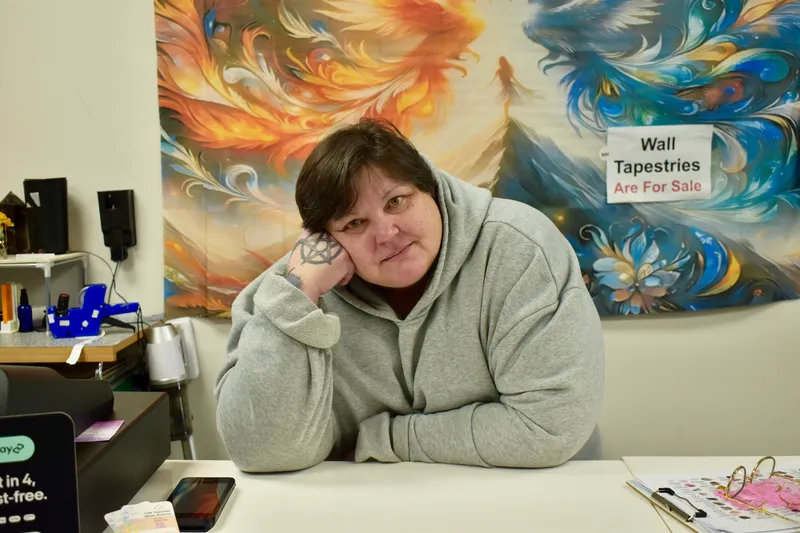
It’s a rare turnaround story, and one that fuels the fire of Elliot’s anger about Rotorua’s homelessness issue. No one visits her shop in the 30 minutes we’re speaking, and there are barely any passersby. As she speaks, Elliot gestures to the empty street outside, and seems on the brink of tears.
“I hardly see people walking past any more, you know? And, yeah, I know the economy is pretty bad. I do know that. But at the end of the day, we need them tourists… the homeless people are scaring them.”
Elliot says she’s noticed streeties “getting more and more aggressive”.
“If they ask for money, and the tourists say no, they start getting really aggro…I’ve been here in Rotorua since 2015 and I’ve never seen it be so bad. They’ll wee anywhere. They’ll shit anywhere. They don’t care.”
Elliot is far from the only business owner at the end of her tether. Salon owner Sarah Pearson speaks quickly as she trots to the accident and medical centre between clients to get a bright green cast cut off her forearm. The cause of the fracture? Helping a drunk homeless woman out from the middle of the road.
“She was falling in the road, so I went and tried to help, because she gets really loud and shouts…But drunk people are quite heavy, so I’ve realised… she trips up the curb, and I fell before she did.”
Pearson has worked out of her CBD salon Honeycomb for nine years. There have always been the original “street pixies”, as she calls them, but she says visible homelessness is the worst it’s ever been. “After the Covid fiasco, when we ended up with most of the homeless people in New Zealand, it just got out of hand. They were all given somewhere to live, and then they just got chucked on the streets.”
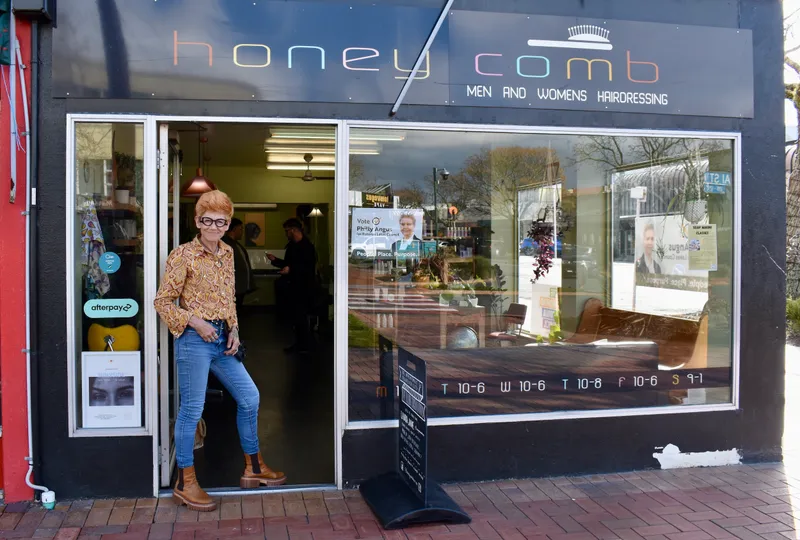
Pearson often works late, and has formed relationships with many of the local streeties. She’s given free haircuts and heard their stories – “they’re in tears because they never got a bloody hug off their parents, honey.” But she’s also had a front row seat to the worst of the central city disorder.
“I’ve had somebody do a poo on my zebra crossing. They [defecate] outside my shop, on the lawn, the hedges. I’ve dealt with overdoses, fighting. I’ve had both my windows smashed with a trolley. Like, who pays for that? Me. I had to pay for it.”
She doesn’t see a future for her business in town and is thinking of buying a caravan so she can travel to her customers, some of whom she says are now too scared to come into the city.
“You go out there and see how many elderly people you can see,” she says, pointing to the street. “I’ve got clients whose kids would come in after school by themselves, not any more. They don’t want their kids walking through town… imagine being a tourist in our town? It is horrendous.”
The security guys
Keeping the peace in Rotorua is no small job. On any given day you’ll see the Rotorua Lakes Council’s Safe City Guardians as well as contractors VR Security roaming the streets, keeping a watchful eye out for disturbances and muttering into walkie talkies. Those services cost the council about $950,000 a year. Six police officers have also been added to the city beat.
But some think that’s not enough, including a local businessman who in the past year has spent $250,000 of his own money funding a private security patrol through local company Watchdog. I spend a morning walking the streets with Gabby Tournery, a tall, burly Tahitian man who is the head of the private patrol. In the time he’s been in the job, he says he’s witnessed the homeless threaten and attempt to steal from passersby, and even have sex on the street.
“In broad daylight…they had a blanket, but it was still noticeable. All we could do was get proof for the police so they can actually get done for what they were doing.”
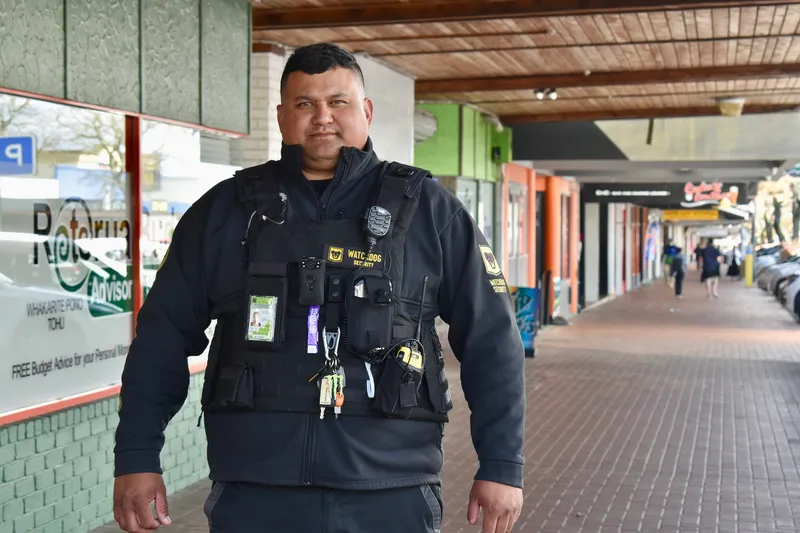
Despite what he’s seen, Tournery, who has called Rotorua home for 17 years, still has compassion for the homeless. As he trudges around the CBD, he’s greeted with several “chur my bro”s and his requests for people to move from the doorways of open shops and put away their homemade bongs are quietly adhered to.
“They’re all high. That’s the reason why they are the way they are today,” he says as we pass a man with a thousand-yard stare.
When will the comedown happen?
“Maybe later on this afternoon or maybe tomorrow…if they can’t get their next hit. That’s when arguments, fights start going, and theft, a lot of theft. They try and steal anything to sell it to maybe a drug house or whatever. And then, yeah, just get the drugs again and back on the same boat. It’s just repetitive. It’s a loop.”
It’s a job that takes its toll. Tournery admits he needed to take time off work the week before due to the stress of being abused and having to break up fights. “I still got empathy for them, I’m not a harsh person. We actually try and help them first before anything else. I had one of them, actually threatening me with a metal pole. I didn’t judge him, I just dealt with the problem.”
But not everyone shares Tournery’s benevolent approach, including the man funding the security operation. The local businessman says he doesn’t want to be named because it’s “not his style”, but has very strong views on Rotorua’s homeless situation and how to resolve it.
“I stopped in Rotorua… to do a job, and I’ve never left. My kids are here, my life’s here, my staff are my friends. I’m pretty passionate about the place, and I’m not going to let scum bloody run this town.”
He says he started funding the central city patrol initially to tackle general disorder – fights, kids causing trouble – but increasingly security guards have been dealing with the homeless community across a few main streets.
“In terms of bloody law and order, we’ve got the police who have ceased to become a proactive organisation…and the council put those guardians in place, they’re completely ineffective,” he says. “I offered the council to run the security service in town and fund it for them and they would save a million dollars a year doing that, and that money can go back to the ratepayers or they can pay off their debt.”
Rotorua mayor Tania Tapsell says that while an offer was made to replace the Safe City Guardians with Watchdog security guards, “this service wasn’t offered to council free of charge, nor was it done through an appropriate procurement process.” She says the service on offer would ultimately be “less effective” than the council’s current approach.
The businessman offers his solution to Rotorua’s rough sleeping issue: he wants to see funding cut to social services that provide things like food and laundry facilities for the homeless.
“Just turn the tap off…stop funding it… or if you want to do it, take it somewhere where it doesn’t impose on people’s bloody rights and freedoms.
“If you create an environment for them to survive, they’ll thrive.”
The advocate
While many in Rotorua would likely be pretty uncomfortable with the idea of “turning the tap off” support for the homeless, the anonymous businessman’s position does represent a growing hostility towards the city’s least fortunate.
The Salvation Army’s community ministries manager Darnielle Hoods says while plenty of residents continue to drop off food and blankets for the local streeties, there’s been “unfortunate” commentary on social media. She says she understands the frustrations of local businesses, but continual trespassing is not the answer. By the time we speak, more rough sleepers have been trespassed from the other side of the Salvation Army building, where I first met George Mohi. Hoods says she wasn’t made aware in advance of either the formal police operation in June, or subsequent trespasses that were carried out by City Guardians.
“We absolutely want to work with council, but on approaches that address the root causes of homelessness rather than simply displacing people from one location to another. Moving people along doesn’t solve their homelessness, what we have seen since is that it just relocates the challenge elsewhere in our community.”
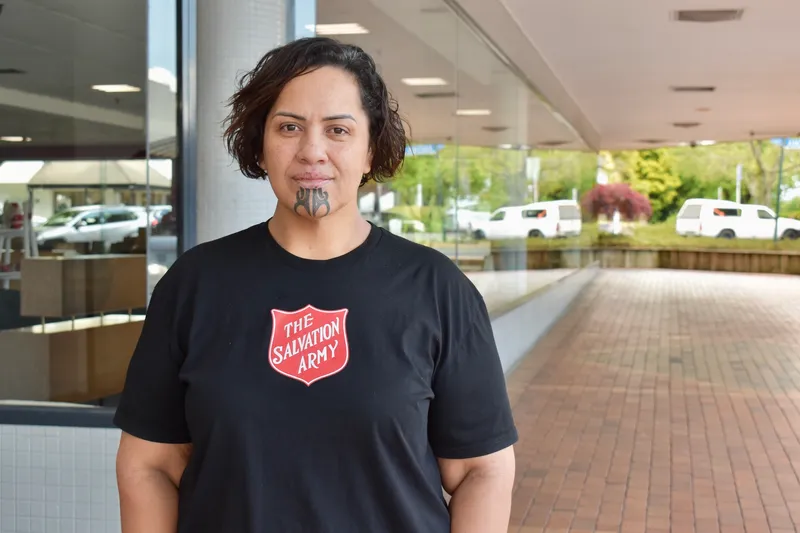
To illustrate Hoods’ point, the group who were trespassed from both sides of the Salvation Army have simply moved to the other side of the road. Hoods says she’s seen one person holding a sign claiming they were being “harassed by police for being homeless”.
Hoods and the Salvation Army have been accused by many locals of “enabling” homelessness by providing food and allowing people to shelter outside the building, but she disputes that.
She says people ended up at the Salvation Army’s doorstep in the first place because they’d already been trespassed from Kuirau Park, a former hot spot for rough sleepers, and the reserve at Sulphur Point. It’s a practice that could well become common across the country as the government weighs up a ban on rough sleeping and begging in city centres. Now, while the footpath outside the Salvation Army is clear during the daytime, Hoods says some people return at night. She says women who’ve been abused while sleeping rough have told her they feel safer outside the building as it has good lighting and CCTV.
“What do you say to that, if this is the only place in our city that you feel safe?”
So, in a city that has had tens of millions of taxpayer dollars poured into emergency, social and transitional housing, why is homelessness and rough sleeping such a persistent problem? Since January 2023, the Ministry of Housing and Urban Development has spent $45 million on contracted emergency housing in Rotorua. A further $22.6 million has been paid to nine different social service agencies to provide transitional housing in the city.
The Salvation Army is one of those providers, but Hoods says the chances of the chronic rough sleepers she sees day-to-day securing a transitional housing spot, and then a permanent home, are “very low”.
“The tough thing at the moment is them being able to communicate. Many of our whānau on the streets… there’s a lot of help that they need as individuals to even decipher a conversation. They’re often not candidates that would be looked at, because you have to be able to engage, be looking for work, applying for houses.”
But, she says, that doesn’t mean they don’t want support. The Salvation Army surveyed 10 local rough sleepers shortly after they were first trespassed from outside the building in June. They reported “significant physical and mental health deterioration” from sleeping outside. One was recovering from pneumonia, one had long-term heart failure and a chest infection, another had chronic obstructive pulmonary disease (COPD) and reported they were unable to sleep due to fear and the cold. Eight said they needed help with housing but weren’t able to access it. All 10 of those surveyed said they would use a 24-hour shelter if it was available.
“What is the plan?” Hoods asks, with some exasperation. “For whānau who are not suitable for [transitional housing], with emergency housing coming to an end very soon, what is the plan?”
The mayor
Newly re-elected Rotorua mayor Tania Tapsell is in a tricky political position. She’s the former National Party candidate for the East Coast, and has campaigned hard for the closure of Rotorua’s 56 emergency motels during her time as mayor. She agrees with many locals that rough sleeping and associated anti-social behaviour is the worst it’s ever been in the city, but says she doesn’t see a link between the closure of those motels and the rise of visible homelessness. She also says it wasn’t a mistake to wind down the motels so quickly.
“I have no regrets in going so hard on that because the state and condition and safety of those motels were completely inadequate, especially for families.”
She’s been criticised for the hard line approach she’s had towards the homeless in the past, and seems to swing between conservative talking-points – “there comes a time where they need to help themselves” – and having sympathy for the many barriers the homeless community faces.
“Often, there is a lot of background to what’s put them in the homeless situation, and the requirement for care, compassion and kindness to their situation is, I believe, what’s actually going to help,” she says.
Still, the mayor maintains that moving rough sleepers on is necessary as a “last option”, and won’t rule out further trespass operations. She says some people sleep on the streets by choice, and speaks about multiple social and affordable housing initiatives that have seen “record amounts” of houses built in the city. She also acknowledges those may not be an option for many of the local streeties.
But, Tapsell says, there is a plan. The council is working alongside government agencies and local social services on a homelessness strategy that should be finished by mid-2026. She says that instead of having the homeless bounce between different government agencies and local social services which don’t always share information with each other, the plan is to have one “navigator” that assists them off the streets.
“It’s not necessarily helpful when they have multiple people trying to connect with them. It’s better if they have one person that’s consistent… not multiple different touch points where they would have to physically go…to access that support.”
The idea of a homelessness strategy and a dedicated navigator for the homeless community was proposed to the council by the Salvation Army in June, but Darnielle Hoods says she was not aware it was being adopted and hasn’t been consulted since.
What does the mayor say to those growing impatient for a solution?
“Please know that we have made this a top priority, and we are making progress, although that might not always be visible behind the scenes, there’s a significant amount of work being done.”
The future
After years as the emergency housing capital of the country, Rotorua’s final government-contracted motel now sits empty and will close just before Christmas. Two closed in mid-November, but all three motels were practically deserted when I did a walkaround in October. I was told there was one resident left across all three properties at the time. HUD wouldn’t confirm that figure, but did provide the lease costs. The motels cost about $400,000 a month, whether they are empty or not.
In a statement, Tama Potaka, the minister responsible for emergency housing, says there are up to 150 social housing places and 119 affordable rentals in Rotorua, and that “every household leaving contracted emergency housing has been individually supported by HUD, MSD, and Kāinga Ora to find the best long-term housing solution”.
As for emergency housing grants, that’s a different story. The government changed the eligibility criteria for emergency housing in August last year, making it much harder for people to access, but it is not tracking all emergency housing exits. There is no way of knowing exactly where the hundreds of adults and children who once relied on emergency housing grants have gone.
The Rotorua Homelessness Count – Te Mirumiru o Mahaki was conducted in 2018 and found there were 48 people sleeping rough in the city at the time. Te Taumata o Ngāti Whakaue trust and other social service providers are currently carrying out another count for 2025, which will include rough sleepers, people in temporary accommodation, and those couch-surfing or living in garages. The findings are due out later this month.
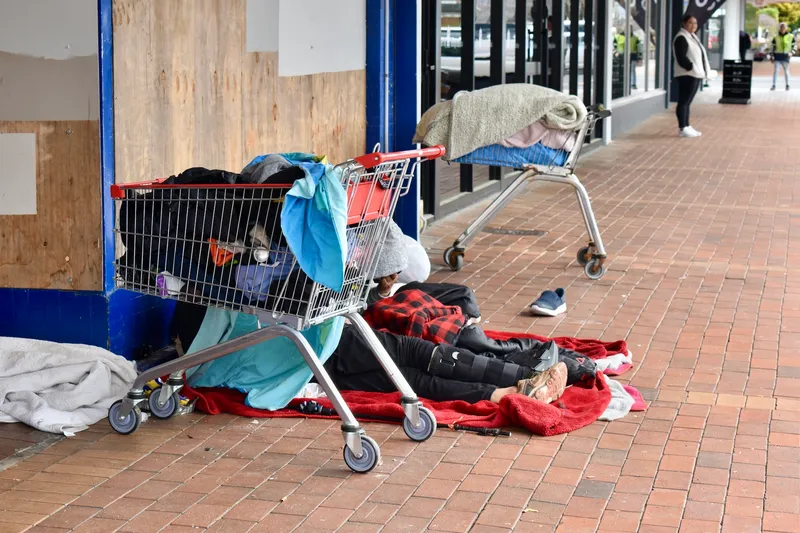
Potaka wouldn’t draw a link between the emergency housing shutdown and the rise in visible homelessness in Rotorua, saying rough sleeping “reflects complex issues like addiction and mental health, which emergency motels were never designed to solve”.
“We’re not pretending the job is done, but for the first time in years, the balance is shifting toward permanent, community-led housing rather than emergency measures.”
The government released a national plan earlier this year to tackle rough sleeping, which included adding 300 social homes for rough sleepers in Auckland, Hamilton, Wellington and Christchurch. On the lack of targeted support for Rotorua, the minister says the city’s needs are being met through “dedicated local initiatives” like housing investments, and the Te Pokapū housing hub, introduced under the last government and run by Te Taumata o Ngāti Whakaue.
He says with the contracted motels winding down, the government’s focus now is on “permanent solutions that restore dignity and stability”.
The hidden homeless
Standing outside an inner-city backpackers on a gloomy, wet day, Billie-Jo Rata is pretty keen for some dignity and stability. The 38-year-old is one of the so-called “hidden homeless”, an ex-emergency housing client who’s been living at the backpackers for nearly a year. There are dozens of others like her, filling the rooms of at least two of the city’s handful of hostels. With families taking priority for many of the social housing spots, Rata says local social services are referring single people, some of whom have “major mental health issues”, to backpackers.
“I looked after one… they put her in here… but she went into her mental health state and that’s what got her kicked out,” she remembers.
“She didn’t know what she was doing or anything like that, she was having seizures in her room… They shouldn’t be putting people like that in here. They should be getting them somewhere [that has] nurses or people on site for them…because majority of the time they just get left on the street again.”
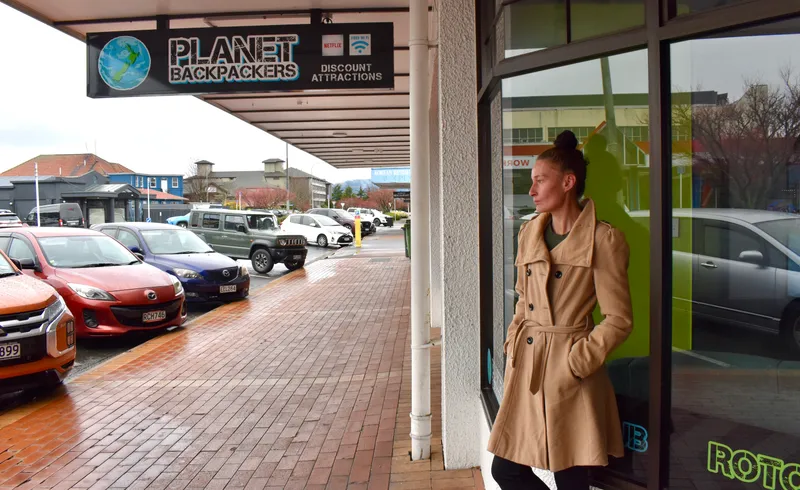
As for Rata, she says the backpackers is better than the “crap” emergency housing motel she was in before, but she wants to get out. She’d love to study small business management, but the drop in her benefit if she did so would mean she couldn’t pay the $380 a week for the room in the backpackers, which would leave her homeless again.
“I’ve applied for rentals after rentals, but the rentals are way out of my price range, and trying to get a job, I’ve been trying for a year and a half,” she says. “Rest home work, cleaning jobs and some kitchen hand work… and I still can’t get one… I don’t have that much qualifications.”
Rata’s had a tough life, she’s struggled with addiction and domestic violence. A backpackers is no place for young children, so her three kids live with their father in Putāruru, an hour’s drive away. “They got a better life than what we have here,” she says, gesturing to the alcove outside the backpackers, where fellow residents sit and smoke.
“I’m actually surprised my life has turned out like this, to be honest.”

Kristin Hall
Kristin Hall is a former TVNZ reporter who's currently doing her cliche Big OE and occasionally writing about it.


