

On June 30, 2025, paper machine 6 at Kinleith Mill in Tokoroa rolled its final reel of paper, marking the end of 70 years of manufacturing and the loss of more than 150 jobs. Anna Rankin was there to speak to the workers who leave behind decades of experience in an industry town determined to survive.
This feature was made possible thanks to the Vince Geddes In-Depth Journalism Fund.
In winter, a cape of fog settles on the rolling thickets of pine forest that enclose the South Waikato town of Tokoroa. A timber town, its history is indivisibly interwoven with the lore of logging and milling industries in New Zealand. Kinleith Mill assumes the central role; it represents not only the economic lifeblood of Tokoroa and the symbol from which it draws its identity, but an intergenerational employer. As a forest boom town it pumped out wood products as it reproduced families; at its height of prosperity, in the 1970s, Tokoroa boasted 20,000 odd residents, granting it as close as it would come to the status of a city.
On the final day of June, the town’s population hovers around 14,000, and is subdued. The final reel of paper from No.6, Tokoroa’s last remaining paper mill, once one of six, is being rolled under the smoke and steam of the mill’s chimneys. In November last year Kinleith’s owner, Oji Fibre Solutions, announced it would shutter the paper mill of its plant and move to importing paper to produce its packaging. Kinleith is losing at least 150 jobs, to say nothing of the contractors, maintenance and supplier businesses downstream. The announcement followed a string of paper mill closures across the country costing 300 jobs, which Oji and other operators attributed to untenable wholesale power costs and year on year losses.
For Ian Farrell, who has worked at Kinleith since 1986 and been a union delegate for 30 of those years, the writing was on the wall, though he struggled to accept it. “I thought the government surely wouldn’t let this happen,” he says on the Monday morning the paper mill closed. “We were the last paper manufacturing and packaging site left in the country.”

In the 1920s, Tokoroa was a small township within the North Island’s central plateau developed around felling timber after its hostile, volcanic soil was deemed unsuitable for farming. Radiata pine was introduced in 1925; historic photographs archived at the Timber Museum in nearby Putaruru feature mostly Māori workers hand sowing future harvests in brutally cold and subsistent conditions during the Depression.
As forest spread and matured across the ranges, Tokoroa was formally established as a company town in 1953 by New Zealand Forest Products (NZFP), serviced by rail on the Kinleith Branch line. Scores of modest, uniform housing on one-fifth acre sections, fabricated for the mill’s salaried earners and wage workers alike, still stand alongside street signs bearing the name of the mill’s founder Sir David Henry, a wily, ambitious Scot from a sawmilling family. The forestry sector remains lucrative: today, its export market constitutes the third-largest earner for New Zealand, trailing dairy and meat. A 2019 Treasury report on overseas investment of forestry states research suggests up to 70% of plantation forest trees, including long term control of but not always freehold ownership of the underlying land, are in overseas ownership.
For a long time, NZFP represented the largest company in the country; it made profitable returns and provided high wages and cradle to grave jobs across its many boughs. It also stood as a stronghold of union power, where from the 1980s onwards strike action was reliable; a three month strike in 1980 to secure pay parity with other millworkers saw the community rally and delegates criss-cross the country to rouse financial and political support. After eight weeks, NZFP relented but prime minister Rob Mudoon exercised executive powers to block the pay increase. Workers downed tools for another month before the government conceded defeat.

Russell Campell co-directed the film Kinleith ‘80 on the strike, and has produced extensive literature on labour histories in this country. In 2021 he wrote in a precis of the 1980 strike that there has since been no greater “resounding achievement of the labour movement in the country.” Campbell underlined the favourable conditions, namely robust union membership and networks, owing to its success while noting that just around the corner, with National’s wage and price freeze and Labour’s neoliberal schema, circumstances would change. National’s 1991 Employment Contracts Act undermined collective bargaining and union membership, deregulating the labour market with the same zeal the previous Labour government had displayed in liberalising the economy, implementing market reforms, privatising state assets and opening the country up to foreign ownership.
Regional towns were disembowelled overnight, emptying industries and driving populations in search of work to the cities, particularly Māori and, in Tokoroa, intergenerational Cook Island and Samoan communities. They were encouraged by the government to migrate with the promise of the good life, instead breaking families and ties to the land as chronicled in histories of urban drift. Forty-odd years later, history is rhyming, where those in need of employment travel beyond the cities, further afield to Australia in record migration numbers unseen in over two decades.
While the late 80s and early 90s charted downscale of operations and deindustralisation, 1991 also saw Kinleith and its forest assets acquired by the behemoth Carter Holt Harvey, itself purchased in 2006 by magnate Graeme Hart, who swiftly sold it off in parts to overseas investors. Pine forests were divested and developed into pastoral land; the decision to privatise remembered by old timers who describe an era where the region’s trees fed the mill and kept costs stable, from the fibre itself to low haulage rates for truckers and absence of imported fibre required to make products for the export market. Our product was superior and nimble; our forest and ground conditions are unique, and unlike Europe we lacked months of snow to contend with, allowing for fast growing trees. We sold our innovative technology to Chile; their trees share the same wet strength fibre for packaging materials that can withstand time in coolstores without collapsing and damaging goods.

In 2014 the company sold Kinleith, Tasman Mill in Kawerau and Penrose Mill to Oji Fibre Solutions, a Japanese consortium and the fifth largest forestry, pulp and paper company globally. Late last year, Oji confirmed it would shift its Kraft linerboard arm – paperboard made from wood pulp and used for boxes and packaging for companies like Fonterra – from New Zealand to its paper mill in Banting, Malaysia. Kinleith, which once provided 5,000 jobs, now has a workforce of around 250 across its plant. The redundancies are rhythmic across the decades; ‘86, ‘92, ‘98, ‘02 (where almost half the mill’s staff was laid off and half of those re-hired as contractors), with each accompanied by the refrain that the cuts would ensure the mill’s survival.
Sitting at a Robert Harris skirting the highway on a crisp, bright Monday ordinarily spent on the factory floor, Farrell, with his lumberman’s frame, adjusts the black wraparound sunglasses resting on his cap. Our mills can’t compete, he shrugs. Customers buy on price; the market isn’t offering the desired return on investment. When word of redundancies arrived late last year, Farrell knew the decision had already been made. There was a consultation process across the summer break, “from November into January,” he says, raising a brow. All they could do was delay the final date, not the outcome.
CEO of Oji Fibre Solutions, John Ryder, appreciates there are “different views and opinions from people in the community” about their decision. However, closing the operation has simplified the mill, he says, allowing for a focus on manufacturing market pulp, which is more globally competitive than containerboard.
He says they have consistently emphasised high energy costs and market uncertainties as significant factors influencing their decision, but these are not the only variables. “The company has energy hedges, but we have seen both the spot market price and the price of hedges rise dramatically in recent years due to serious problems with New Zealand’s energy supply.”
Repair and maintenance expenditure has also increased in recent years, he adds, due to a combination of inflation and intensified maintenance requirements. “It’s a relatively complex mill with several manufacturing lines, so complexity is as much of an issue as is the age of certain assets.”

While Kinleith operates a 35MW cogeneration system onsite, the plant requires large amounts of energy and natural gas for its ongoing pulp operations. Oji has applied to the Regional Infrastructure Fund to support a condensing turbine; where steam produced turns into energy to generate renewable energy.
Outside, a steady current of timber trucks strapped with logs rumbles into the distance, back and forth around the clock and bound for export on cargo ships docked at Tauranga. Like many of his generation at the mill, Farrell, who is 65, received an apprenticeship at Rangipo Hydroelectric Dam, one of a number of schemes built across the plateau by the ambitious Ministry of Works, which forged New Zealand’s infrastructure for over a century before it too was dismantled through the restructure of the public sector in the late 1980s. Farrell joined Kinleith as an operator in 1986. The changes at the mill over his tenure were gradual, he says. “They kept trimming fitters, tradesmen, tech numbers. That’s how we knew maintenance wasn’t being done.”
Infrastructure began breaking down and wearing out. “It’d be raised in meetings and management would give you the learned response; the jargon. A whole lot of educated words that didn’t mean anything substantial”. Attempts to improve production were poorly focused, he says. Significant funds were invested on a wastewater recycling facility, which was positive, he adds, “but that wasn’t affecting production – they needed machinery upgrades”.
Farrell believes that, together with an ageing plant and disinvestment, an appreciable variable unspoken by management but assumed by staff is the wage cost, union presence and other realities of doing business in this country. In a management plan published in May this year, Oji identified rising energy and personnel as “structural problems” facing the company. The plan later mentions inflation post Covid-19 and a declining market price of containerboard for South East Asia.

Ryder from Oji says the closure has “right-sized the mill for the capacity of NZ pulpwood markets”, meaning it will mitigate their wood costs by reducing the need to purchase “relatively expensive” export-grade logs from suppliers. Farrell points out that Kinleith has been compromised by external costs. “They have to buy trees at market rate from offshore-owned companies,” he says, shaking his head at the contradictions of market logic.
“Once, the company owned the trees, the forestry operations, the plant. And the trucking fleet and servicemen and technicians, now all contractors.” He leans back in his seat and adds, archly, “and the Overseas Investment Office allowed that to happen”.
Associate minister for energy and regional development Shane Jones says large manufacturers exposed to high electricity prices view the country as progressively uneconomic to do business in. Jones has been strident on the role prices play on business closures and disinvestment and underscores the record prices the four gentailers – Genesis, Contact, Meridian and Mercury – demand through their control of both the generation and retail arms of the market.
The monopoly is a cartel, in his parlance, that holds the country ransom, and Jones has pledged to break them apart in a bid to allow more competition and lower prices. “That they own both their generating assets and retail base means their focus is solely on net profit after tax,” he says. “They don’t believe it’s their role to guarantee the security of supply, so I don’t expect them to solve what are essentially political problems.”
Like other large industries, Kinleith contracts a set amount of energy it is required to use, with the residual made up on the spot market; where users pay per megawatt on a set rate and where energy companies use those high price times to determine the rate. But there’s only so much electricity that can go around, and that’s the problem, says Farrell. “We’re working happily, then get a phone call from a foreman who says power prices are too high, slow your plant, so we have to shut down. It’s cheaper for the company to shut operations than pay the bill.”

Matt Grant arrives at Robert Harris to join Farrell in advance of a meeting with a prospective union representative. For Grant, a third generation employee dressed in fluorescent yellow and blue Oji gear who is keeping his job in the chemical plant at Kinleith, there is survivor’s guilt. The morning walk through the factory was eerie, he says quietly, the carpark half full. Management put on a barbecue to mark the final day but most of those laid off weren’t in the spirit to attend.
There’s an understanding between those remaining that they’re next on the block. “We’re on a knife edge. Unless we see some significant investment in the next 18 months to two years it’s not looking too flash.” Grant references the pending proposal between Oji and the government for a turbine to be installed to help produce onsite power by 2027. Within that deal is a caveat an agreed number of jobs must be preserved, Grant says. Farrell chortles; he believes it’s management jobs that will be maintained, should this caveat prove real and honoured.
The mill churns not only wood products but rumour; that Oji threatened to close Kinleith in its entirety should the government deal be refused; that workers in Malaysia do their jobs for a pittance without obstructive red tape or unions. For his part, Grant accepts the decision with frustration but without quarrel. It’s a number of things, he concludes. The combination of high energy and import costs, the country’s position at the tail end of the global supply chain and standing in competition with countries with low cost labour means new investment in New Zealand is unlikely. We need to diversify our economy, he says. “We can’t all work in boom and bust tourism. And you can’t just race to make as much milk powder as you can”. It’s fine when milk prices are high, he continues. But what happens when they’re not?
“If you were looking at building an industrial complex here the first thing you’d look at is your energy costs. You’d see gas is on the way out, there’s a limited supply of electricity and it’s expensive. You wouldn’t come here.”

Grant is 51 and concerned for those in the 40-60-year-old bracket who fall between employment age cracks. There’s the loss of intergenerational skills, too, expressed in the years where both the public and private sectors provided paid apprenticeships. The number of apprentices who travelled through Kinleith would be “phenomenal”, he says, staring out the window to the trucks chugging by. “They used to plug out so many through a training scheme.”
He references companies like Fisher & Paykel which once depended upon local packaging for its whiteware, and who like other industries shifted their manufacturing facilities offshore. “That’s unfortunately the way New Zealand is going now, eh. We’re not really a manufacturing country anymore.” While Grant has no qualms with automated processes if efficiencies are improved, “we’re shutting industry and not replacing it with anything. They’re just closing it and saying it’s stuffed, it’s not economical, and we’re just going to import all our stuff”. The government has removed itself from industry, his voice lifting as he continues. “They’ve washed their hands: you survive on your own.”
Tokoroa’s central business district is flat and broad, organised by wide streets and shopfronts that attempt cheer despite their shabby facade. A number are empty, their glass front windows tacked with for sale or lease signs. Planted throughout the centre are sculptures and pouwhenua or hoe; alongside each a plaque reliably indicates the wood’s donor: the town’s largest employer. On a bench outside a bakery, a man with a creased, worn out face in scuffed shoes and poorly fitted clothing describes his former days as a well paid dental technician. He’d received an apprenticeship for the role, then the rules changed and he’d been required to complete further study to maintain his job, which he couldn’t afford. He ended up doing garden work and odd jobs around the neighbourhood.
The unemployment rate in Tokoroa is double the national average and many of Kinleith’s workforce commute from elsewhere, often by necessity. Their partners and wives don’t want to live here; or there’s no work for them, or there’s no new housing stock and what remains is dated and requires substantial investment prospective buyers are unwilling to shoulder. But there is pride here; the streets’ gardens are clipped and manicured, the lawns mown. It’s a town that in its earlier life proved a robust training ground, producing many esteemed names, including its daughter, Green MP Tamatha Paul, who says the decision to close the paper mill has “caused a great amount of despair about the future for the community that I love”.
“We’re told we need to be working, we need to be contributing to the economy, we need to be productive,” she sighs, “but all the opportunities to do that are slipping away.” Paul was instrumental in the “Save our Mill” campaign which as a coalition between a number of stakeholders, including mill employees and local community leaders, fought to find a resolution but couldn’t stymie the tide. She is concerned by the foreclosure of economic opportunity, and refers to the high numbers heading to Australia: “It signifies a death roll pattern for rural New Zealand who can’t see a future for themselves.”

It’s not only Tokoroa at stake but the entrenchment of a systemic pattern. “You look at towns where mills, freezing works close and it’s awful; poverty, rises in drug use, methamphetamine in wastewater, violence – then gangs are able to exploit people’s misery.” Crime thrives where there is misery. “That’s what worries me the most. We’re already neglected enough without adding that hardship to people’s lives.”
Unofficial town mayor Larry Sullivan has been in the retail trade for 40 years, and this winter is the quietest his clothing store, local institution Morrissey’s, has experienced. The town was pumping back in the day, he remembers. “Everybody had a job. Whether a boss or worker, you were judged on whether you were a good bugger or not. It didn’t matter who you were.”
Now, retail has all but vanished. “We’re the last man standing,” says Sullivan. “I hope there’s a few years left. It’s all I know.” Historically, Tokoroa has survived downturns but he’s circumspect. In its heyday it was lively and fun, he says. “People had a great time – a hard working, hard playing mill town.” His strongest seller remains the Tokoroa labelled t-shirts; the number of people who have lived or temporarily passed through is extraordinary, he considers. “Just about everyone you know or meet there’s a Tok’ connection.”
Socioeconomically Tokoroa is unbalanced, and where there were once greater numbers of high earners to even the scales, the town has a large share of lower paid citizens. “Back when there were thousands of guys at the mill they used to earn big money,” Sullivan reflects. “The guys in forestry had disposable income, too. Friday at 2pm was like fishing: they’d come in, buy a new outfit and go off to the pub.” Nowadays forestry labour is outsourced; nowadays people shop online; throwaway fashion has destroyed the youth market he depended on. Women spend on personal grooming where they once bought a new top, Sullivan’s noticed. He lost his first regular from this round of redundancies yesterday. “A really good customer who took redundancy, and has taken a job in Aussie. In his 20’s with a baby. Came in with his redundancy and had a big spend up.”
The hits to the local economy are incendiary; “if they leave town all business suffers. My mates own a big engineering shop, the extra work they get for that – gone. Twenty, 30 guys they look after.” Sullivan reflects on earlier decades where the state provided jobs which offered people skills and purpose. “We’re left with an old paper mill that’s not profitable. We’ve got all the supply and we just give it away with no value added.” Short term thinking and absent vision summarises this country, he continues. “We’ve got untold water and hydro, how are power prices shutting down factories? If you look at the power boards back before they were sold off, and compare management costs, that’s where it’s soaking up the money.”
Some around town grumble that the unions didn’t do enough to keep jobs, or that Kinleith workers themselves have had an advantageous ride for years. They’ve earned good money, some say, the good times can’t roll forever. Such views are challenged by workers who describe long shift work with antisocial hours that have cost them time with their families. And besides, they contend, why should their situation be exceptional? Not long ago a secure job and affordable housing was standard fare across all income brackets. The good life the unionised site offered sustained the town. Despite the current reality, Sullivan is cautiously hopeful that Singapore-based company Olam Food Ingredients, which has opened a local dairy processing facility, will expand the local economy. “Everyone says the town has potential, but it’s had potential for 40 years”.
On Monday afternoon sports bar Focal Point is filling up with mill workers. Late into the evening those from No. 6 laid off, those in between and those in support commiserate over rounds of Waikato Draft or games of pool. For many, today was their final shift, and they’re here to get on it. Two long tables with high stools divide the bar; on both are placed generous glass vases into which are stuffed folds of cash, crowded to the brim with notes over the course of the night. On one table sits production, the other maintenance. “We fix their fuck ups,” one seated at the latter quips to the laughter of his colleagues, thumbing at the group of men still dressed in workwear.
Gary Munday is signing off on 45 years of shift work. “It shortens your life, they reckon,” he nods, before Kelly to his left finishes a phone call and announces with a wary smile that he’s procured an interview for a job with Fonterra. “He’s a good fella,” Munday approves. He speaks of the paper mill with a fraternal sense of ownership; he never thought it would cease. He glances around the table at his colleagues and motions; “Walt’ll be at the boiler house, Ash the pulp mill, Big Dave, been there 49 years. You’re close when you’re working. It’s been good times.” Munday recites the redundancies he’s endured over his tour of duty. Describing one round of cuts where a number were let go, he pauses, rolls his eyes. “A few weeks later they were hired back because the company had got rid of all the expertise and couldn’t run the place.” He sees the current situation as symptomatic of corporate greed; “and we can’t do anything, we’re only little pawns.” Big Dave rolls up a sleeve to display the tattooed names of a considerable number of grandchildren on his forearm as he narrates the various Kinleith owners, concluding NZFP was best, because it was wholly New Zealand-owned.
A laid off worker frowns as he describes men like himself in their 30s, “who have a long road ahead, on the lookout for work and hoping for something local.” He orates the concluding ritual that morning. “The last jumbo machine reel of paper came off about 4am this morning, that was C shift. Then we come in, B shift at 8am, and the reel is sitting there. At 10am we put it through the winder where it gets cut into smaller reels, to size for the customer, and fed them off down to dispatch. And that’s it, no more paper on the floor.” For the older workers, “this is their life, it’s all they’ve done. A few tears in eyes. But everyone turned up, got the job done and walked out together.”
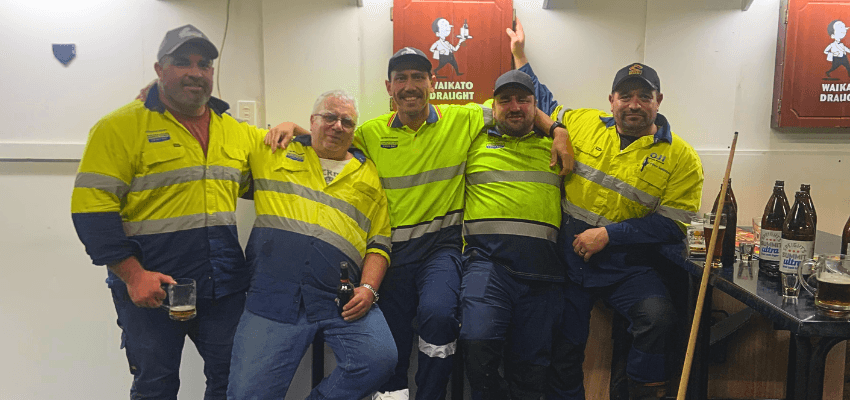
Steve, 64, has worked at Kinleith for 43 years. He’s survived a few redundancies. He believes Oji had inexorable plans to restructure for a long time, “they just didn’t tell us”. Coterminous with the redundancies across the decades was the successional termination of paper machines; five were shut down from the late 80s through the early 2000s. “We make the best product in the world, always have,” he asserts with pride. “But manufacturing in New Zealand is stuffed. The only thing saving the dairy industry is they can’t export raw milk to process, otherwise they’d do that, too. Won’t be forever, they’ll find a way around it.”
Over at maintenance, one employee of 42 years explains that they represent a bill to the company to keep it going, whereas production delivers a commodity. “You’re happy when your car gets you somewhere but you’re not happy to spend a grand to fix it.” Approximately 20% of their work is fixing operating errors, with the remaining share age, breakdowns, routine maintenance. “The decision by Oji is based on the bottom line, not history, family, community. But you’ve got to make money.” A New Zealand owner would be no different, Dylan Jaffey, a 32 year old worker, retorts. “Hart was a Kiwi and he didn’t give a fuck.”
In monotone drawl, Lou soliloquizes his employment number, 168432, acquired in 1979. A former delegate secretary, since being let go from Kinleith he has dedicated himself to “educating working class people on exactly what’s happening to them”. Has he proved a thorn in the side of the mill’s owners, then? “That would be an understatement,” he replies after a beat. Lou believes Oji elected not to close Kinleith down entirely as a form of “window dressing to prepare it for sale. Global production is moving to where labour costs and taxes are low.”
A second generation Cook Islander, who kicked the last reel out of the machine this morning, agrees. “The world has moved on from small countries like us.”All rural places are the same now, he says; we’re not getting back what we once had. “The money goes offshore, we’re broke.”

For many there is not only a bitter sense of betrayal but grief. Peter Marx, a boilermaker, fabricator and welder, has a “wealth of knowledge I don’t want to die with. I make objects from steel – you get a pallet delivered and you roll it, curve it, make machines out of it, and I’m very fucking good at it. And I love it. My dad taught me – it’s been my trade all my life.” It all happened beneath the eye of successive governments, he laments. “Assets are stripped but their shareholders are still getting dividends. The pipe’s burst, just weld a patch over it.” And he’s affronted: “It’s like a punch on the chin – you take it and move on but it don’t make it right.”
Minister of finance Nicola Willis says Treasury advised a taxpayer investment in Kinleith, as has occurred in other industries, would not guarantee the long-term operation of the mill, owing in part to high energy and maintenance costs. Furthermore, were the government to step in, “questions of fairness and precedent would be reasonably raised by other firms struggling with high costs”. The government’s preference is to “reduce inflationary pressures and red tape, open trade doors and incentivise investment through measures like Investment Boost”.
New Zealand Forest Owners Association chief executive Elizabeth Heeg says overseas investors in New Zealand’s production forest estate “face an unpredictable future.” Public discourse around overseas ownership of forest has become “increasingly polarised,” she says, “with some groups conflating foreign investment with the loss of control over New Zealand’s land and resources”. Uncertainties surrounding New Zealand’s Emissions Trading Scheme and the broader regulatory environment together with these views have led to some investors stepping away, she says, and has contributed to fluctuating carbon prices.
“This has further discouraged investment in production forests at a time when New Zealand needs sustained capital to ensure the growth and sustainability of this critical industry.”
Council of Trade Unions economist Craig Renney says Oji was partially responsible for its soaring energy costs because it failed to buy sufficient hedges in the market, leaving it exposed when prices soared.
High energy prices are not inevitable but political, says Edward Miller, a researcher at the Centre for International Corporate Tax and Accountability Research. It’s a question of what we want our economy to look like. “What jobs do we expect people in the regions to get beyond farming or forestry?”.While energy prices may represent a convenient shorthand for the closure, shifting the operation to Malaysia brings with it an 80% reduction in wage cost, he says, thanks to permanent union labour being replaced with temporary migrant labour. More broadly, Miller despairs that the gentailers, which are majority owned by the government, don’t invest profits in building new generating capacity. And while even without high energy costs it’s likely Oji would have at some point shifted operations, “you would have still been left with a reasonably attractive proposition for another buyer to snap up, and in the context of high energy prices, that’s what we don’t have”.
Renney says New Zealand lacks both long-term economic planning and an industrial strategy. “We’ve produced no new net generation for a decade. During that time the population has increased and the economy has grown by 30%.” For Renney, supply chain resilience is of explicit concern, citing two of our largest export companies – Zespri and Fonterra – and “the craziness of using paper produced in Malaysia to wrap around kiwifruit to be exported from New Zealand”.
“Why are we allowing a crucial exporting component to leave the country? Essentially we’re saying we don’t need to own the means of production of that in whatever form again.”
Kinleith is an exercise in not thinking ahead, Renney bristles. He compares the process of the shuttering of industry in this country to the disorderly closure of coal mines across the UK in the 80s, where his father worked at a pit, legislated by Margaret Thatcher, who sought to import cheaper coal. Renney contrasts the immiseration, high unemployment and shattering of communities that occurred in the UK with Germany’s visionary approach, where across three decades the government moved to transition away from coal and in winding down invested tens of billions into coal regions to create new jobs and industries. This is an example of a “Just Transition” approach unions want to see implemented, Renney says.
“If we’d said, 25 years ago, pulp and paper are going to go at some point, what’s the next round of alternative industries so we can transition workers? We just kick the can down the road.”
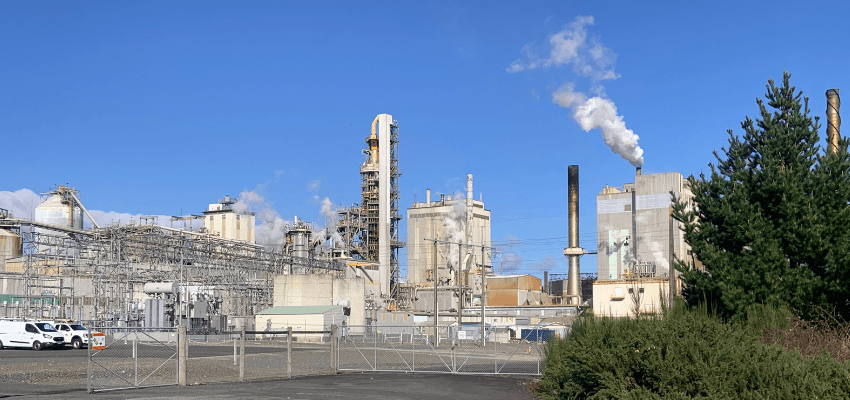
On Friday afternoon Tokoroa Club plays host to bookend the first week without the paper mill. Mayor Gary Petley takes the microphone and passes it along the men in black jeans and sneakers present who share their stories and reflections. Behind, a projector rotates a carousel of photographs of Kinleith: the workforce spanning generations, the celebrated occasions and commemorations, the gleaming NZFP trucking fleet arranged in proud formation, the tall pyramids of woodchips, the hulking, sawn logs and displays of machinery and infrastructure amassed over the years. “It’s all coming back to me,” one man smiles as he walks away.
Mario VanderPutten is in his 40th year at Kinleith, where he works as a plant operator, and his children have six university degrees between them; education he paid for. “That’s what Kinleith allowed,” he says to the room. “It invested in our children. There’s a lot of scientists, doctors and engineers who have come out of this place. Not so much now. We used to have a personnel department. We were people—we were treated like that. Then we became human resources. I don’t like the term, and that’s how we were treated”.
Those present remember how the two major parties once competed for votes in the town: “National would say, we’ll build a radio station and a courthouse. Labour—we’ll build a hospital.” They’re disillusioned by Labour, “but you couldn’t vote for the other bastards, could you”.
Finally, Peter Mariu stands to address the gathering. He’s remaining on at Kinleith to cover for a set period. As he begins to speak he recounts with an awed sense of near disbelief the job’s offerings, before the sale to Carter Holt Harvey: the money, the canteen, the clothes and boots, allowances, free bus transport to the site. “I was introduced to unionism,” he venerates, to the satisfaction of the assembly. “I’d never heard of it before.”
“I love it at Kinleith. I love seeing the families. I see guys on the floor who are so talented and go unrecognised. I’m so sad to see No.6 go, so many laid off.” He pauses, collects himself. “In Māoridom we ask, why didn’t we capture our Koro and Kuia’s stories?” Another pause, and his voice breaks. “That’s what this is about today. We go, with the blessings of those around us.”
We love hearing from you. Become a member to join the conversation.
Already a member? Sign in to have your say.