Kiwibank's response to the fuck Buck movement may have made things worse

Buck, Kiwibank's sheep mascot, has responded to her fans and admirers. (Image: The Spinoff)
The bank tried to link sexualised posting about its mascot to real online abuse. Suffice to say, people are not impressed.
The last time we saw Buck the sheep on Kiwibank’s Instagram page, she was preparing to front a documentary on why she “left the flock”. “Okay, I’m ready,” she said, as a mic descended in front of her. Then, silence. No word from Buck, let alone a documentary on her life, for months.
During the lull, a crisis was in motion. It turns out hundreds of people were making their own Buck content, but rather than being documentary in nature, it was smut. “I WANT TO FUCK THE Kiwibank SHEEP,” said the first viral post, above a gif of Buck from a Kiwibank ad. It started a movement. Posters on Bluesky and X started creating images of Buck engaged in a panoply of sex acts. “Years of effort to convince the world New Zealanders don’t want to fuck sheep has gone down the drain in one tweet,” said one post on X which was liked 93,000 times.
Kiwibank was trying to shut it down, issuing legal notes under the US Digital Millennium Copyright Act (DMCA) ordering people to take down their “highly sexualised and inappropriate” copies of Buck. Its efforts extended not just to people posting explicit images of Buck, but to many accounts who were posting sheep images from Kiwibank’s own ads and making jokes about being attracted to its mascot. By almost any estimation, they backfired. People responded to the takedowns by doubling down on posting about wanting to fuck Buck. I wrote about the saga, then spoke about it on RNZ. John Oliver found my reporting and put me on the TV in America, single-handedly ensuring that a story about cartoon sheep sex would reach a level of recognition I’ve failed to achieve for any other piece of work produced in 20 years of journalism.
Throughout, Buck remained silent. That is, until October 12, when she reappeared on Kiwibank’s Instagram page looking tired and a bit worse for wear, with a serious message to impart. “I’ve been getting a bit of limelight,” she said. “But not the cool ‘skip the queue’ kind. The worst kind.” Buck went on to compare her ordeal to deepfake sexual abuse experienced by people who aren’t cartoon bank mascots. “Yeah, I literally am just an animated sheep,” she acknowledged. “But you know what really ruffles my fleece? This happens to a lot of people. Way more than you realise. It could happen to someone you know. Someone it really affects.”
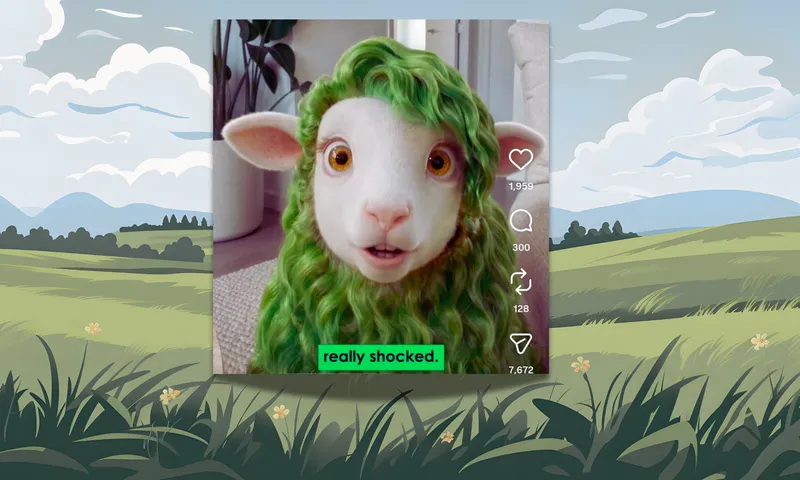
This hasn’t landed particularly well with some of the people who were served DMCA notices by Kiwibank’s legal team. They resent the comparison between what they posted and genuinely harmful content involving real people. The account @ehukuu received a DMCA takedown from the bank over the initial, viral “I WANT TO FUCK THE KIWIBANK SHEEP” post. “They don't like the public's reception of Buck but that doesn't mean you have her say something insanely tone deaf,” they told The Spinoff. “She is not real, the reception she got was because she is fictional.”
The backlash is best summed up by the account @mothmaam420, who said the bank should be “deeply ashamed” of framing this as a consent issue and comparing Buck’s situation to real abuse. “Crazy meeting at Kiwibank where they panicked about sending overreaching copyright strikes and decided the best strategy was to accuse people of being digital rapists,” they posted.
Some critics also take issue with the fact Kiwibank has used an AI editing tool to animate Buck’s movements in its response video. They see the move as hypocritical given growing concerns globally about the use of AI in creating deepfake sexual abuse imagery, including of children.
Kiwibank has always maintained its actions have been about minimising online harm. “We have taken reasonable steps to protect others from harmful content and to address the misuse of Kiwibank intellectual property,” its initial statement said. When The Spinoff asked it to quantify that harm and respond to the criticism of its latest video, it refused to elaborate. “We've already set out our position on this matter and don't have anything further to add,” its statement said.
Cassandra Mudgway, a law lecturer at the University of Canterbury and an expert in online abuse, saw a gulf between sexual Buck content and nonconsensual deepfakes. “The latter involves using someone's likeness without their consent and can have serious consequences for their sexual autonomy. A fictional sheep is not a person who can experience those harms.”
In other words, Buck doesn’t have to worry about family seeing explicit images depicting her. She’s not having to deal with those images following her around the internet. Drawing a link between horny posts about an animated mascot and actual deepfake abuse risked trivialising a real issue, Mudgway said. “What happened is not the same, and it actually can really undercut victim survivors and advocates for greater remedies and support for victims of this behaviour.”
Mudgway pointed out that animated mascots have long been the inspiration for sexual imagery online. Kellogg’s Frosties’ figurehead Tony the Tiger famously had to beg furries to stop including him in porn. Some companies have tried to harness this enthusiasm, with Meta employees recently getting called out for making their own horny images of the company’s AI mascot, Jolly, to make him go viral. “Kiwibank clearly didn't anticipate the full spectrum of human sexual expression. Obviously, their lawyers have never been on Tumblr,” Mudgway said.
Ali Mau, founder of the new sexual violence reporting service Tika, said if Kiwibank was concerned about nonconsensual deepfake images, it should put its money where its mouth is and fund services for survivors. “My question to Kiwibank would be: what else are they doing to protect or help survivors? Where are their big sponsorships for counselling services or an organisation like my own? Otherwise, it just looks like an obfuscation of the issue,” she said.
The conversation could be different if the harmful content Kiwibank was ambiguously pointing to was violent in nature. Mudgway said there’s a case that violence directed toward feminised characters can contribute to the normalisation of gendered violence against real women. “But I think that argument is tenuous in this particular context,” she said, before reiterating the central point that everyone keeps coming back to; the one at the heart of every argument about Buck:
“It is a sheep, not a person.”

Hayden Donnell
Hayden Donnell is a senior writer for The Spinoff. He previously worked at RNZ, TVNZ and the New Zealand Herald, alongside other media companies that have since closed down or been renamed. His primary passions are local politics and the Big Fresh animatronic fruit and veggies.
Sign up to The Daily, delivered straight to your inbox.


