The government’s controversial plan to build an LNG terminal in Taranaki, explained

Port Taranaki, the site of the proposed LNG terminal. (Image: Bill Zhang/Getty Images)
National says it's the gas facility critical for our energy security. Labour says it's too expensive, unnecessary, and will increase carbon emissions. What’s the plan, why is everyone arguing about it, and will it ever actually get built?
The crisis
Back in the winter of 2024, New Zealand suffered an electricity crisis. The wholesale spot price – the price that retail power companies pay to top-up their supply if they don’t have enough electricity to meet consumer demand – reached an average daily price of $820 per MWH, compared to $180 per MWH the previous few winters. For context, 1 MWH is approximately enough to power an average home for a month.
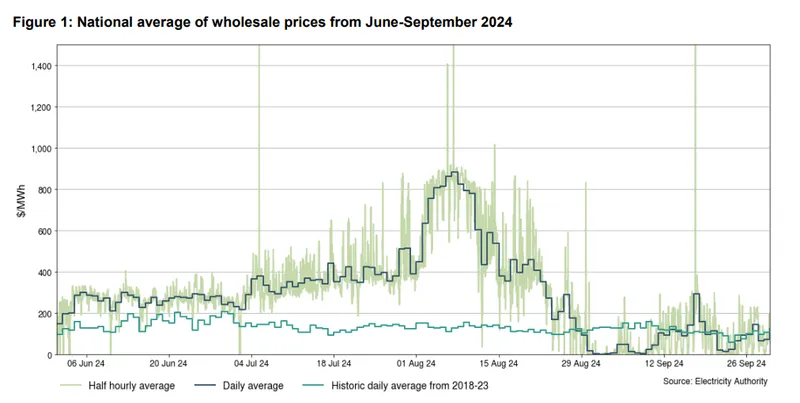
Most consumers were shielded from the spike due to fixed-price contracts, but Transpower had to issue emergency notices urging people to conserve power to prevent rolling blackouts. Many large industrial users, like mills and factories, had to pause or reduce operations.
The problem wasn’t the cold. It was actually the third-warmest winter on record. The problem was that the weather was too mild. There wasn’t much rain, so the hydro dams were low, and there weren’t big storms to charge up the wind power.
When the hydro dams are low, power companies typically ramp up the production of coal and gas generators in order to meet demand. In the winter of 2024, they relied on this so much that New Zealand’s coal stockpiles got worryingly low. Gas was already in short supply, because New Zealand’s oil fields are dwindling and we haven’t found any new ones since 2012. (NZ’s locally-produced gas is almost entirely used for electricity and fertiliser production because it isn’t the right kind of oil to turn into petrol or diesel).
New Zealand ended up importing extra coal from Indonesia to help firm up the supply, but couldn’t import extra liquified natural gas (LNG) because none of the existing ports are equipped to handle it.
The review
The crisis prompted the government and industry leaders to dust off an old plan from 2006 to build an LNG terminal in Port Taranaki. Back then, it was proposed as a joint venture between Contact Energy and Genesis Energy but was scrapped over concerns about safety and impacts on the local coastal environment.
Energy minister Simeon Brown thought the terminal would be a good “stop-gap” measure to prevent future energy crises. In August 2024, he announced that the government would greenlight the necessary permits if the industry still wanted to build it.
The four big energy gentailers got together with pipeline operator Firstgas and did a market study looking into the idea. The study found that building a terminal was theoretically possible, but it would require a huge amount of new port infrastructure, with construction possibly costing upwards of $1 billion and up to $210 million per year in ongoing running costs.
None of the gentailers were particularly interested in paying for that. A few weeks later they struck an alternative deal between themselves to set up a larger coal stockpile at the Huntly Power Station.
The government commissioned its own report looking at the whole electricity sector, including the LNG Terminal. The report’s authors, Frontier Economics, were also not huge fans of the idea. They thought there were cheaper ways to manage the risk of another winter energy shortage, saying it made “no economic sense to develop an LNG import terminal to meet just dry year risk”.
However, the Frontier report also didn’t love the gentailers’ agreement in Huntly. It suggested starting a new, government-owned company (creatively titled “New Co”) to run the coal and gas plants, be in charge of stockpiling fuel, and help to underwrite new coal and gas exploration. The report was critical of the Labour government for cancelling new oil and gas exploration permits and of the National government for cancelling the Lake Onslow Hydro scheme, both of which could have helped prevent future dry year problems.
The plan
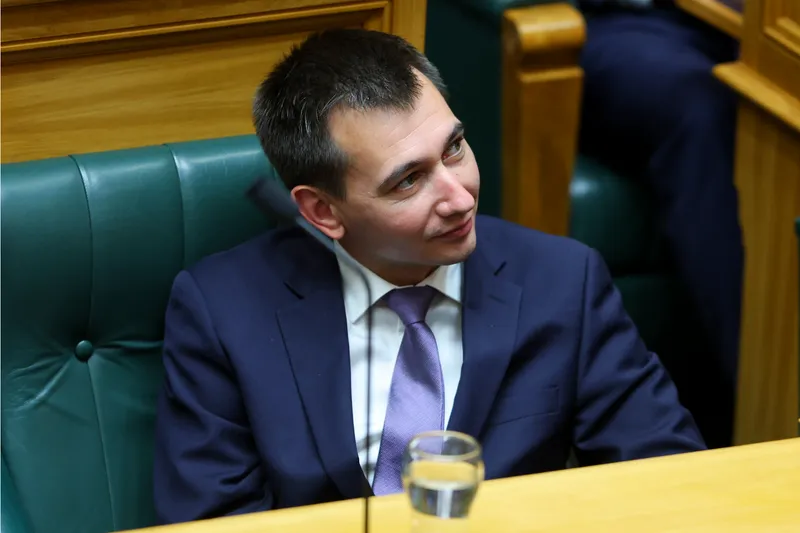
The government carefully considered the Frontier report’s recommendations and chose to mostly ignore them. Simon Watts, who had by then replaced Simeon Brown as energy minister, announced in February that the government would go ahead and build the LNG terminal itself, which would be paid for by an electricity levy of $2-4/MWh.
Consumer NZ estimated it would add $15-$30 per year to most people’s power bills. Labour and the Taxpayers’ Union became unlikely allies, calling it a “gas tax” and “power tax”, respectively. In June, energy minister Simeon Brown (who had re-replaced Watts) dropped plans for the levy but still insisted the terminal would be paid for by the electricity sector).
The reactions
Aside from the controversy over who would pay for it and how, the proposed LNG terminal has been criticised by several government officials, industry groups, and activist organisations.
Parliamentary commissioner for the environment Simon Upton said the plan “raises the possibility that not only will we lock ourselves into a higher emissions pathway but will do so in a way that exposes us to higher energy costs – the worst of both worlds.” He said the plan “most likely won’t reduce electricity prices overall.”
Rewiring Aotearoa commissioned its own report from Sapere which suggested that New Zealand could address the dry year risk by instead focusing on diesel backup generators, building more renewable energy plans, and encouraging more industrial electrification.
Meridian chief executive Mike Roan told a parliamentary select committee in May that the terminal was “not necessary from an electricity perspective” because the sector has already taken steps to manage the dry year risk in the near term.
And several climate groups oppose the plan for encouraging the use of fossil fuels and the potential harm to the local environment and nearby residents.
However, some industry bodies have been supportive of the idea. Gas Industry Co chief executive David Prentice called the terminal “mission-critical for energy security” and Pan Pac Forest Products pulp general manager Roger Jones said it would help to keep the company in New Zealand.
The future
Back in September, Brown said he was keen to get a contract signed before the election, potentially binding a future government. Act and NZ First put the kibosh on that plan. David Seymour said it would be “irresponsible” to rush the decision. However, RNZ confirmed last week that the government had continued pushing forward with its plans and had quietly selected a preferred provider to build the terminal.
Labour, the Greens and Opportunity all oppose the LNG terminal plan. Labour leader Chris Hipkins said his party would “not proceed with an LNG import facility if there is any way to stop it”. It seems the fate of the LNG terminal will be decided by the election on November 7.

Joel MacManus
Joel MacManus is a senior writer for The Spinoff. He previously worked at RNZ and Stuff, and began his career at Critic Te Ārohi. His writing explores the political, economic and cultural systems that underpin modern New Zealand. He won the 2025 Voyager Media Award for Best Columnist, Opinion or Critique.


