
Deception, incompetence or both? The story of Immigration New Zealand’s failed Biometric Capability Upgrade project keeps getting worse, writes Henry Oliver in today’s excerpt from The Bulletin.
To receive The Bulletin in full each weekday, sign up here.
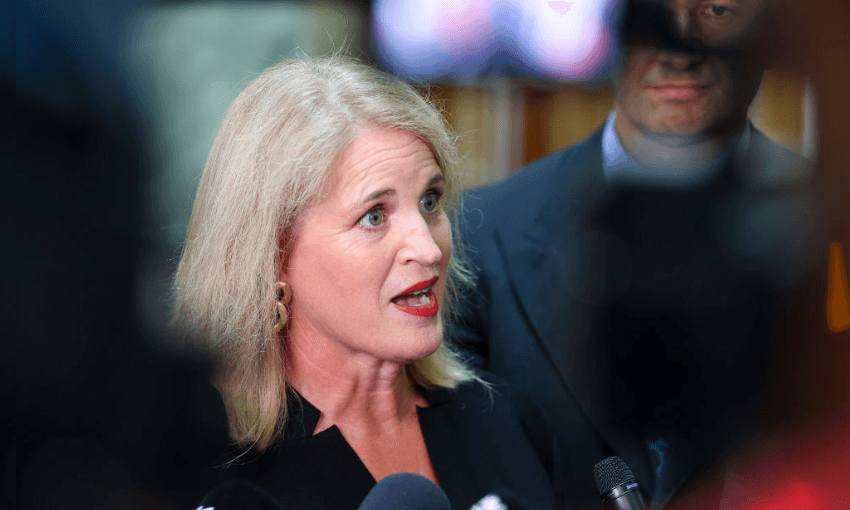
Yesterday, immigration minister Erica Stanford revealed that MBIE chief executive Nic Blakeley had told her a further $6m in costs had been found for the failed Biometric Capability Upgrade (BCU) project, on top of the roughly $33m already written off, as reported by The Post’s Anneke Smith. It’s not yet clear what the newly disclosed $6m was spent on, and Blakeley isn’t confident that even captures the full picture, prompting him to commission an independent financial audit.
Stanford said the discovery confirmed fears she’d held all along, describing a pattern of unravelling that predates the current government: “As soon as we pull one thread, more and more unravels”. While not explicitly expressing confidence in Blakeley, she noted that he was new to the role and “as surprised and disappointed” as she was.
After consulting with finance minister Nicola Willis, she referred the matter to both the existing Heron inquiry and the public service commissioner, bringing the total number of reviews into the whole affair to three. Stanford said her trust in the information she’d been given had been “severely damaged,” while stressing that most public servants she deals with are, in her words, “amazing people” being unfairly tarred by the scandal.
Blakeley faces the privileges committee
The additional $6m came just a day after Blakeley appeared before parliament’s privileges committee, as reported by RNZ’s Giles Dexter. Blakeley accepted MBIE had made a mistake in not telling the Education and Workforce Committee in March that the project had already been killed, but denied any deliberate attempt to mislead parliament, citing a “genuinely held belief” that budget and commercial sensitivities limited what could be said publicly during ongoing payment negotiations with the project’s contractor, NEC.
Committee chair Chris Bishop asked Blakeley why he couldn’t just have said the project was terminated, and Blakeley conceded the ministry’s approach had been a mistake. The former head of Immigration New Zealand, Alison McDonald said she also hadn’t intended to mislead the committee and found the suggestion “extremely distressing,” while accepting in hindsight she should have paused to clarify what MPs were actually asking about.
‘Creative accounting’ and systematic dysfunction
None of this is happening in isolation. As The Post’s earlier reporting by Amelia Wade stated, an independent review released in June found MBIE gave ministers misleading advice, bypassed its own governance processes, and ignored warnings that the seven-year project would not deliver – while also raising the possibility of “creative accounting” used to keep costs below the $35m threshold that would have triggered cabinet scrutiny.
In this context, yesterday’s revelations seem less like a new scandal than confirmation of an already establish pattern: a project where nobody seems to have known, or been willing to say, the true cost until someone outside the ministry went looking.