Chlöe Swarbrick on being painted as ‘bogeyman’ of the 2026 election

Chlöe Swarbrick: 'I've always been a bit of an idealist'. (Photo: The Spinoff)
The 'buzzy experience' of leading a Green campaign for the first time.
With 10 days to go, what has surprised Chlöe Swarbrick about this campaign?
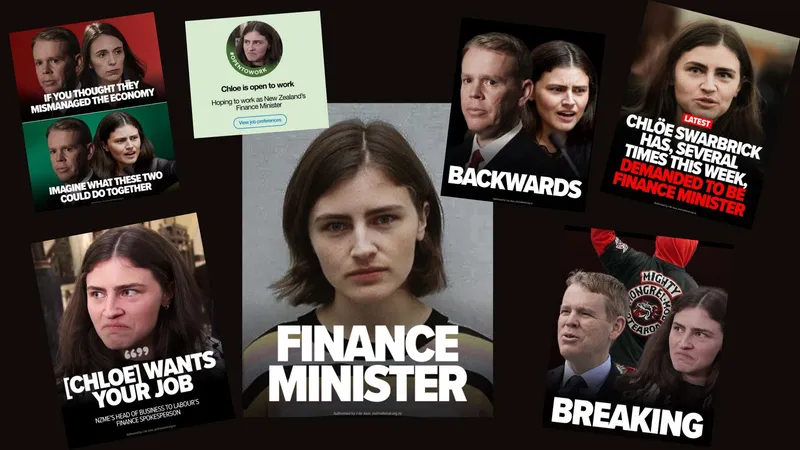
“I didn't expect to personally be the bogeyman of the National Party,” said the Green co-leader. “I didn't expect it to feel as kind of yucky and as grotty as a campaign as it has.”
Speaking to The Spinoff, Swarbrick said she’d been taken aback by the extent to which senior National figures and their social media team had sought to target her since she said she would be eager to take the role of finance minister (something Labour leader Chris Hipkins says is not on the cards).
In the latest leader interview for At Large with Toby Manhire, Swarbrick said: “I've always been, I guess, a bit of an idealist when it comes to politics, and thought that it was supposed to be a contest of ideas. But it’s quite a buzzy experience to have a government campaigning as though they're the opposition, so that, at a high level, has been what surprised me.”
In response to the latest challenge, from National campaign chair, Simeon Brown, to provide certainty on the spending plans of a potential Labour-Green government, she said: “My first answer is that Simeon Brown is so scared of properly funding our healthcare system, isn't he? Removing the hiring freeze and ensuring that our kids have access to adequate cancer treatment. God forbid."
She continued: "The answer to, I guess, the undercurrent of all of that is you don't negotiate before you get to the negotiating table. The Green Party are very clearly a distinct political party from the Labour Party, as the Act Party is from the National Party, as it is from the New Zealand First Party. We are running a very clean, very clear campaign about what our priorities are and what we would do if we held all of the levers of power, but of course you're going to have to negotiate those things when you get to the negotiating table.”
She said: “All of this kind of bottom-line stuff and the rule-in, rule-out game I think is ultimately to the detriment of our politics and our democracy … The National Party have continued to paint me a bogeyman. I think if you actually listen to the things that I am saying, if you actually listen to the things that the Green Party are saying, we are eminently sensible and eminently reasonable, eminently evidence based. God forbid we want to have a more nuanced and sophisticated conversation about the kinds of debt that we're taking on, about who is actually paying tax.”
Could the Greens not inoculate much of the attack line by announcing, for example, that they would join Labour designing a path to surplus within five years, and agreeing that, in the event they could form a government, both the prime minister and finance minister would come from the party that received the most votes?
“Theoretically, sure,” she said. “But we're in a different election campaign, in which we've taken a different kind of approach. And I also think … the wheels are falling off of the legacy parties internationally and very clearly here and now,” she said, pointing to polling that has put both red and blue parties under 30%. “The way in which the Chrises have sought to maintain a kind of pole position in a very pseudo-presidentialised style of election campaign is just not accurate to reality. The Greens are a different political party. We have alignment, very clearly, with the Labour Party, but we actually want to deal with the root causes of the issues that we are facing, and that does mean that we are going to have to rewrite this economic rulebook.”
Had there been any preliminary conversations about coalition building with the Labour Party? “Marama [Davidson] and myself met with Chris Hipkins, prior to the House rising, at least once a month or so … And we've had some yarns whilst out on the campaign trail. Nothing getting ahead of ourselves when it comes to the actual shape of government, but very clearly we've been operating to give each other a heads up on what our respective election policies are, and there are evident synergies.”
What would be the top of the list for the Greens were they to find themselves in government after November 7?
“This will terrify Simeon Brown, I'm sure,” said Swarbrick, “but we have to fix the tax system, and we also need to understand that this is a radically popular proposition – 60% to 70% of the New Zealand public agree that we should have a wealth tax on individual net wealth in excess of $10 million, excluding the family home, which will unlock tax cuts for 96% of New Zealanders.”
That could be achieved, she continued, “not by cuts to public services, but by investing in things that [would mean] genuinely fixing the basics and rebuilding the future, if you will. I think that if we had the opportunity to implement something that we know is going to actually fix this thing called the economy and allow all New Zealanders to prosper, to build our resilience, to look after our natural world, but also something that has a huge, huge amount of public support behind it, that would be a pretty obvious first cab off the rank.”
The prospect might terrify Brown, but Swarbrick saying it would thrill him, wouldn’t it? “I can't wait for Simeon to clip that out of context,” she said.

Toby Manhire
Toby Manhire is editor-at-large at The Spinoff. He loves to cast a pod, whether it's Gone By Lunchtime, At Large or Juggernaut. He is a former editor of The Spinoff and has worked as a journalist in NZ and the UK since the last millennium.


