The risky business of forming a one-seat-majority government

Our 55th parliament is starting to look pretty precarious.
Could a single departure, death or defection be all it takes to bring down our next government?
Urgent memo to all members of our yet-to-be-formed 55th parliament, especially if you end up being part of the government: please resist any and all urges of sudden death, defection or retirement. Taking any of these actions risks totally unravelling our entire democratic system and sending us back to the ballot box.
Election night has left us in a bit of a quandary. On preliminary results, the current coalition could come back with a three-seat majority, but history tells us that when the special votes come in next week, the left bloc is very likely to add more one or more seats to its numbers and/or the right bloc to lose one or more. Modelling from The Post projects that a one-seat majority on the right is far more likely (at 38%) than a hung parliament (28%), the left bloc forming a one-seat-majority government (25%) or the coalition retaining its election night results (8%).
Which means whoever’s next in line to hold the country’s reins will also be holding their breath. But just how risky is a one-seat majority? In short, it leaves the governing parties with little wriggle room and vulnerable to a number of factors – many of which we have seen before.

Death, defection, dismissal or done with it
One thing that could disrupt a majority is the death of an MP on the government side. Last term, we had two MPs – Te Pāti Māori’s Takutai Tarsh Kemp, and the Greens’ Efeso Collins – die in office. As a list MP, Collins’ replacement came from the next waiting in line on the Green Party list, but as the local MP for Tāmaki Makaurau, Kemp’s death sparked a byelection. But these were both losses to the opposition parties, so didn’t affect the makeup of the government. The Tāmaki Makaurau seat was also retained by Te Pāti Māori, meaning there were no changes to the makeup of parliament either.
A death in office is also a relatively rare occurrence. The last time a sitting MP had died was in 2013, with the passing of Labour’s Ikaroa-Rāwhiti MP Parekura Horomia. The last time more than one sitting MP died in a single term was during the 41st parliament, when Labour MP Basil Arthur died in 1985, before National MP Bruce Townsend in 1987. Arthur's death resulted in a byelection that saw his Timaru seat flip to National, while Townshend's death was close enough to the coming general election that a byelection in his Kaimai seat wasn't required.
So, that’s one scenario that could possibly up-end a one-seat majority, but only if it’s an electorate MP who's part of government and the resulting byelection sees an opposition party's candidate win. Then you get the defectors and dismissals, and last term produced three of these: the Greens’ Darleen Tana (who resigned from the party after an investigation into her conduct) and Te Pāti Māori’s Mariameno Kapa-Kingi and Tākuta Ferris, who were expelled from their party. All three were in opposition.
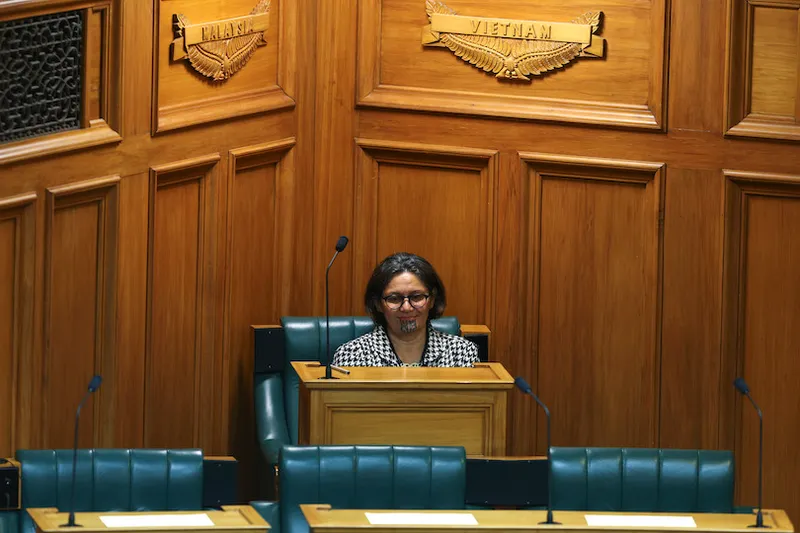
Perhaps last term was just a particularly gnarly one for the opposition parties. Since our first MMP election in 1996 (which produced a National-NZ First government with a one-seat majority), it’s typically the governing parties who suffer from rogue MPs. Nearly two years after that government was formed, NZ First leader Winston Peters was sacked from cabinet and the party split, with half of the caucus following Peters into opposition and the other half continuing to support a National-led government. National managed to scrape by to finish the term with support from those MPs, Act’s eight-person caucus, United Future’s Peter Dunne and Alliance-turned-independent MP Alamein Kopu.
The last Labour government in 2020-2023 saw the defection of Meka Whaitiri to Te Pāti Māori, and the expulsion of Gaurav Sharma. The previous National government went through hell with Jami-Lee Ross, who spent two years as an independent. The Labour government of 2004 lost Tariana Turia to the Māori Party. But none of these departures threatened the governing parties’ majorities.
Then you get the retirees, who are more evenly spread across parties and have various reasons for leaving their posts. You could end up like former National MP Aaron Gilmore, who resigned after embarrassing his leader and prime minister John Key (Gilmore’s replacement, Claudette Hauiti, who came in off the list, resigned the next year after misusing her parliamentary credit card). You might find a new diplomatic role, like Trevor Mallard, who was by that point a list MP so was simply replaced by the next person on the Labour list (Soraya Peke-Mason). Or you could bow out like Jacinda Ardern, looking ahead to an election year with “nothing in the tank”. She stayed on as Mt Albert MP until it was less than six months until the election, meaning a byelection wasn’t triggered.
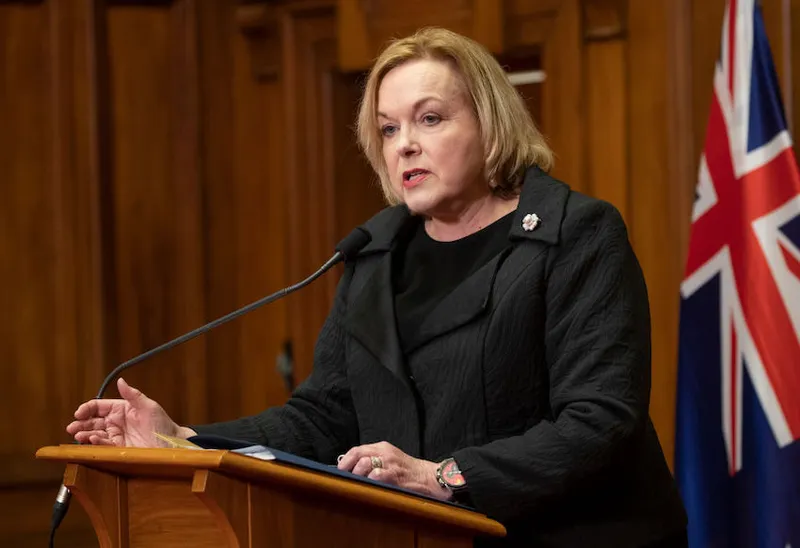
This term we said an early goodbye to Judith Collins, whose final day in parliament was May 14. Because the general election was to be held within six months from Collins’ departure, the House was able to pass a motion that no writ (written notice) be issued for a byelection in her vacant Papakura seat. These motions need the support of 75% of the House to be passed; you can imagine a situation where two parties are very keen to contest a swing seat. But reaching consensus on a motion like this could come pretty easily once these parties are reminded of how costly it is to run two elections in one year.
And if Chris walks out the door…
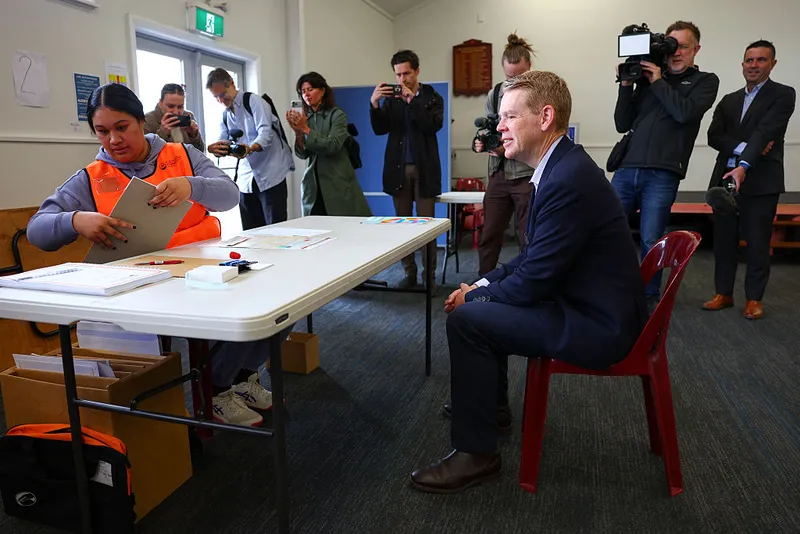
There’s another question hanging over this election that might threaten the numbers: if one of the major party leaders leaves when the other forms a government. Chris Hipkins is the MP for Remutaka, while Christopher Luxon is the MP for Botany – Hipkins has already pledged to spend the next three years in the role, while commentators expect Luxon would rather leave than sit on the opposition benches. Both of these seats can be considered by the respective incumbent parties as safe, so a resulting byelection would be unlikely to change the delicate balance of seat numbers. In a coalition government, however, it could threaten to upset the delicate balance of personalities among coalition partners.
The actual business of parliament
In the House of Representatives, a one-seat majority means the party vote becomes more precarious. In a hypothetical 129-seat parliament with a 65/64 split between government and opposition, the pressure is on every MP to vote along their party lines. One government MP abstaining or crossing the floor to vote with the opposition would mean that motion is lost. This situation also means laws with far-reaching effects for all New Zealanders will be passed with the slimmest of margins.
The government can lose a vote or two on legislation without losing the confidence of the House. But that could be triggered by the kind of motion the government loses support for, such as passing the budget or its authority to spend public money (known as supply). These kinds of votes are treated as confidence votes, and don't necessarily require the opposition to raise a motion questioning the House’s confidence in the government.
According to Parliamentary Practice in New Zealand: “Where the House is voting on either of these issues of supply or annual rates of taxation, if a government fails to secure parliamentary support to grant or impose them, the vote demonstrates a loss of confidence in the government.” But parliamentary practice is de facto as well as de jure – theoretically, the prime minister could attempt to talk to the dissenting MP, get them on side and try to pass another budget. We've never been in this situation before, so ending up here also risks a bit of a constitutional crisis.
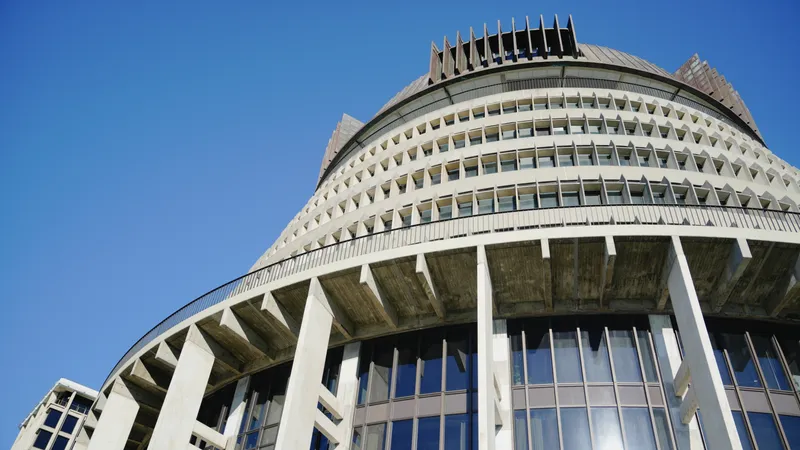
The prime minister’s statement – which kicks off the parliamentary year – is also treated as a confidence vote. This statement typically begins with the prime minister asking the House to express its confidence in the government’s upcoming programme. The opposition can come in and table an amendment claiming the House has no confidence in the government – if that motion is passed, the prime minister must alert the governor-general to the government’s resignation.
What if we all just got along?
A one-seat majority isn’t necessarily a harbinger of doom. It’s possible the stakes could push MPs to fall in line and cooperate for the sake of keeping a stable government. There’s also the incentive of keeping it together for the sake of avoiding another expensive and time-consuming election cycle, which could end in the public punishing the governing parties for failing to stick it out.
Members of a coalition government don't necessarily need to agree on everything. If National negotiates confidence and supply agreements with the likes of Act and NZ First, the smaller parties are given space to disagree on certain policies while having to support the government’s core work. The right level of discipline can keep a government with a one-seat majority functioning. But it also means one disgruntled MP or one particularly controversial piece of legislation threatens to undo our next government altogether.
So, to all our incoming MPs: load up on vitamins, get your flu shots, try your best to be an empathetic co-worker and for the love of God, avoid Molesworth Street at all costs. We’re all depending on you.

Lyric Waiwiri-Smith
Lyric is an award-nominated politics reporter at The Spinoff. She covers parliament from the press gallery, pens the weekly column One MP, One Pint and is endlessly curious about what makes our decision-makers tick. Off the clock, Lyric loves a live gig, a cold brew, and being a Wellingtonian (on a good day).
Sign up to The Bulletin, delivered straight to your inbox.


