Parliament’s new mum and dad have been adopted into a very bizarre tradition

Our new ma (Louise Upston) and pa (Chris Hipkins). (Photos: Getty Images/Supplief)
The pompous ‘father/mother’ of the House titles come with no extra responsibilities, and certainly no paid parental leave.
It’s one of those grand distinctions both desired and rejected by those in the running to hold it. But with the National Party’s Gerry Brownlee and Melissa Lee out the door, our parliament is perilously parentless. Never fear; clerk of the house David Wilson has confirmed to The Spinoff that, “assuming no major surprises” after the special votes are counted, Labour leader Chris Hipkins and National MP Louise Upston are set to become our new mum and dad.
There’s only one criterion an MP needs to meet to be given the title: having the longest unbroken period of parliamentary service. Which is why Winston Peters, who was first elected in 1979 but has spent three terms since out of parliament, doesn’t get the title. Nor does Labour’s Damien O’Connor, who was elected in 1993 but lost his seat in 2008, before returning in 2011.
However, if there is more than one MP who has served the same length consecutively, the titleholder is decided by who was sworn in first. And because swearing in ceremonies for new MPs happen in alphabetical order (by last name), Hipkins gets the title over his Labour colleague Phil Twyford, who was also elected in 2008. Upston could have been recognised as a mother of the House earlier, if she had won the surname lottery and was sworn in before Lee, the last mother of the House, in 2008.
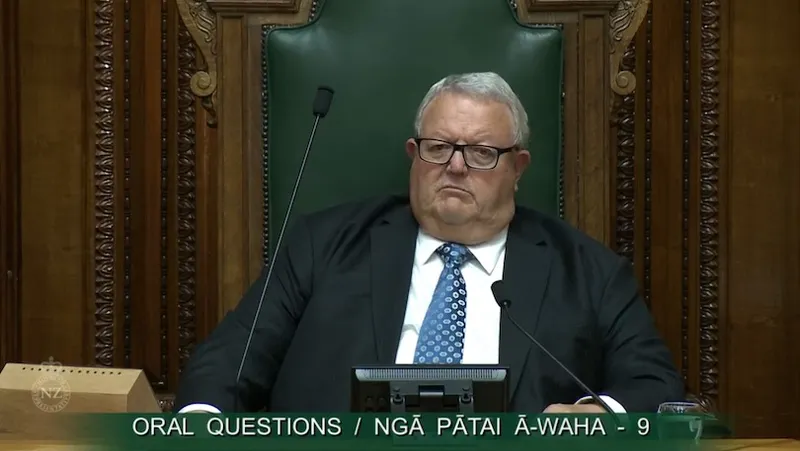
Truthfully, the title is a bit of posh piffle – or in Brownlee’s words, “a load of rubbish”. The father/mother in question are given no extra duties or responsibilities alongside the title, just the reminder of their longevity and, therefore, integrity. It’s a term Wilson reckons was “almost certainly copied from the UK House of Commons” – but more on that later.
If you need any more proof this stuff is all fur coat, no knickers, take a look at our first self-described father of the House, Hugh Carleton. Carleton served a term of 17 years, five months and 16 days in parliament – just over half the length of Brownlee’s tenure, and the shortest of all our House fathers. Carleton’s only claim to fatherly fame was the fact that he was the first-ever person to be sworn in as a member of New Zealand’s parliament (then the General Assembly), after running unopposed in the Bay of Islands in 1853.
As a man infamous around the House for his individuality of thought and short temper, Carleton’s self-imposed title didn’t necessarily garner respect from his fellow parliamentarians. In a debate in 1868, Rangitīkei MP William Fox made sure to let Carleton know what he thought of his “tantrums”. “I trust, if the honourable member is the father of the House, that his sons take after this mother, whoever she may be, and that they exhibit in their tempers the smallest possible strain of paternal blood,” Fox told the House.
It would be a while until the House finally found its mother (back then, only one parental figure was recognised). When former National Party minister Jonathan Hunt left parliament in March 2005 with 38 years on the board, Helen Clark was next to be recognised for her record. Clark was first elected in 1981, the same year as her finance minister Michael Cullen, who sat on the wrong end of the “C” spectrum. Although, there were 12 whole days between Clark and Cullen’s parliamentary departures in 2009, so he did get a brief stint as House daddy.
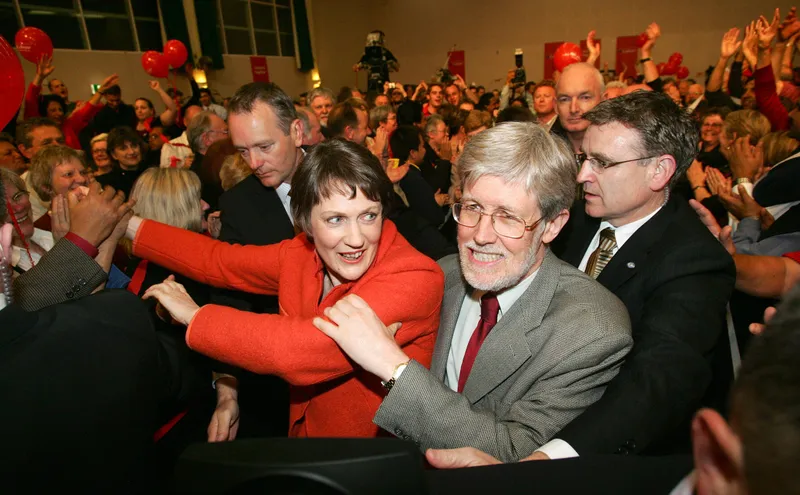
In 2005, there were a few old-timers around grateful to not meet the criteria. “We wish her that title, as well,” said Winston Peters in the House, of Clark’s status. “Richard Prebble and I were saying the same thing to ourselves: ‘Thank heavens for that!’”
Then there came Jim Anderton, Peter Dunne, Bill English, Nick Smith, Trevor Mallard and Brownlee. Though for many of these battlers, their status was used by others to reprimand, not to show respect. Check the Hansard and you’ll find instances of these men having their title mentioned by a speaker to remind them of their manners, or by fresher MPs trying to tease. It’s only when speaking of fathers of the House in retrospect – like Don Brash of Sir Apirana Ngata, our first Māori father of the House – that MPs seem to hold them in high regard.
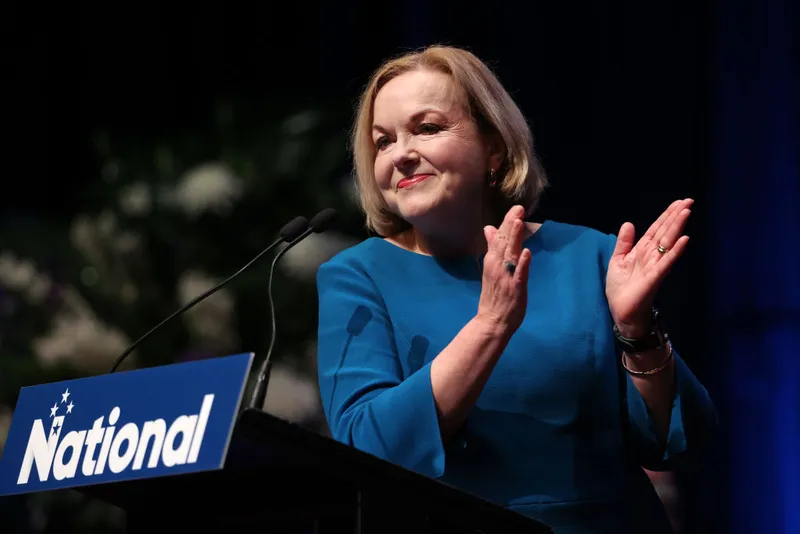
Somewhere along the line, we started recognising the father and mother of the House concurrently. Nanaia Mahuta was sometimes referred to as mother, and Judith Collins adopted the term with pride – she’s the only MP recorded in Hansard referring to herself by the title. As for Lee? Well, it’s hard to say whether anyone really registered her status in the six months between Collins’ departure and Lee's electoral ousting.
Then you get the babies of the House, the young’uns of the lot. As you’ll well know, Te Pāti Māori MP Hana-Rāwhiti Maipi-Clarke, first elected in 2023 at age 21, is our current baby (replacing the perpetually youthful Chlöe Swarbrick, who had previously been the youngest MP, but who was usurped in 2023 not only by Maipi-Clarke but also the Greens’ Tamatha Paul, who was 26 when she was elected, three years younger than Swarbrick). In their tenures, Hunt, Smith and Mahuta all started as babies and finished as fathers/mother of the House.
Why care at all? As it turns out, Hugh Carleton was strangely ahead of his time. New Zealand had copy-and-pasted the United Kingdom’s Westminster system to guide its parliamentary functions, but “father of the House” was only an informal term in the motherland at that point.
Since 1971, the election of the speaker of the House of Commons has been presided over by the MP “present in the House and not being a minister of the Crown, who has served for the longest period continuously as a member of this House”, according to standing orders. That MP is informally known as the father of the House, and since 2024, the not-so-official title has been held by the Conservative Party’s Edward Leigh.
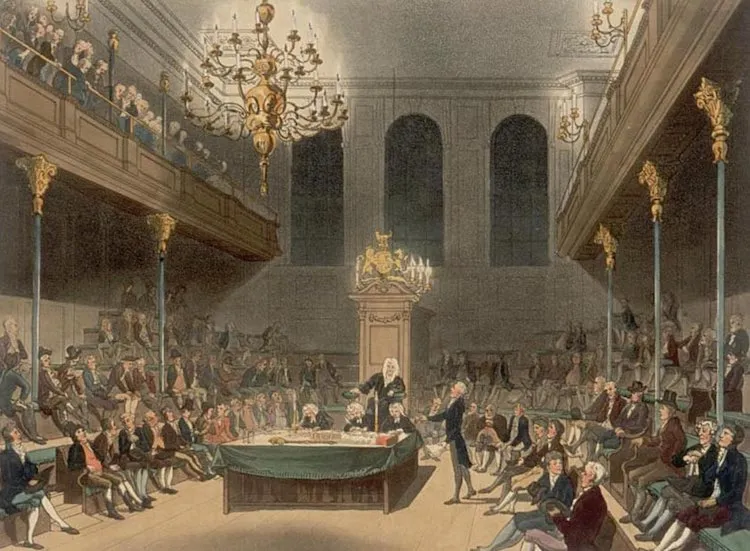
British political historian Paul Seaward notes this procedural change was copied from France, where the “doyen/doyenne d'âge” – the oldest member of the House – chairs the first sitting of a new parliament. However, this “deeply obscure” title has floated around various inhabitants of the House of Commons since the latter part of the 18th century. Seaward says it is unlikely the term was applied in a “systematic” way, considering at that time there was no collected information on the births of MPs or the dates of their service.
Seaward writes that we should assume the title was given to an “elderly member who hung around the place and was universally recognised, rather than one who contributed significantly to proceedings”. It seems to reflect a traditional “value attributed to age that was common in pre-modern societies, and may reflect the way in which older men were assumed to be repositories of memory in any community, particularly about matters of customary ritual”. Seaward notes that in the 1500s-1600s, veteran MPs were looked to for procedural guidance or to recall information from earlier debates.
For tantrum-prone Carleton, it’s likely the title was purely an ego boost. Over time, it’s entered our lexicon as a way to recognise an MP’s lengthy service and the wrinkles they’ve earned along the way. Some titleholders take it as a welcome acknowledgement of their service – for others, an unwelcome reminder of lost youth. The only consolation is that these parents don’t have to answer for the behaviour of their children.

Lyric Waiwiri-Smith
Lyric is an award-nominated politics reporter at The Spinoff. She covers parliament from the press gallery, pens the weekly column One MP, One Pint and is endlessly curious about what makes our decision-makers tick. Off the clock, Lyric loves a live gig, a cold brew, and being a Wellingtonian (on a good day).


