Women are too emotional, says angry man swearing about politics

Harry Mowbray, making a point or three on his YouTube channel.
If Harry Mowbray wants to argue that emotions are corrupting our democracy, he might like to begin by examining his own, argues Cleo Wood.
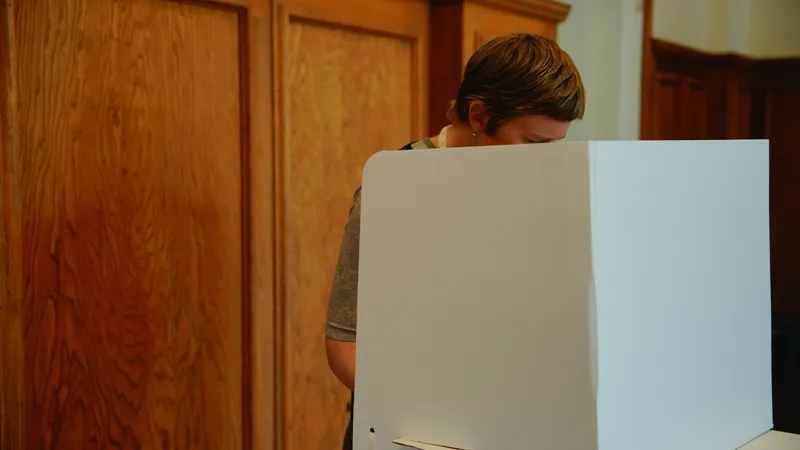
In 1893, New Zealand became the first self-governing country in the world to give women the right to vote. The first. While women across much of the world were still being told they were too emotional, irrational and intellectually inferior to participate in democracy, New Zealand women were marching into polling booths and making history.
Kate Sheppard and thousands of suffragists fought for that right and it remains one of our proudest achievements. And yet, sigh, here we are, 133 years later, listening to a wealthy New Zealand businessman explain that women are driven by emotion and easily manipulated by promises of a few extra dollars.
Forgive me if I become emotional.
Harry Mowbray, businessman, father to the Zuru billionaires and self-appointed authority on the female mind, has offered his analysis of NZ’s electoral system. Women, he suggests, are driven by emotion. The left wickedly exploits this by promising struggling people a little more money. A mother with two children, he explained in an interview with Newsroom, might be swayed by another $10 or $20 in her weekly budget.
Sorry, are we seriously calling a mother emotional because she knows what an extra 20 bucks would mean for her children? She's not being manipulated; she's doing the maths. She knows what groceries cost, what school shoes cost, and how quickly $20 disappears when you're responsible for keeping two small humans alive.
In other words, Harry, she's making a financial decision. You're the one having feelings about it.
Speaking of emotions, Mowbray was furious with National's response to his vote-splitting campaign, describing its representatives as "fucking idiots". Not because his tactics were thwarted; quite the opposite. He's claimed a victory, and National had the audacity to withhold their applause. A 75-year-old wealthy businessman throwing what looks remarkably like a toddler's tantrum because nobody gave him a gold star and a pat on the back.
And this is the man lecturing women about emotional decision-making. It takes a breathtaking level of arrogance to mistake your own privilege for intelligence and someone else's lived experience for stupidity.
But that's the convenient thing about emotion; when it belongs to someone wealthy and powerful, we tend to give it a more respectable name. Anger becomes strength, aggression becomes leadership, fear becomes national security, and greed becomes economic ambition.
Compassion, meanwhile, becomes weakness. Empathy becomes sentimentality. Concern about children going hungry becomes a woman's inability to separate feelings from facts.
Well, if we're going to start judging an entire sex's right to vote by its ability to control its emotions, and the damage those emotions inflict on society, then Harry, old boy, you'd better strap yourself in: the stats on anger, aggression and reckless behaviour are about to make this a deeply uncomfortable conversation.
Let's start with the men.
New Zealand Police data for 2025 shows that men accounted for approximately 78% of proceedings for assault, 85% for homicide, 81% for property damage and an astonishing 97% for sexual offences.
These are proceedings against alleged offenders, not convictions, and they cannot tell us what motivated every offence, but it’s an uncomfortable set of numbers to encounter in the middle of a lecture about women's supposed lack of self-control.
Let’s consider the road.
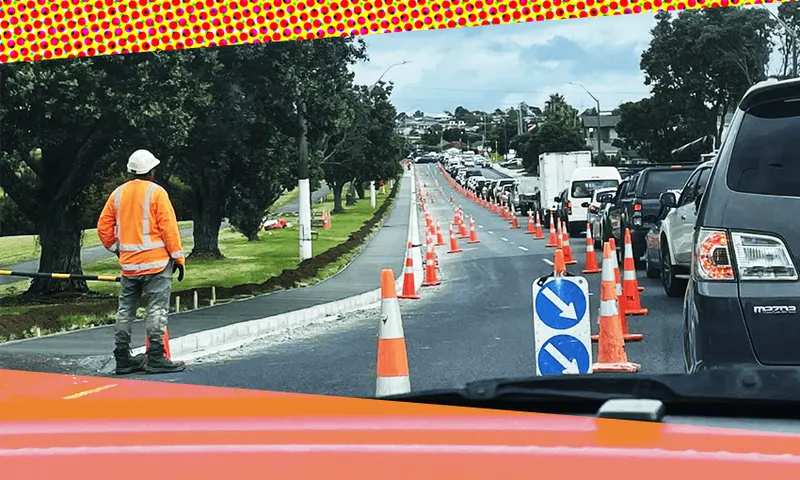
Research involving New Zealand motorists found that men were more likely to express driving anger aggressively, while women were more likely to respond constructively.
In the year to June 2025, men also accounted for approximately 78% of New Zealand convictions for driving under the influence of alcohol or drugs. The 2024/25 New Zealand Health Survey found that 21.9% of men had hazardous drinking patterns, compared with 11.5% of women.
A woman considering her grocery budget is apparently a threat to rational democracy. A man screaming obscenities because somebody cut him off in traffic is just having a bad day.
Meanwhile, women have been quietly performing the work on which civilisation actually depends. According to the United Nations, women and girls globally spend around two and a half times as many hours on unpaid domestic and care work as men. In New Zealand, research into couples working equal paid hours found that women reported doing an average of 28 hours of unpaid work a week, compared with 19 hours for men.
And in the June 2026 quarter, 118,000 women outside the labour force identified looking after children as their main activity, compared with just 19,900 men.
Women are raising children, managing households and stretching grocery budgets. Much of this work is invisible to the economy, right up until somebody has to pay another person to do it. If housework were listed on the stock exchange, perhaps someone would finally recognise its value. Which brings us back to Harry's imaginary mother. I love that he's invented an entire woman just to find her stupid.
The 2023 census tells us that more than four in five sole parents with dependent children are women. Inland Revenue reported $834 million in outstanding child-support debt as at June 2026. Not every absent parent is a father, but there is something particularly ugly about sneering at women receiving government assistance when so many are the parents who have stayed to do the work.
And since Harry is so concerned about the financial decisions of struggling mothers, perhaps we should talk about tax.
Inland Revenue's 2023 research found that New Zealand's wealthiest families paid a median effective tax rate of just 9.4% on their economic income, compared with 20.2% for middle-wealth New Zealanders, once GST and government transfers were accounted for.
Meanwhile, Treasury found that 30% of sole-parent families face effective marginal tax rates above 50%. That means when they earn an extra dollar, more than half can disappear through taxes and reductions in financial support.
So the wealthiest can accumulate enormous fortunes while paying proportionately less tax on their economic income, and some sole parents can lose more than half of every additional dollar they earn. But Harry wants us worried about a mother voting for another $20 to feed her children. Perhaps it's not her financial judgment that needs examining.

Generations of women fought against the belief that they were intellectually inferior, hysterical and fundamentally unsuited to political life. Even after winning the vote in 1893, New Zealand women couldn't stand for parliament until 1919. Our first woman MP wasn't elected until 1933.
It's 2026, and we've got artificial intelligence, self-driving cars and robots vacuuming our floors, but apparently the political analysis of the female brain hasn't advanced beyond a Victorian gentleman grasping his newspaper and worrying that his wife might develop opinions.
The actual kicker is that the things women are supposedly too emotional about are the very things politics is meant to address: children, housing, healthcare, education, poverty. Whether the elderly are cared for. Whether a family can afford to eat something other than toast three nights in a row.
These aren't silly little feelings fluttering around inside our delicate lady skulls. They're actual issues affecting actual people.
And maybe having empathy doesn't mean you lack intelligence; maybe it's an advantage when you're making decisions that affect other human beings.
If Harry Mowbray wants to argue that emotions are corrupting our democracy, he might like to begin by examining his own. The anger. The contempt. The frustration when National didn't give him the recognition he wanted.
Those are feelings, Harry. Big ones.
And here's another rather inconvenient detail about democracy: women are allowed to vote for things wealthy men don't like. We can vote for benefits, public healthcare and higher taxes on enormous fortunes. We can vote for politicians who promise to make life easier for people who don't happen to have enormous fortunes.
It might surprise you, Harry, but we women are capable of a little duality. We can make decisions grounded in financial acumen and guided by compassion, all while using the perfectly functioning brains in our heads. Kate Sheppard didn't help win women the vote so we could spend the next 133 years seeking approval for how we use it.
If this entire spectacle has demonstrated one thing, it's not that women are too emotional for politics. It's that some men are still having an awfully emotional time accepting that women get a say.

Cleo Wood
Cleo Wood is a freelance writer from Taranaki. Her experience spans 15 years working in the events space crafting stories for some of New Zealand’s most beloved festivals.


