Linda Clark: Scrapping TVNZ’s political editor role is a mistake

Linda Clark in a news clip from her time as TVNZ political editor.
There has never been a more compelling set of circumstances calling out for serious and comprehensive political reporting, led by a political editor viewers can trust.
Once upon a time in a galaxy as far, far away as the 1990s I was TVNZ’s political editor. I never applied for the job. This was obviously before the days of departments of “people and culture”. In those days a shoulder tap – or in this case a short and unexpected telephone call – dealt with all the preliminaries. I was working in TVNZ’s gallery office already, under Richard Harman, one of the legendary “three Dicks” of political reporting. Did I want the job? Yes, I did. And until the day I stepped away from the parliamentary press gallery in 2000, doing justice to the role and its responsibilities meant everything to me.
Fast forward to this week. I am no longer a journalist and haven’t been for many years. But news that TVNZ’s latest reorganisation may see the role of political editor scrapped has shocked me back into print.
I still have enormous loyalty to my old mothership. I worked at TVNZ from 1989-2002, in Avalon, then the Wellington bureau, at parliament and in Auckland. Between 2023 and 2025 I was a member of its board. I was on that board when the reluctant decision was made to cancel Sunday and the much-loved Fair Go. So, I understand the pressures on the business and the urgency of the challenges it faces in the new and very unsettled media environment.
But, scrapping the political editor’s role and effectively downsizing and downgrading its political coverage is a mistake.
The role is not just about being a reporter, or even about breaking stories. The political editor’s job is a complex mix of ringmaster, manager, translator, historian and commentator. Almost every story in a country of our size has a political angle and (whatever Auckland mayor Wayne Brown says) time and again, all roads lead back to parliament. The political editor’s job is, at least in part, to understand how issues, people and parliament are connected because consumers of news want help to know what is important and what is worth their time.
The political editor is probably most associated with live crosses filmed outside parliament. It ages me to say I was TVNZ’s first live cross reporter and on my first one I needed to steel myself with a shot of whiskey moments before we went on air. I came to appreciate that a good live cross is intoxicating enough. But it’s the smallest part of the job.
As the leader of the gallery team, your own reporters need supporting, promoting and mentoring and in turn they support and teach you. All parliamentary gallery offices are cramped and pretty basic work environments and everyone is working under constant pressure for average pay. So, building a strong team culture is vital. News managers working in more spacious, well-designed news hubs have never understood the reality of political reporting; how grimy it can be, what it is like to be in such close proximity to the subjects of your reporting, the level of personal abuse, the constancy of political news. It’s a noisy, raucous, changeable business and you’re on your mettle all of the time.
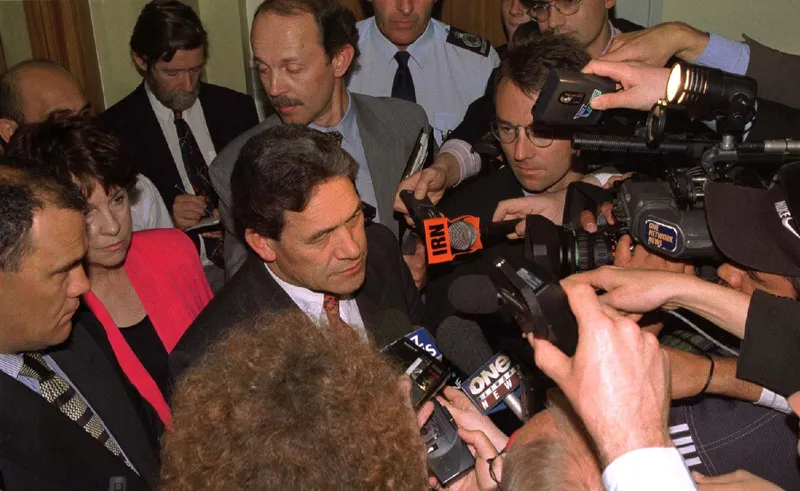
Reporting is a competitive sport. A key KPI is being first, fast and accurate with the news. As political editor you want to lead the pack, which takes effort and experience. It helps if politicians see that you can dominate your competitors in a stand-up. I acknowledge viewers were turned off by the “Jessica, now Tova” parade during the interminable season of Covid media conferences. In the 1990s there were far fewer women reporters, and those of us there needed to stand up for ourselves in every way. I have always suspected that if the PM had been calling on “Richard, then Dick” throughout Covid, viewers would have shown more tolerance. I guess we will never know.
When I had the job I certainly always thought about the viewers at home. Journalism is a privilege. It gets you into rooms others are locked out of, which means your responsibility is to take the story and the audience seriously. But turning complex information or prolonged debates into bite-sized nutritional news is hard work. You need to read a lot to write a little and you need to be able to do both at great speed. Politicians of all stripes have long understood the advantage of a late-in-the-day news drop. Or the sneaky repeat release of old information dressed up as a new initiative. They have teams of comms specialists all working on ways to side-step media scrutiny and up-sell the boss (whoever that is).
Part of a political editor’s job is to act as a content sieve, sorting out the difference between news and spin. You can’t do that without the experience of gallery reporting and covering many, many political events. It’s not enough to just be a news reporter. It’s not a natural skill to understand politics. It’s not even a skill most people would want. But to develop it you do need to have a highly developed bullshit radar and a natural capacity for joining the dots. That enables you to know where you need to have cameras, and when and who you need to be watching and why.
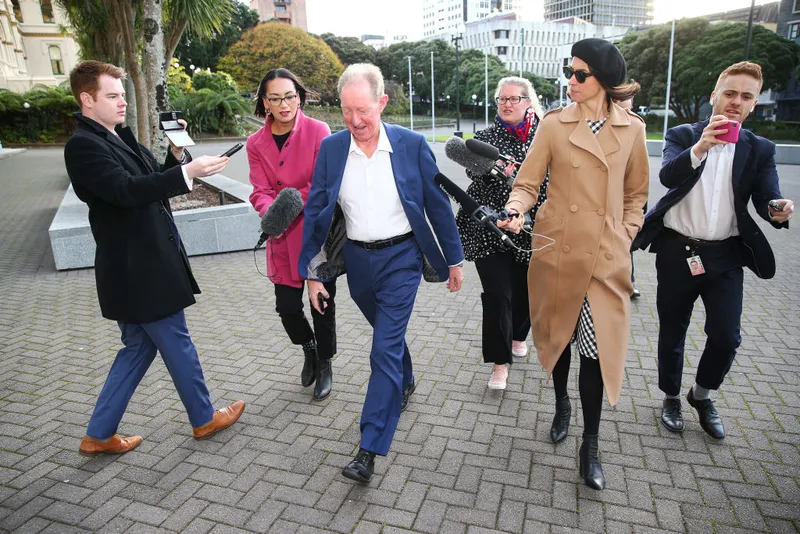
And then there are the politicians. Right now, in some quarters at least, there’s a kind of phoney war going on between some MPs and the media. But plus ça change. When I was political editor, I was blacklisted for a time by both Helen Clark and Jenny Shipley. Both had their reasons. Naturally, I was also castigated by Winston Peters (more times than I can count) but then who hasn’t been? It’s only natural that there will be tension between politicians, and governing MPs in particular, and the press gallery. Experience in the place teaches you how to manage that.
It is almost always true that political editors get preferential access. It’s a hierarchical institution, after all. That’s a ticket no news organisation should want to give up. But also, one of the unheralded roles of a good political editor is to act as a shock absorber between any aggrieved MP and their news outlet. It was routine for MPs, or their staff, to phone up and have a screech about one story or another. In all but a very small number of cases that was enough to see the matter settled. They just wanted to get it off their chest. Any news manager thinking about scrapping the position should ask themselves, do they want to take these calls? Because the fact there will be an ongoing relationship between an angry MP and the political editor does – once the screeching has run out of puff – usually mean most situations can be de-escalated in a way that simply would not happen with an outsider.
TVNZ, of course, has had no political editor since early May. With no disrespect to its hard-working but depleted political team, it has shown. The proposal now to make this permanent will have far-reaching effects at a precarious time in this country’s history.
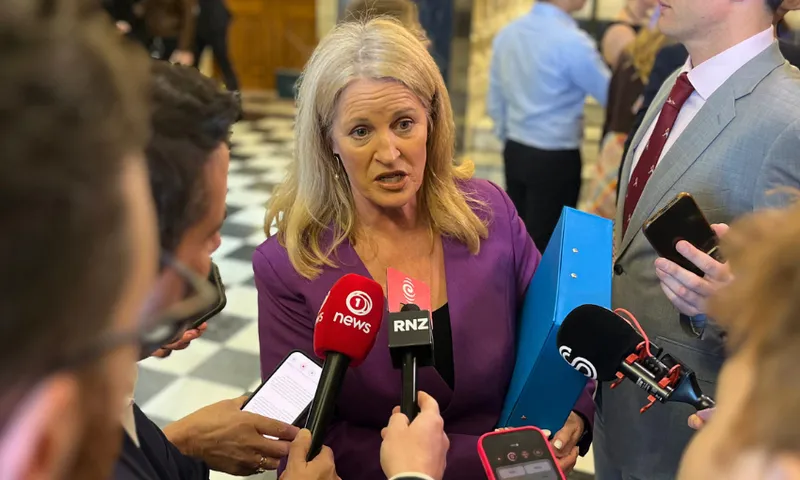
On any kind of counting the next government is going to be there by a whisker. It is likely to have four parties in some kind of coalition/partnership arrangement. One of those parties has zero experience. If it’s a right bloc government, another is led by a charismatic 81-year-old. Every one of National’s MPs could, if they felt like it, run to their own agenda because they got elected under their own steam as electorate MPs when the party’s vote was waning. There has never been a more compelling set of circumstances calling out for serious and comprehensive political reporting, led by a political editor viewers can trust.
TVNZ is a significant and dominant news creator. Its 6pm bulletin remains the linchpin of its free-to-air broadcast, with many more viewing on TVNZ+. It has a responsibility to those viewers – and others it can attract – to ensure they can be informed about what is going on in parliament and how it will impact their everyday lives. During periods of volatility and uncertainty – such as exist now – that responsibility is even greater.
Any decision that dilutes political coverage concerns all of us. It will also pave the way for other media organisations that are also struggling, and arguably in more immediate financial peril than TVNZ. The media has already lost many specialist reporters, and we are all the poorer for it. A fair question to ask is whether we might all have had a better understanding of the pressures on our health system if media companies still employed health reporters?
TVNZ is – quite rightly – not commenting on its proposed reorganisation. But it has asked for feedback. My feedback is that the role of political editor is a particularly precious one. It was my privilege to have that job. I hope others get the same opportunity.

Linda Clark
Linda Clark is a barrister at Thorndon Chambers. She was TVNZ political editor from 1993-2000.
Sign up to The Bulletin, delivered straight to your inbox.


