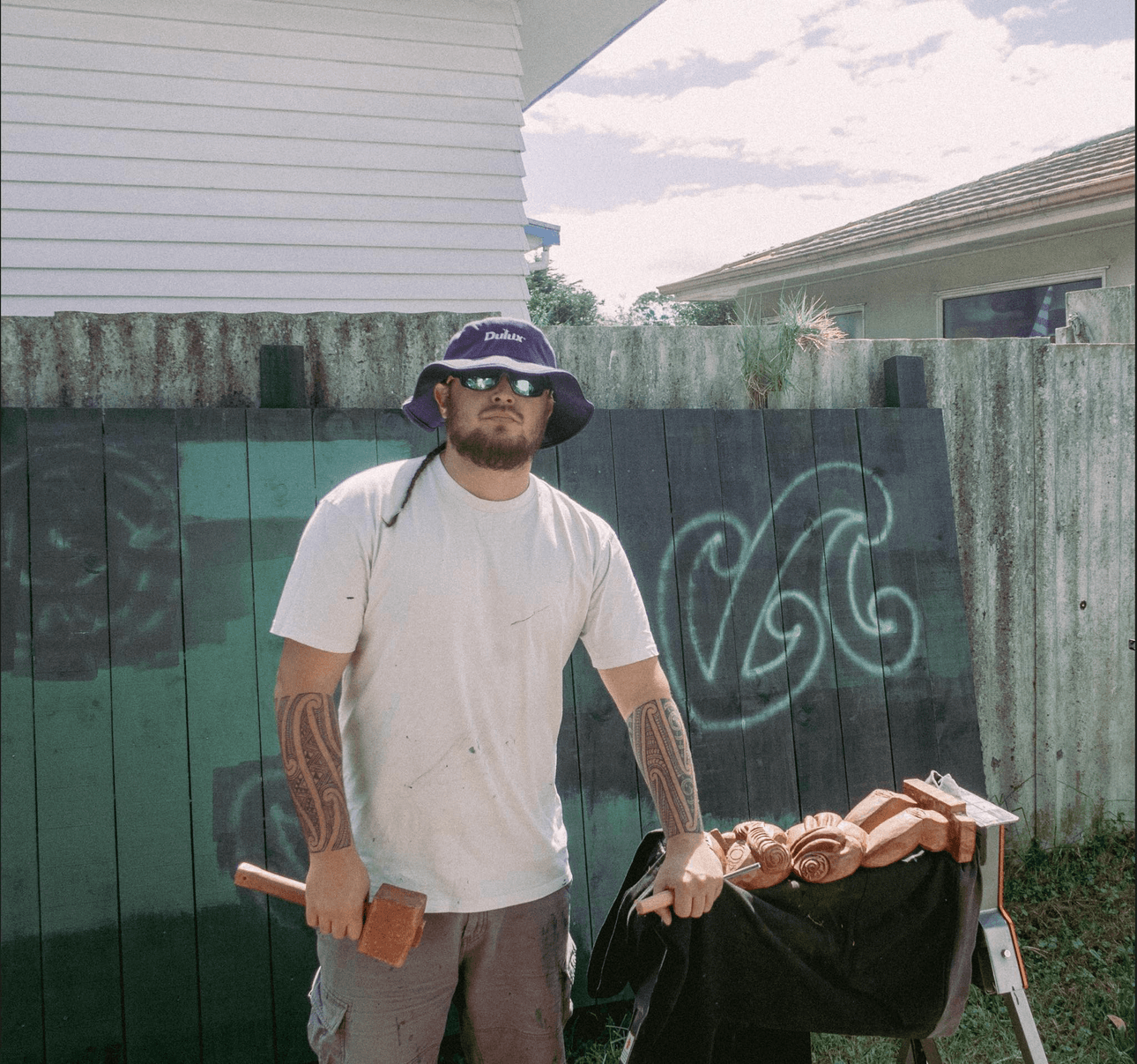
In the penultimate episode of Singles Club, Bryn and Ku visit Ku’s whanaunga as she prepares to give birth. Liam Rātana remembers how his own son’s birth plan went awry.
Before my son was born, his mother and I attended a hapūtanga wānanga – a full-day antenatal course grounded in tikanga Māori. As part of the kaupapa, we spent time creating a clay uku for his whenua, or placenta.
At the wānanga, we discussed the tapu associated with placentas. The Māori midwives facilitating the wānanga invited us to consider how we wanted the placenta to be handled, who could touch it, and what we might want to do with it after the birth. My fiancée and I incorporated the handling of our son’s whenua into our birth plan. We wanted it returned as soon as possible after the birth and it would be placed straight into our clay uku, for burial at a later date.
Whenua is most commonly translated as referring to land, but it’s also used for referring to placenta in te reo Māori. This speaks to the tapu nature of the placenta. It’s what feeds and nurtures the child in utero until they are born and is a pivotal part of te whare tangata – where all humans are created. Once we enter te ao mārama, the placenta’s job is done, but it maintains its tapu and mauri.
When I was younger, I dated a girl who used to talk about one day turning the placenta of the child she hoped to have into capsules and taking them every morning, like a vitamin. This is practiced in some social circles, with claims the placenta contains a mass of nutrients and other beneficial minerals that can aid mothers after giving birth. It is not a practice I have heard of in te ao Māori.
What I have seen and been a part of is burying whenua in the whenua, or hiding it somewhere (like in a hole in a tree). Usually, the placenta is buried somewhere meaningful, often where the whānau have strong connections. This practice strengthens the child’s connection with the place, and that of the whānau. Having kōiwi and whenua buried in the whenua is sort of like the Māori version of sticking a flag in the land and staking a claim to it.

While we had planned what we wanted to happen with our son’s whenua, that went out the window when he was born. Eager to enter te ao mārama, our son came five weeks early and very quickly – it took no longer than 45 minutes from the time his mum realised she was in active labour to the baby being delivered. We didn’t have time to make it to the hospital, call the midwife, or find the muka tie we wanted to use to cut the umbilical cord or the clay uku to hold his placenta.
Suffice it to say, there was a bit going on when we got to the hospital. My son ended up in the neonatal intensive care unit and somewhere in the blur of having a newborn child and mother on the verge of requiring urgent medical intervention, it was recommended we have his placenta tested to see if there were any identifiable causes of his premature birth. Wanting to ensure we gave our son the best possible chance healthwise, we agreed. It would be over three months until we got the placenta back.
I remember walking into the building at the back of Auckland Hospital to collect my son’s placenta. It was a typical sterile hospital setting, with a few Colin McCahon paintings providing the only reprieve from the grey concrete and cold steel. I was overcome with a sense of sadness thinking about how the placenta was probably kept in some drawer among dozens of others after being poked and prodded by strangers. It was a far cry from our original plan for it. The real kicker though, was that the tests hadn’t turned up any results – the whole process was in vain.
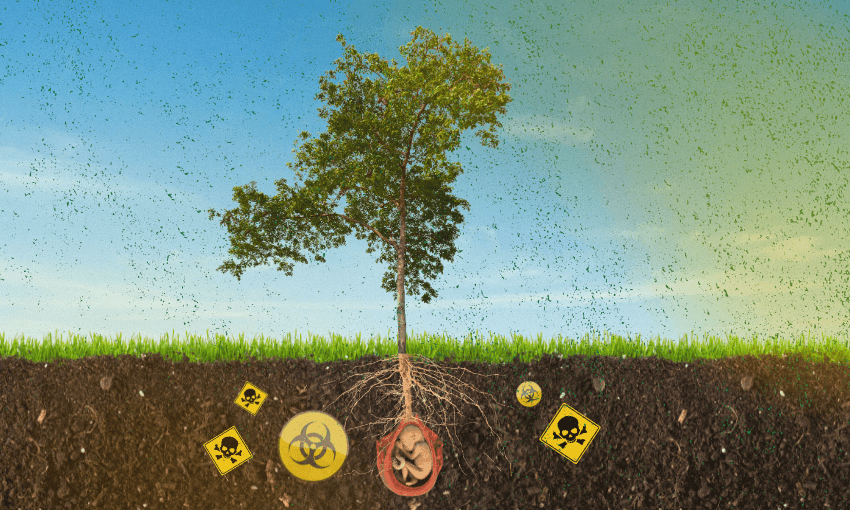
The lady behind the counter held up a brown paper bag and handed me a piece of paper outlining how to handle the placenta. “It’s been in formaldehyde, so you’ll need to wear gloves, a mask and be very careful when handling it. It’s toxic”, she said to me. My son’s placenta was toxic? I cried a little inside.
Over two years later, his placenta is still in the same paper bag, sitting in our wardrobe. Because formaldehyde is a toxic chemical and known carcinogen, it’s not safe to plant a tree on top of the placenta. Thankfully we can still bury it, but it has to be at least one metre deep and there is still a risk it will poison any flora or fauna nearby. Neither my partner or I can remember any of this being disclosed to us when it was recommended the placenta be handed over for testing.
Now we’re left wondering what to do. Initially, I wanted to bury his whenua up north in Herekino, where I whakapapa to. However, my partner and her mum would like for it to be taken back to Mitiaro in the Cook Islands, where they whakapapa to. I even considered splitting the placenta in half and taking some to Herekino and some to Mitiaro – but thought it would be best for it to be kept whole. In the end, it’ll probably come with us on our next trip to Mitiaro and be buried somewhere over there.

As we live in New Zealand, my son will likely grow up strongly connected to Herekino anyway, so I’m happy for his whenua to be taken to his other ancestral home. If anything, I hope it makes him feel more connected to Mitiaro too. Maybe one day, he or his children will want to live there. If so, I hope knowing his placenta is buried there helps.
Mai te whenua, ki te whenua. From the placenta we shall one day return to the land. It’s a nice reminder of the cyclical nature of life. We are born and we die, but our mauri remains. The placenta is an extension of our mauri, of our life force essence. It deserves to be treated as such.