Naida Glavish on the grandmother who made the ‘kia ora lady’

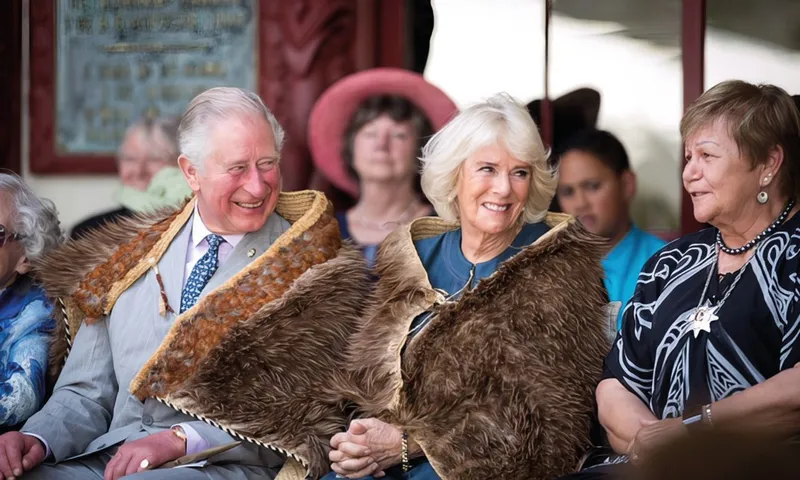
Dame Naida Glavish has spent decades championing te reo Māori, tikanga and the mātauranga passed down by her grandmother. (Photo: Supplied)
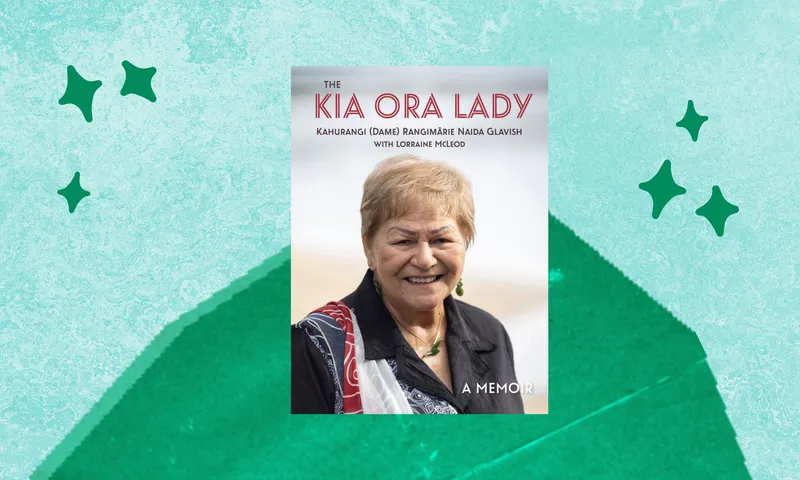
Rangimārie Naida Glavish became famous for refusing to stop saying ‘kia ora’ as a toll operator in the 1980s. In her new memoir, she reflects on the grandmother whose teachings shaped her life.
People looking from the outside might have thought Rangimārie Naida Glavish grew up poor. Her childhood home had an earthen floor and a thatched roof, with no electricity, running water or refrigeration. But Glavish inherited treasures far greater than material wealth. She grew up speaking te reo Māori, surrounded by whānau, on her whenua. Now 80, she says those early gifts are the reason she wanted to write her new memoir, The Kia Ora Lady.
“To me, it should have been [called] The Privileged Life of a Servant, because as far as I'm concerned, everything I've done all my life has been as a servant to her teachings… I learned more from a blind woman than I've ever learned from anybody. I learned so much from her,” Glavish says.
The woman Glavish is referring to is her grandmother, or māmā, Ngāpeka Teririkore Nahi, to whom her book is dedicated. Glavish credits her māmā with shaping the person she is today, and her gratitude for those gifts is clear throughout the book. She recounts many of the life lessons bestowed on her as a youth in the book, including how to read tohu in the taiao and interpreting them in a spiritual context.
“We were hanging out the washing when a great gust of wind came from Te Tai Tokerau. She said, ‘ko wai rānei tērā? I wonder who that is?’ I didn’t understand what she meant. About half an hour later, the wind returned, this time blowing north. She said, ‘Oh, kua whiwhi. Whoever went to get them has brought them back to Te Reinga.’ On the six o’clock news, they announced that kaumātua Kingi Ihaka, from Te Tai Tokerau, had died.”
It’s a story that illustrates how Glavish was raised by her māmā to be in tune with te ao wairua, the spiritual realm. Reading the book, it quickly becomes clear that it’s not something Glavish has to consciously try to do, but rather a natural part of who she is.
“I’m alert to my surroundings wherever I am, whether it’s at the airport or somewhere else. I’m conscious of who we share our environment with, even a little spider. They’re not just there for nothing. If one crosses my path, I have to stop and acknowledge it,” says Glavish.
She recalls a story of when her māmā would bathe her as a child, using sunlight soap and water from the local creek heated in a large drum: “She would sing her waiata, every day. It's stuck in my ears, and it's those things that come back to me that remind me: ‘Nui ake tēnei take i a koe – this is far greater than just you’,” says Glavish.
It would be those words that reverberated around her head as she drove over the Auckland Harbour Bridge on the way back from a tangi in 1984. She believed it was the voice of her māmā, who had died 12 years earlier, reminding her that the battle she was fighting was bigger than herself.
At the time, Glavish was embroiled in a dispute with her employers at the Auckland toll exchange, where she had been demoted for refusing to stop greeting callers with “kia ora”. The controversy eventually reached the Post and Telegraph Association and attracted international media attention.
Prepared to lose her job, Glavish returned to the toll office and thanked her supervisor for the time off to attend the tangi, saying: “You do what you have to do as my supervisor and I will respect you for that. But I will do what I need to do as the mokopuna of my grandmother, and I hope you respect that.” She walked back to the switchboard and resumed answering calls: “Kia ora, tolls here.”
Glavish managed to keep her job, and the use of kia ora as a greeting continued to spread around the country. She quickly became known as “the kia ora lady”, but her legacy would extend far beyond her use of te reo Māori as a toll operator.
She has spent the four decades since championing te reo Māori and tikanga, first as a teacher and later as a cultural adviser in the health sector. She's helped establish tikanga-informed practices in hospitals and advocated for greater recognition of Māori values in healthcare, drawing on the knowledge passed down by her māmā.
“I really truly believe that it [mātauranga] is inherent, but not known,” Glavish says.
In her book, Glavish refers to a prophecy from Māori prophet and tribal leader Āperahama Taonui: “‘Ka tae ki te wā ka kī ō koutou kāinga ki te pūngāwerewere.’ (The time will come when your homes will be filled with nothing but cobwebs.) He said, ‘A spider will come into your home and build its home there but you won’t notice it. Then it will abandon that home and build another one, and another; that is the advent of colonisation entering right into your homes and lives, and you won’t even recognise that it is happening.’”
For Glavish, the prophecy speaks to how colonisation has separated generations of Māori from the knowledge their ancestors once held. But that knowledge, she believes, isn't necessarily lost. It simply needs to be rediscovered and passed on. As a grandmother to 20 and great-grandmother to 46 children, Glavish is not short of people in whom to instill her mātauranga. But she’s never been selfish with her knowledge.
“It's not supposed to be about me. It's supposed to be about the teachings of my grandmother. Follow them if you think any of it's of benefit to you. Use it, use whatever is in there that you agree with,” says Glavish.

Liam Rātana
Liam Rātana (Ngāti Wairupe/Ngāti Kurī) is editor of The Spinoff's Ātea section. He is passionate about indigenous and minority issues. Liam enjoys cooking, poetry, photography, and exploring the outdoors.


