‘Another long three years’: Five Māori leaders on the potential return of the coalition government

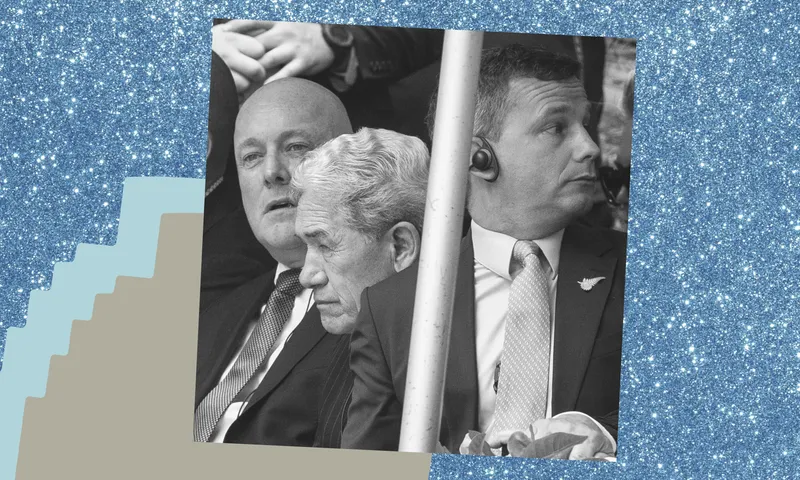
Winston Peters, Christopher Luxon and David Seymour: Three leaders, three parties and one coalition government. (Image: The Spinoff)
‘The real question is not who forms the next government, but how much of our future we are choosing to leave in its hands.’
The phrase “one term government” was thrown around a lot by the left in the lead up to this year’s election. With a plethora of policies perceived as being “anti-Māori” and some labelling the coalition government “the most overtly racist” we’ve had in years, a fair chunk of Māori were particularly eager to see a change.
As the numbers stand, the coalition will maintain control of government with a much weaker majority, pending special vote results. The Spinoff spoke to five Māori leaders to find out how they are feeling about a potential return of the coalition to power.
Bayden Barber, chair of Ngāti Kahungunu
I was disappointed with the initial result. I was a bit hōhā that the left hadn't put together a proper election strategy. On the right, you could clearly see that they had done a bit of mahi tahi around their strategy. Look at Te Tai Tonga – if Te Pāti Māori had retained the seat, then there would’ve been another seat on the left. It would have been a difference maker.
It's going to be another long three years [if the current government returns to power]. I've been pretty clear about the past three years and how hōhā it has been for our people in terms of the policies that they've put through and things that they've taken away from us. Unfortunately, a big chunk of New Zealanders have jumped on their waka and have been emboldened to support kaupapa that have put us at a disadvantage.
We've got to be in government. We can't be satisfied by sitting in the opposition bench, throwing pebbles and not having influence over Treasury. The strategy needs to be about becoming the government. If you hold the purse strings, then you're in a position to make good decisions for all of our communities – Māori and non-Māori.
If [the coalition] returns to government, there is something to be said about Māori-Crown relations. But I don't think that's going to be a big focus for them. I think they're happy to continue to damage their relationship because it plays into their voter base. But we've got some big issues… People are going to be going without over Christmas. We’ve got a kaupapa here in Hastings focused on recycling food that isn’t being used in restaurants and supermarkets. The line goes right around the block, nearly twice. It’s crazy how many people are lining up for food.
I think Maori power lies in the hands of Maori communities, iwi, hapū, and marae. Rangatiratanga starts with us. It doesn't start with the kāwanatanga. We're going to be hosting the Maori Economic Summit next year and economic sovereignty is going to be a big part of our future. Māori have to have the courage to not rely on kāwanatanga – it's a big thing because when you sever that umbilical cord, it can be painful.
Tureiti Moxon, chair of Te Kōhao Health
The mood of the country has certainly changed, hasn't it? There's a faction in this country who are living in denial about the rights of Māori in our country under the guise of “we are all one people, one New Zealand”. It's really a group of people who choose to live in ignorance about what it means to be in a partnership.
I think another three years [of the coalition government] will be devastating because in the last three years, they have eradicated all the hard work of people over decades who have tried to create a country that takes into consideration the rights of Maori alongside the rights of others. This government has taken away those rights and downgraded significant pieces of legislation to make the treaty pretty much null and void.
Holly Bennett, lobbyist and business owner
Mana motuhake remains where it always has: with each of us. No government will ever, nor should it ever, stand in for our own self-determination. That is a principle I believe transcends whakapapa; the single biggest determinant of our success is ourselves. That means it is incumbent on us to value the gift we all share: the ability to think, to question, to critique and to challenge.
In politics, we are often sold grand gestures or big numbers as the things that will shift the dial, but they rarely do. In my view, what truly moves the dial is the ability to decide what is right for ourselves. When we have agency over our decision-making, we become active authors of our own lives.
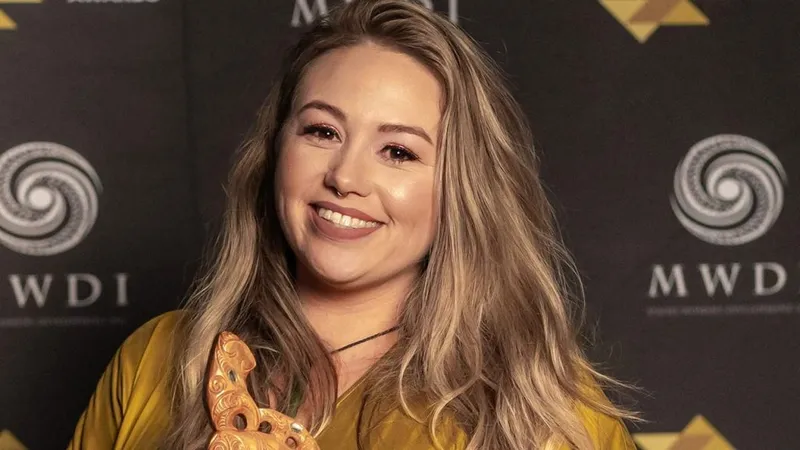
For those of us with whakapapa Māori, the real question is not who forms the next government, but how much of our future we are choosing to leave in its hands. Build your own capital, capability and capacity to decide what is right for you and your whānau.
For iwi and hapū Māori, as treaty partners, the question is different. Every iwi and hapū has its own unique and enduring partnership with the Crown. It is for those elected to serve to hold the Crown to account by asking what duty does the Crown owe those I represent? Has it failed to uphold that duty? Is the Crown even the right party to act? The Crown is bound to act in good faith, and it must be held to that. But in any partnership, the party prepared to walk away holds the power. That power always lies with iwi and hapū Māori.
Matt McCarten, political commentator
The major thing for me is the handshake deal between Willie [Jackson, from Labour] and JT [John Tamihere, president of Te Pāti Māori] around the Māori seats. Te Pāti Māori focused on being an electorate-only party and they've been able to cement the relationship with Labour. It produced a significant overhang, and if it wasn't for the surprise overhang with National, then it would have played a huge role. It still might.
[The coalition government] want Māori to be brown Pākehā. Act has become more ideological being anti-Māori and Winston [Peters] has been opportunistic. But I think that’s cemented their anti-Māori agenda and that will be a problem because they’ll feel vindicated.
The Greens have earned their right to be a legitimate player. They have made a significant claim of legitimacy in the Māori seats and are more than just a soft vote. I wouldn't be shocked if at the next election, the Greens actually win a Māori seat.
It's almost impossible for parties not to have Māori in list positions. All parties have had a Māori leader or deputy leader at some point in time, and it's not even commented on. I think being Māori by birth and being committed to Māori issues are two different things though. Probably half of the [Māori] MPs are Māori by birth only, but don't have any commitment to or background in serving Māori.
Māori MPs tend to be more talented now than they were, because in the past, Labour used to win the Māori seats all the time. You could’ve put a slug in there and they'd get elected. Their job was to shut up and behave themselves, and they usually obliged. That’s certainly changed because of MMP.
I don't think [the current coalition] will address Māori issues at all. They pride themselves on Māori bashing. There's nothing in it for the centre right parties to support Māori initiatives.
There's a depth of leadership in the [Māori] community that wasn't there in the past, and that will continue to build. Every political party has Māori within their leadership because it's now a natural way of being. Although support for the Māori economy and infrastructure has been cemented in, National will want to cut it if they can, because it’s a political risk for them having well-educated Māori. They’re not going to vote for the centre-right.
India Logan-Riley, project manager at Tai Tawhito, Tai Tipua
I think for Māori particularly, the concern is that there is still a group – a large population in Aotearoa – who are willing to vote for parties who want to see the Waitangi Tribunal gone, who want to see te tiriti removed from our constitutional fabric, who want to see more jobs disappearing, and won't stand up for good wages and good working conditions.
Under this coalition, we've seen some of the most direct and explicit attacks on Te Tiriti o Waitangi and our constitutional fabric. This is going to create a whole lot of work just trying to protect our communities, rather than moving towards invigorating our relationships with each other and working towards a better future together across the country.
Even though we have way more Māori engaged because of the attacks under the existing coalition, we really need to be striving towards constitutional transformation that cements Te Tiriti o Waitangi and gives us a kaupapa-based democracy in which we can have good relationships with each other and actually work proactively together, rather than this division that has been sown by the coalition.
[Māori need to] stay engaged in what is currently happening – this is part of how we maintain political awareness and develop smart political strategy. But we're really lucky as Māori that we also have other spaces where we can organise and build strength: on the marae and in our Māori organisations and Māori services. I think an emerging space which is really important is a restoration of our traditional economics and our traditional governance structures, because those can help us be resilient no matter what happens.

Liam Rātana
Liam Rātana (Ngāti Wairupe/Ngāti Kurī) is editor of The Spinoff's Ātea section. He is passionate about indigenous and minority issues. Liam enjoys cooking, poetry, photography, and exploring the outdoors.


