
He faced an Auckland jury for sex crimes but did he really face the music? One of his victims says no – and wants to change the law.
Warning: This story discusses sexual assault
He stood in the dock, hands clasped behind his back, rocking from side to side like a metronome. He looked remarkably relaxed for a man facing an array of rape and sexual assault charges. He also looked old. It was the male pattern baldness, yes, but it was his proximity to youth too. On the other side of a black screen, erected so she didn’t have to look at him, Eva (not her real name) sat in the witness box. She had a full head of thick, wavy hair and unwrinkled skin. She was more than 30 years his junior.
The decades between them – a 72-year-old and a 38-year-old – were stark, but surely not as shocking as when they met in Auckland in the 2000s and began a sexual relationship: he was a 50-year-old music teacher, she was a 16-year-old high school student who went halves with her parents to pay him for lessons.
The jury was not supposed to think too much about this. This is not about the age difference, his lawyer, Anoushka Bloem, insisted in her opening address. It is not about the fact that he was Eva’s teacher. Neither of those things made the sexual relationship criminal, because at 16, she was at the age of consent, Bloem said. She was right. But is that wrong?
As Eva gave evidence last month in Auckland District Court’s soulless courtroom 14 – all grey office furniture and cold lighting – her memories of being his student and sexual partner came together like a dissonant chord. Netball practice. Oral sex. School uniform. Penis. Exams. Penetration.
She told the jury how he invited her to stay on at his home for dinner after a lesson, how she thought he could help her carve out a career in music, how he let her play a game on his computer that involved using condoms to catch sperm. She remembered how he gradually pushed the boundaries, one day rubbing her back, another kissing her, until eventually there was sex.
His evidence was like the buzz of a mosquito in the night. He droned on so relentlessly, injecting irrelevant detail, that his own lawyer had to keep telling him to wait to hear her question before he answered. If you stripped away the padding (largely unsolicited references to his musical career), his story was that Eva made the first move, that yes, he would have sex with her, but only outside of the 45-minute lessons – a delineation he seemed proud of. “I kept them strictly professional,” he said. That the sexual relationship happened was never in dispute – he readily admitted it – but he claimed it was all consensual.
If he had admitted this in the United Kingdom, Canada and many states of Australia, he would have been admitting a crime. Although the UK, Canada and most of Australia have a general age of consent of 16, it is a crime in those countries, and many others, for an adult teacher to have consensual sex with a young person (16- or 17-year-old students). It is also against the law for doctors, pastors, sports coaches and others in positions of trust to have sex with a 16- or 17-year-old under their influence. The abuse of position of trust offences are in place to recognise the power imbalance between these adults and teenagers and how murky that can make consent.
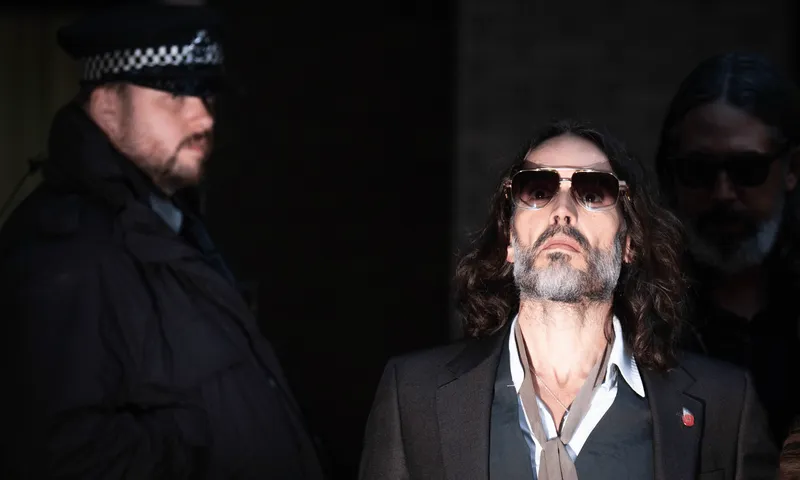
The UK is now reckoning with the rape convictions of Russell Brand and allegations that fellow comedian David Walliams groomed teenagers, which he denies.
This has sparked a discussion, reverberating around the world, as to whether further legislation is needed to protect teenagers. Some, including Mia Latter, who has accused Brand of raping her when she was 16, are pushing for a staggered age of consent. This would see young people able to consent to sex with one another but would prevent much older adults having sex with teenagers. Canada has a version of this already.
But we were in New Zealand where there are no abuse of position of trust offences and no staggered age of consent. We were in courtroom 14 of Auckland District Court and it was legal for the music teacher to have had consensual sex with Eva. So, the secrecy, anguish and confusion of the teenage years Eva spent in a sexual relationship with her middle-aged teacher had to be stripped from her story and left in a corner, as the jury was directed to focus on a handful of acts that Eva said were non-consensual. For those he could be tried.
Giving evidence, Eva said “I’ve spent decades trying to forget” and “I knew I was out of my depth massively” and “I was constantly trying to leave him” and “I was so confused”. She cried and slipped her fingers beneath her glasses to swipe at the tears. She took breaks to put herself back together so she could face more questions.
Bloem cross-examined Eva, sending her back to her sixth form self to look for answers. She asked Eva if she lacked self control, if she was the one pushing the boundaries with her teacher, if she flirted with him, if she willingly went to his bedroom. Why, she asked, did you keep going to see him outside of lesson times?

We can’t say who the teacher is right now. His victims want him named, the Crown wants him named and The Spinoff has had a lawyer in court arguing against name suppression. Judge Kathryn Maxwell has refused him further name suppression, but Bloem signalled her client would appeal that decision and has secured him interim suppression. For now, we’ll call him Thompson.
We can tell you that the trial wasn’t only about what he did to Eva. Thompson’s teaching career – he worked at multiple Auckland schools and gave private lessons – spanned decades and so did his crimes. He faced three charges in relation to Eva (one of rape and two of sexual violation by unlawful sexual connection) – and a further 11 in relation to two other teenagers, who we’ll call Tess and Mel (there names are supressed).
Tess told the court she spent a day doing work experience with him at the school where he was on staff in the 1980s. She was 14. At lunchtime, Thompson took Tess to his family home. He kissed her in his kitchen. She remembered holding onto the stainless steel benchtop, before he took her hand and led her to his room, where the bedding reminded her of her nana’s. She remembered the shock of touching a penis for the first time, the discomfort as he touched her, the confusion. She remembered trying to come up with a way to escape, then thinking he would surely stop soon – he had to get back to school before the bell rang.
When a young detective constable, Matt Skinner, investigating his first big case, had arrested him early one morning, Thompson had told him that he may have kissed Tess and he couldn’t remember if they felt each other up. Now in court giving evidence in relation to four charges of indecency on a girl and one of sexual violation relating to Tess, he said he had told Skinner that because he was “hedging my bets”. He had since had time to think back and could now remember for sure that he did not kiss her and he did not assault her.
Thompson seemed almost incapable of mentioning the house where he assaulted Tess without describing it as a “Californian-style bungalow”, and giving other details of the place that would have seemed more at home in a property listing than they did the trial. As he told it, Tess had overheard him telling people about the Californian-style bungalow (“three split levels”, “shagpile carpet”) and was so intrigued by his description that she asked him to take her there. Then, she insisted he show her the master bedroom so she could see its psychedelic wallpaper. She sat on his marital bed, at which point he took the opportunity to point out the wardrobe’s features: “Quite large built-in wardrobe with three doors and three lots of door tracks so you could move them all independently.” After that, she threw herself at him, he claimed. Kissing her was “not unpleasant”, he said, but he quickly came to his senses, and pushed her away, pushing her so firmly, in fact, that she would have fallen from the bed, had he not saved her.
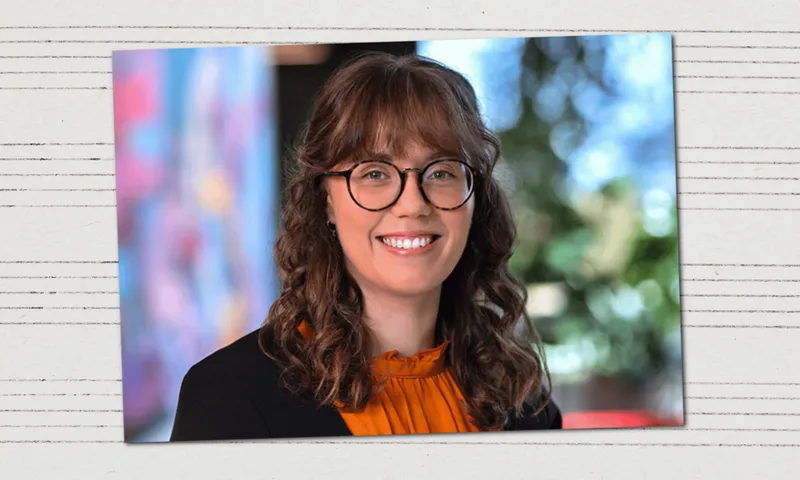
The crown prosecutor, Kasey Nihill, swallowed down his property descriptions and different accounts of the assault and spat them back at him during a staccato cross-examination: “She did not want to see your Californian bungalow-style house, did she, Mr Thompson?”; “Is this another occasion where your memory has gotten better over time?”
Skinner would later tell The Spinoff he found much of Thompson’s evidence “absurd”. Knowing what the victims had been through, he said he found it “unpleasant to listen to". "He had an explanation for every single incident that absolved him of all liability."
Then there was Mel. Thompson met her when she was 14. He left notes in her instrument case, took her out for coffee and bought her jewellery. He began a sexual relationship with her – he admitted that – but was adamant that it was all consensual and that nothing had happened until she was 16.
For her, the relationship was like a note played fermata, ringing on, spreading to every aspect of her young life. “You can never be normal, because you can't hide these things, there were rumours, the other kids knew these things,” she said. “I would walk down the corridor and kids would look at me funny, I felt really alone, no one understood me… I was cut off, I was weird girl, I was enemy girl. That was the worst thing about high school. What happened left me with no friends and a really terrible sense of worth.”
At times, the evidence was essentially a scrap over dates: did that happen before Mel’s 16th birthday or after? At others, the recollections around the four charges of indecency on a girl and one of rape, thew up visceral, harrowing scenes. Mel gave evidence that the relationship became physical when she was 15, yet said he was vocal about how much restraint he was showing, telling her, “I’m not going to have sex with you until you are 16.” She relived the appalling day when she lay on a picnic blanket, trying to push him off her, telling him to stop, and then when he wouldn’t, going limp and disassociating.
Thompson claimed he didn’t hear Mel telling him to stop, though he admitted she had talked to him after it ended. “She said ‘I asked you to stop’ and I said ‘I didn’t hear you’ and she said ‘OK’ and we walked to the car perfectly happy.” Nihill pounced: “She’s accusing you of non-consensual sex and you say she was perfectly happy?”
Thompson could come across as testy under cross-examination. At times, he swapped his long, rambling answers for an elongated “yeeeess” or “nooooo”, blasting them across the courtroom like a fog horn. At one point, he told Nihill a smile might be nice.

The trial dragged on for two weeks. After Eva had given evidence, she waited around in a hotel room in central Auckland, on notice that she could be recalled to give further evidence. She badly wanted to go home to the UK, where she now lives. It was night there when it was day here, and the legal situations between the two countries were just as far apart.
Her friends, accustomed to UK laws, didn’t even understand what she was doing back in New Zealand. “He’s admitted that he had a consensual relationship with me, which over there would have seen him guilty, so my friends don’t even understand why I have to go to court. They’re like, why do you have to give evidence? What he’s done is illegal!”
Perhaps it’s understandable that they couldn’t grasp New Zealand’s law. Kathryn McPhillips, the executive director of sexual abuse prevention and support organisation Help, says that New Zealand consent law has fallen “massively” behind other countries. “Back in the 80s, we were ahead in terms of making it a criminal offence to rape your wife, but since then we’ve just continued to fall behind.”
Canada first introduced abuse by adults in positions of trust law in the 1980s, the UK did so in the early 2000s, while the Australian states have varied in pace.
McPhillips believes if New Zealand introduced abuse of position of trust offences, there would be many complexities to tackle, but she says it needs to happen. “There is so much harm that's caused by people like teachers, people like sports coaches, people like doctors, so people that young people really trust and look up to and there’s misuse of that power.”
In March, the NZ Herald examined 20 years of Teachers’ Disciplinary Tribunal decisions and found that 125 teachers had appeared before the tribunal for inappropriate relationships with students.
“First employers is another situation that we see,” says McPhillips.
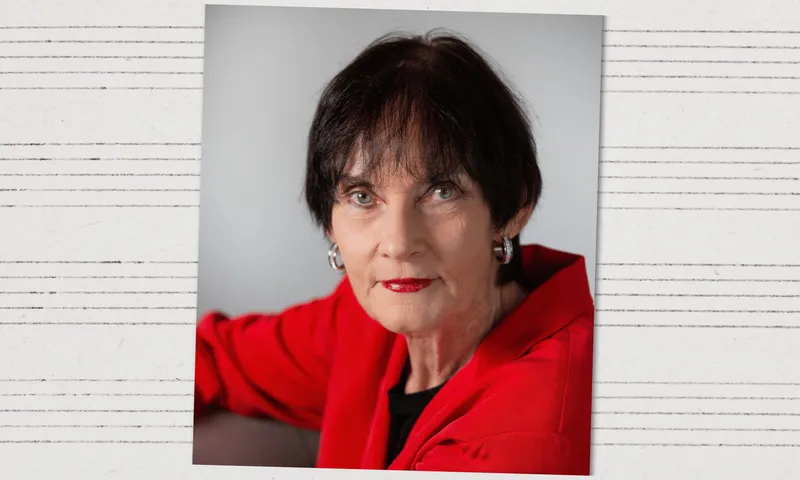
“No,” is Marie Dyhrberg KC’s response when asked if New Zealand needs abuse of position in trust offences. A criminal defence lawyer and co-chair of the Defence Lawyers Association, she says it’s worth thinking about who you could end up criminalising. “You've got to be really careful, I think, about putting something like that in place.” What if you have a youth group leader and the age gap is two years, she asks. What if a 20-year-old is coaching a sports team? Then there’s the risk of deciding all 16- and 17-year-olds have the same level of maturity. “Look at me. I left home at 16… I had a job, played sport, was quite independent.”
She points to sections of the Crimes Act (131 and 131A) that criminalise sexual conduct with a dependent family member under the age of 18. It covers parents, step-parents, foster parents, guardians and aunts and uncles among others. When it comes to teachers, doctors and lawyers, there are disciplinary bodies that deal with inappropriate relationships, Dyhrberg says, and psychologists, counsellors and social workers are also prohibited from having sexual relationships with clients because of the inherent power imbalance.
"Where sexual offending is at issue, whether in the Crimes Act or the disciplinary procedures, the whole conduct is the evidence to determine whether breaches have occurred, and it would be totally unwieldy to try to identify each and every potential act or conduct that would constitute such a breach," she says.

In courtroom 14, Bloem seemed to know there was no getting around how distasteful Thompson’s relationships were with Eva and Mel, even if they were consensual. She tackled it head on. “Yes,” she told the jury, “there was a significant age gap. The relationships were completely inappropriate, it was wrong, it was unacceptable. There’s absolutely no doubt about that. The issues in this trial are not whether the relationships were inappropriate, or whether better decisions could have been made, but whether Mr Thompson’s actions were criminal."
He had already paid the price for the relationship with Eva, she said, because as an adult, Eva made a complaint to the Teaching Council, and after an investigation was launched, Thompson surrendered his teaching registration. He was later found guilty of misconduct.
Bloem said that her client was remorseful, that looking back he now understood that the relationships with Eva and Mel, while consensual, were inappropriate. She did a good job of expressing his remorse – better than he did. Once when he was asked directly by Bloem if he was remorseful, he said he was. Otherwise, if he was upset by the damage he’d caused, he didn't show it.
During Eva’s evidence, he sat calmly, his wedding ring occasionally catching the light. Sometimes he’d offer the security guard a glass of water, other times he would twiddle with his pen. He was quick with a smile but showed no emotion when Eva cried. But then, when she mentioned that he had used an electric wok to cook, he sprang to life, shook his head furiously, scrawled out a message on a post-it note and passed it to his lawyer.
The wok – and a beef stir-fry – cropped up a few times during the trial and each mention prompted a new bout of head shaking from Thompson. When it was his turn to give evidence, he took his chance to deny that he had ever cooked Eva a beef stir-fry. “It was beef strips,” he said. Then he brought out the fog horn: “and salaaaad”.
Thompson said he was surprised to hear, when he was arrested, that his relationship with Mel had been damaging for her. “I was really upset how she felt I had affected her life at that time.” When asked if he understood in retrospect there was a power imbalance, he said he did, and then went on to say he’d done his best to make her feel empowered. “I was trying to make sure that she did not feel forced into anything, that she made her own choices and maybe only in little ways, like for instance on a Saturday morning, I’d say to her why don’t you go and get some breakfast, here’s some money.”
Mel’s recollection of those Saturday mornings didn't so much speak of an empowered partner but a school kid amazed to receive $20 cash she could spend on anything. She said she would walk to New World, buy a big tub of Movenpick chocolate ice cream and a pavlova and eat them for breakfast.
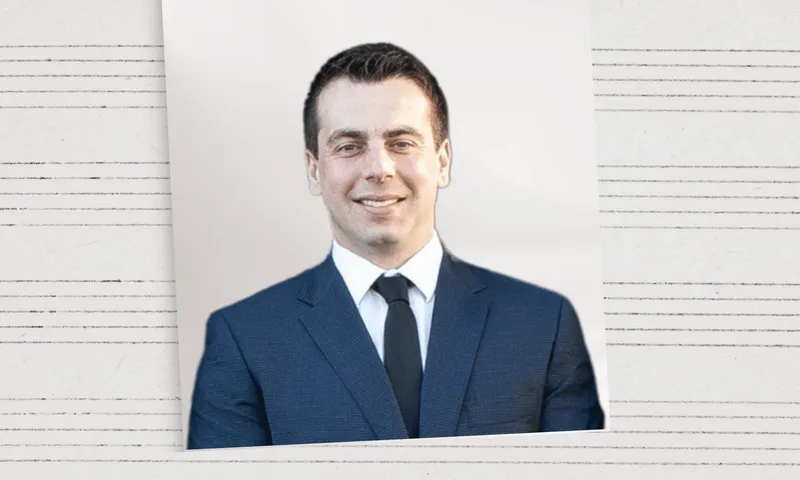
At the beginning of November, on a Tuesday, the jury went out at 11.24am. They were back by the end of the same day.
The foreman read the majority verdicts: Thompson was guilty of one count of rape, two counts of sexual violation by unlawful connection and nine counts of indecency on a girl. (That was all of the charges related to Tess and Mel, and one related to Eva.) They did not find him guilty beyond all reasonable doubt on one charge of rape and one of sexual violation by unlawful sexual connection, both related to Eva.
One of his victims was in court. Her face was flushed red and her cheeks were wet with tears. Her breathing was so ragged that it was audible. Detective constable Skinner sat on one side of her and her mother on the other, reaching across to gently stroke her grown-up daughter’s forearm, reaching through time, it seemed, to soothe her teenage child.
In the dock, Thompson was still. His face showed no emotion.
Eva had arrived back in the UK. It was about 4am when the verdict came through. She didn’t go back to sleep.
Over the following days, the Russell Brand trial played out around her. The headlines were everywhere and people kept trying to discuss it with her. Then the David Walliams allegations broke and the calls to change the law in the UK to better protect teenagers began. The external world felt loud with sexual assault and the issues of age gaps and power imbalances.

Her mind felt no different. She started asking herself, when will this be over? She had thought when Thompson’s trial finished, she could move on. Now, he was in a cell in Mt Eden prison, awaiting sentencing, but it still didn’t feel finished.
She wrestled with the fact that Thompson had been found guilty of one charge of sexual violation in relation to her, but not guilty on another of sexual violation and one of rape. But what she struggled with most was that he had been tried for non-consensual incidents but he would never pay for starting a relationship with her when she was a teenager and his student. It didn’t feel like justice.
“It pisses me off!” she said over a video call, one New Zealand morning recently. It was late at night in the UK and she was in her dressing gown. She didn’t buy that surrendering his teaching registration was the appropriate punishment for the relationship. “He fucking resigned [his registration] when he found out they were investigating him, which pisses me off, because how many times do we let people resign when they get caught?” It doesn’t help that Thompson was in his late 60s by the time he surrendered his registration. He got to have a long career.
She said it felt like Thompson got away with the consensual part of the relationship, but Eva didn’t. It followed her through life, landed her on medication and in therapy, chased her into the witness box. The cross-examination was so much worse than she expected, she said – and she expected it to be bad. The focus on proving the sexual relationship was consensual was discombobulating.
“If we’re talking about the law, yes, some of it was consensual, but if we’re talking about what should be law, or what is law in other countries, or what we all understand about power imbalances, it’s like how could a child, how could a student, consent? It’s a very strange one, because according to the law, yes, that was consensual, but it didn’t feel consensual, it never felt consensual, I don’t believe I was in a position to give consent.”
She wants to see New Zealand’s law changed, to see abuse of power by adults in a position of trust become a crime.
The Spinoff asked all the political parties elected to parliament if they would support such a change to the law. National said it hadn’t considered it, but supported a move to affirmative consent law (where an active "yes" is needed rather than the absence of a "no"). Labour also said it wanted an affirmative consent law and was open to seeking advice on abuse of positions of trust. Act and the Greens both said they were open to looking at consent laws, but that changes would need to be carefully considered. NZ First, Opportunity and Te Pāti Māori did not respond.
Eva, pulling her dressing gown tighter around her, said she planned to apply to have her own name suppression lifted so she could campaign. “There’s such a gaping hole, where there’s no protection. It’s appalling that it hasn’t been done. This has been in place for decades in other countries.”
Thompson, she said, used to repeat to her that she was 16 so he was doing nothing wrong. It made her feel like she couldn’t ask for help, because what could anyone do?
The sun was rising higher in the New Zealand sky. In the UK it was getting late. She was waiting to hear the latest on Thompson’s efforts to keep his name suppressed. She might hear during the night, she said. That would be fine. She doesn’t sleep much.
Helplines
Safe To Talk – 0800 044 334 or text 4334. Sexual harm helpline. 24/7.
National Rape & Sexual Abuse Crisis Line – 0800 883 300. Support after rape or sexual assault. 24/7.
24/7 Helpline – 0800 623 1700 or txt 8236. Support for sexual abuse survivors. 24/7.

Veronica Schmidt
Veronica Schmidt is the editor of The Spinoff. She has worked in newsrooms in New Zealand and the UK for more than 20 years, yet still gets excited to hit publish.


