New Zealand's unmanaged retreat from climate change has begun

A damaged house following Cyclone Gabrielle in Auckland in February 2023. (Photo: Brendon O'Hagan/Bloomberg via Getty Images)
With a small change to its home loan policy, Westpac has for ever altered how climate change will affect some of our most at-risk communities.
Wellington’s Kāpiti Coast is a long, dramatic landscape of low-lying beaches; the kind where you launch a boat by dragging it by tractor far beyond the water’s edge. In the mornings, the sun shines an orange glow against the shallow waves lapping at the shore, while locals take long, meandering walks along the beach and throw driftwood for happily bounding dogs. The area is dotted with retirement villages and holiday homes for the capital’s professional classes.
One winter morning in 2012, about 1,800 homeowners near the coast opened their letterbox to find a letter from the Kāpiti Coast District Council and a colour-coded map informing them that their home was at risk of being washed into the sea within their lifetime. With many beachside properties sitting only a couple of metres above sea level, any increase in water level or any particularly large storm surge could put lives and livelihoods at risk.
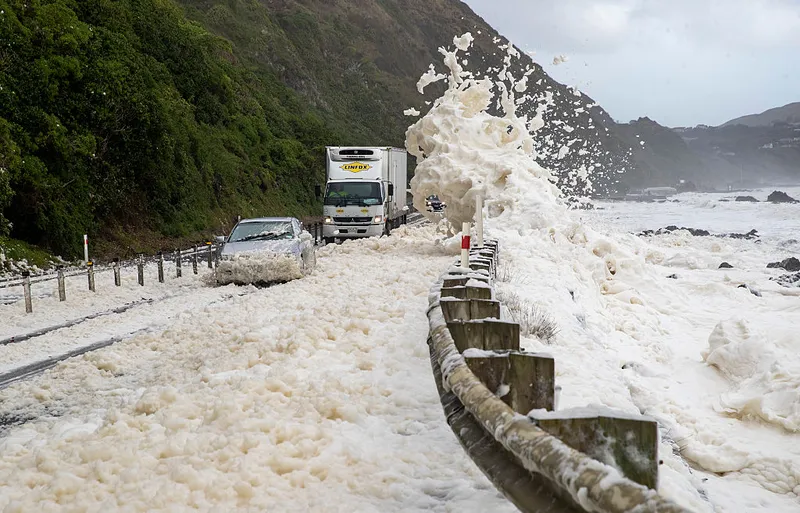
In isolation, you might think the Kāpiti Coast locals would be grateful for the warning from their local authority. Instead, it turned into 14 years of intense, bitter and often deeply personal arguments involving accusations of misinformation, climate denialism, bullying and three different court cases challenging the council’s science.
Residents were concerned that if the council’s climate modelling was included on the district plan and their land information memorandum reports, it would make it harder to get insurance and hurt the value of their properties. Similar battles between councils and residents’ groups over climate risk modelling took place in Christchurch, Tauranga, Nelson, the West Coast, Northland and Auckland’s Omaha Beach.
That’s been the bizarre reality of New Zealand’s so-called managed retreat over the past decade: residents’ groups treating climate risk modelling as if it was a political decision and responding like the council had proposed to build a high-density housing development in their quiet seaside enclave. In many cases, including on the Kāpiti Coast, those groups succeeded in using the legal system and political pressure to have climate risks removed from their property information.
That all changed earlier this month when Westpac made a small but important change to its home loan policies. The bank confirmed that it would start taking natural hazard risk into account when making lending decisions and will give prospective homeowners access to the same information. The reports will be prepared by Hamilton-based climate advisory firm ClimSystems.
In announcing the policy, Westpac was eager to play down its impact. Head of consumer lending Jo McGregor told RNZ that only about 2% of home loans would be affected, and it wouldn’t lead to automatic rejections. "Maybe instead of lending a million against the property, we might say, we'll lend up to $800,000 against the property, or alternatively we might say we don't want to lend over 30 years, but we'll lend over 20 or 25 years,” she said on Morning Report.
In the scheme of things, Westpac’s decision is a small change. It’s significant as the moment where New Zealand banks crossed the climate rubicon. Banks had been playing a strange game of chicken where everyone knew this would have to happen eventually but no one wanted to be the first to jump, because denying a loan simply pushes customers to their competitors. Other banks, including ANZ, have already started incorporating hazard risk in some decisions but none as publicly and openly as Westpac. Now that Westpac has finally made the call, others will surely follow.
The same thing has happened in the insurance market, where companies have been warning for years that it will soon be too expensive to insure every risky property. Tower has started incorporating risk-based pricing for every address, and AA has stopped offering new insurance policies in certain areas of Canterbury, Marlborough and the West Coast.
This is exactly the outcome residents in many high-risk areas have feared for the last decade or two. When it is harder for buyers to get loans and insurance, it's virtually inevitable that property values will suffer as a result. The difference is that these decisions are being made by private companies, not local councils. Residents associations can’t seek judicial reviews against them, nor can community halls full of angry retirees shout down elected officials until they cower to their will.

In other words, we’ve reached a new era of New Zealand’s fight against climate change. The optimistic idea of a government that gently guides a managed retreat away from our shorelines is gone. Instead, the future will be an unmanaged retreat decided by private companies driven by profit motive over public consensus.
After the Christchurch earthquakes in 2010 and 2011, the Crown paid out affected homeowners in the red zone. After the Auckland floods in 2023, the Crown and Auckland Council went 50/50 and most homeowners received 95% of their property value. Climate change minister Simon Watts indicated last year that the government would shift its approach from direct payouts to hardship-based measures, and the Ministry for the Environment’s independent reference group recommended that property owners should take more responsibility for understanding and managing risk.
There was a moment, some time in the past few years, where New Zealand could have implemented a proper, nationwide plan for managed retreat. Climate change minister James Shaw proposed a National Adaptation Plan in 2023, but it got stuck in development and never reached any kind of cross-partisan consensus about how it would work or who should pay. And the communities that were most affected spent more time and effort arguing about whether the risk was real than what should be done about it. New Zealand failed to rise to the moment. Now, we’ll suffer the consequences.

Joel MacManus
Joel MacManus is a senior writer for The Spinoff. His journalism focuses on the political and economic systems that shape New Zealand. He won the 2025 Voyager Media Award for Best Columnist, Opinion or Critique.


