On Friday night, the Warriors performed a haka before kick-off for the first time, and went on to beat the Panthers 28-12. The man who composed Ngā Tamatoa explains how it came to life.
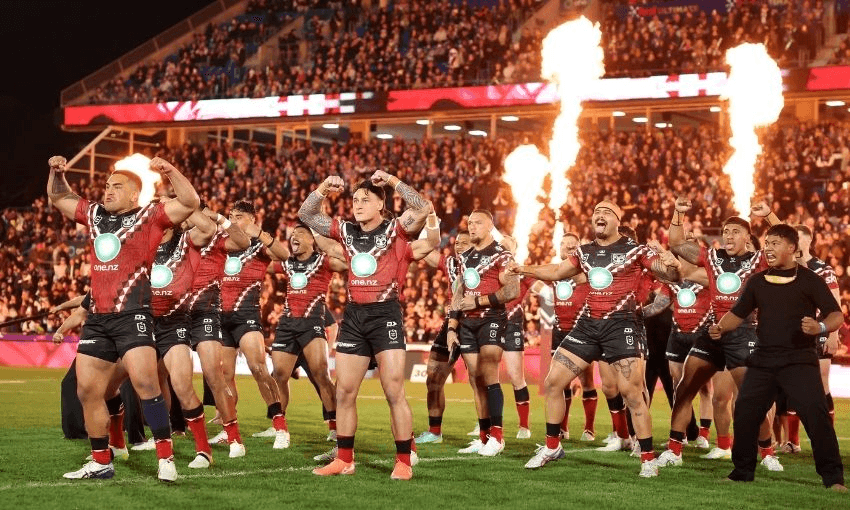
There I was, standing behind the small metal fence separating the thousands of fans in the eastern stand from the playing pitch at Te Ipu Kura o Maki, also known as Rarotonga, Mt Smart Stadium or Go Media Stadium. In front of me, the top-of-the-table Penrith Panthers stood in a line with their arms around each other’s shoulders, forming a wall of pink. In front of them, the New Zealand Warriors stood in a triangle, flanked on all sides by kaihaka from Ngāti Whātua.
“Tūturu kia whakamaua kia tina,” shouted Warriors co-captain James Fisher-Harris as Ngāti Whātua’s Waimarama Hawke finished a spine-tingling karanga. “Tina,” the team responded in unison as they raised two closed fists above their heads.
Flames shot out around the stadium and the crowd fell silent as the Pacific and Māori players in the Warriors began Ngā Tamatoa, a haka composed specifically for them, alongside a small group of kaihaka from Ngāti Whātua, while the other players in the team stood behind them shoulder-to-shoulder. As the haka finished, the horn-like sound of the pūkāea rang out around the ancient pā of Rarotonga. The 26,000-strong crowd erupted into cheers. There was a feeling that we had just witnessed history – the Warriors’ first-ever haka. I felt privileged to be there.
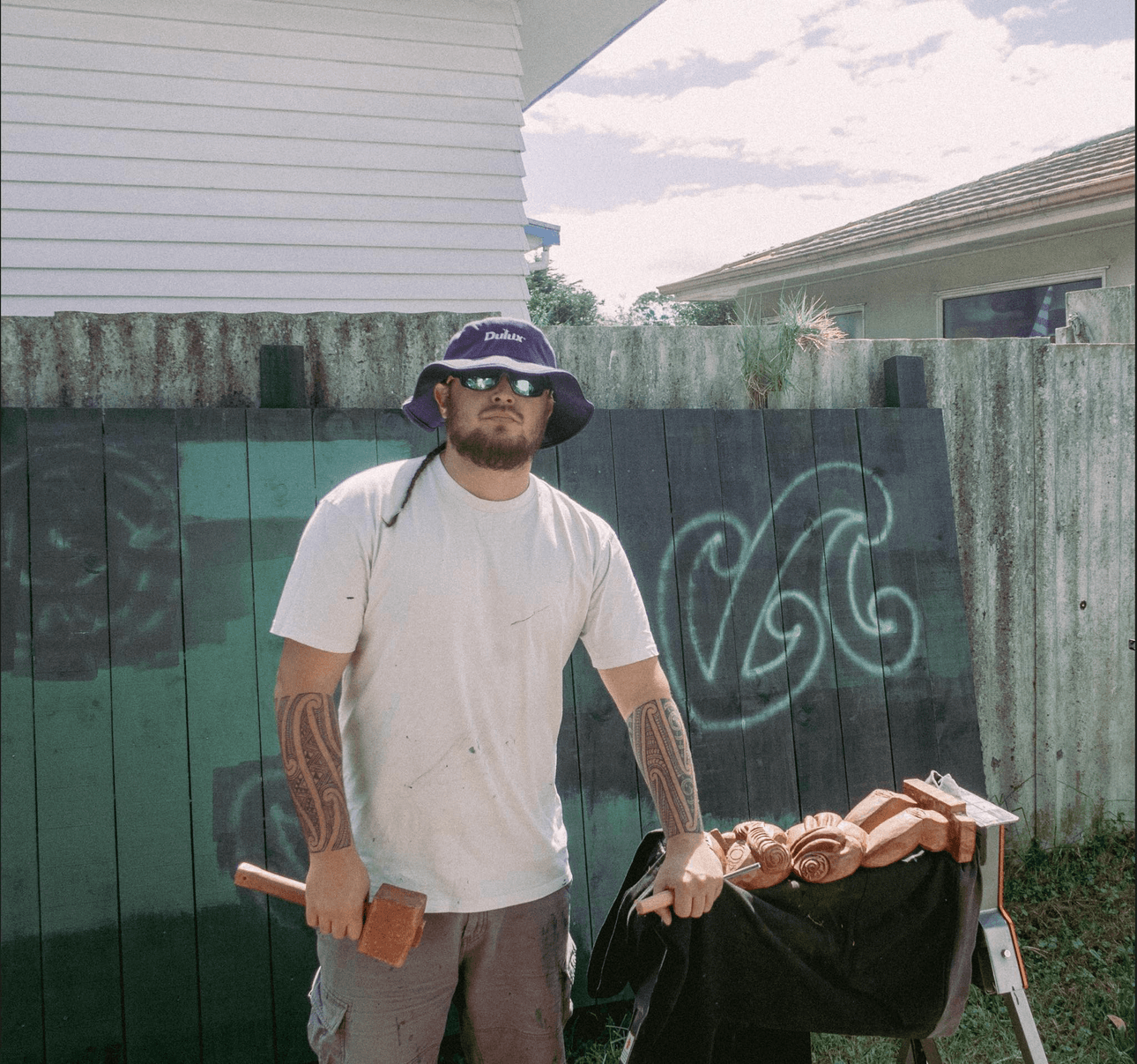
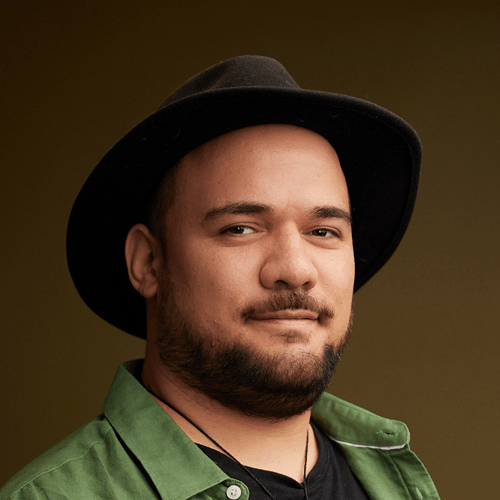
Joe Pihema, who composed the haka, says he first became involved with the Warriors in 1994 – the year before the club’s inaugural season in what was then called the Winfield Cup. He was part of a group from Ngāti Whātua who helped to provide some visuals and sound effects for the team’s first ever promotion campaign and the documentary Once We’re Warriors.
Over three decades later, in March this year, Ngarimu Blair, deputy chair of Ngāti Whātua o Ōrākei, approached him about composing a haka for the team.

Having composed more than 30 waiata and haka during his decades of experience in Māori performing arts – including his leadership role with Ngāti Whātua kapa haka group Te Uri o Manumanu and as a performer for the renowned kapa haka Waihīrere – Pihema says the composition of Ngā Tamatoa was a relatively quick exercise.
“I was always aiming to create a haka that was around 40 seconds long, not too long, and was simple enough,” says Pihema. The end result was Ngā Tamatoa, a haka that speaks of the strength, resilience and flexibility required to be a successful rugby league team. Ngāti Whātua tribal members watching on Friday night would have noticed some tribal references. The words “hōmai rā” begin the haka, a nod from Pihema to a composition by his brother-in-law Pura Tangira. There were also a few lines from the famous Kaipara haka Te Puru Tokatoka that Pihema borrowed for the haka.
“One of the most important parts of the haka are the lines ‘he riri, he riri, he toa, he toa’,” Pihema says, which refers to the challenges the players go through as individuals and as a team. “From each and every battle, a warrior will arise and their inner strength will be revealed. In every game, they have to put themselves on the line and test whether they have that inner resilience to come out the other side with a new strength revealed.”
Another line in the haka from Te Puru Tokatoka is “kia ueue, kia tū tangatanga”. The essence of this, says Pihema, is: “We remain firm. Don’t let the line be broken. But when you’re on attack, be flexible like water – be flexible and unpredictable. In times of defence and resolve, remain firm, but when you’re throwing the ball around, be adaptable.”
Once he had the actions solidified, Pihema and a small group of kaihaka presented the haka to the club at the beginning of the season. From there, Pihema says the Warriors were eager to learn the haka, particularly co-captain Fisher-Harris, who has tribal roots in the far north.
“One day we’re going to look back and say: ‘Far, we were the ones that created history’,” Fisher-Harris said in an interview after the game.
With the team following a strict training regime, Pihema says there was limited opportunity to teach the haka around players’ other commitments. However, he credits Fisher-Harris and other senior leaders in the team for their dedication to learning the haka before the NRL’s indigenous round, which celebrates the competition’s indigenous Australian and New Zealand players.
“I’m not sure when they targeted the indigenous round [to debut the haka], but it was only made known to me about a month ago,” Pihema says.

While it’s unclear how the club intends to use the haka moving forward, Pihema hopes they reserve it for special occasions in order to help preserve its “unique special quality”. However, he says he would be happy for fans and others to learn and use the haka, provided they have an understanding of its underlying principles.
“I think that this haka has the potential to be a strong cultural asset within the Warriors club and fan base,” says Pihema.
Regardless of what comes next Pihema is just relieved the team got the win on Friday night to back up their statement at the start of the game.