Lost in the New Zealand bush: John Summers’ Green Sea, reviewed

John Summers’ new book is a fascinating exploration of getting lost in the bush. (Composite image: Tina Tiller)
Made possible by


What happens when something that is supposed to be so good for us goes wrong?
“When I imagine being lost, I imagine that fading light from my own walks into the bush, the damp chill of the trees and mud as the day begins drawing to a close. And I imagine that, unlike my trips, there would be no end in sight, no hut or campsite, no car park, only the impassive face of the bush, a blank face, lacking landmarks or path or anything to point the way.”
This is John Summers opening the second chapter of his spooky, compelling, strangely gentle book exploring what it’s like, and what it means, to be lost in the New Zealand bush. I knew I’d read Green Sea as soon as it landed in my letterbox. Years ago Summers told me he was writing about one of his great fears. And as Summers is one of Aotearoa’s most interesting essayists, I knew the result would take the mundane and unsettle it and rearrange it in layers that could feed a reader for years, because this is what Summers does: he has a magician’s way of looking and looking at the familiar until it’s transformed. Much like the sun peering over a ridge, scattering the shadows of the night.
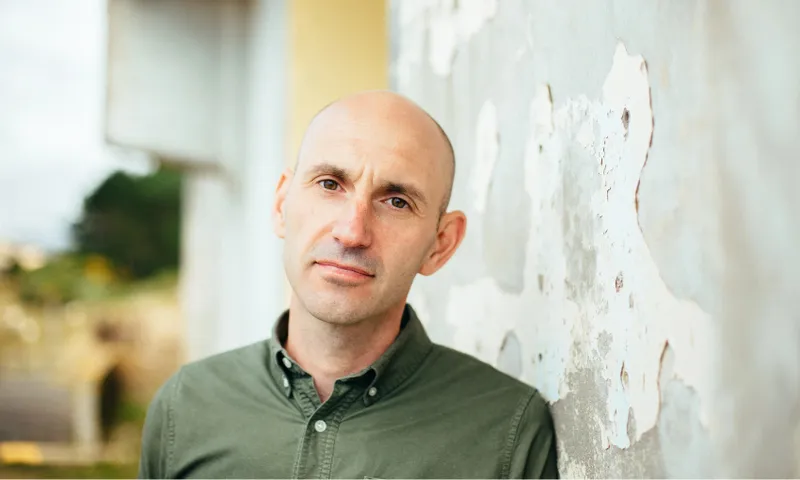
Green Sea opens with a missing man called Alan Hill and the person who spent hours, days, weeks trying to find him, Wayne Keen (yes, one of those names that might prompt a nominative determination conversation). What becomes clear is that Summers is just as interested in the psychology of the searcher as he is in the details of the disappearance, the search and the eventual discovery of Hill’s body on Christmas Day. “It has been the words ‘Christmas Day’ that drew me to Keen’s story and were the reason I had carried it in my head all those years until finally I found myself in that living room in Morven,” Summers writes. “A part of me had expected to find something troubling or strange, something that might explain Keen’s aloneness and obsession. But he was only ever friendly; charming even, with boyish hair and frequent grin.”
Even though the book shares real stories of real people getting lost, sometimes found and sometimes not, this is about a writer’s compulsion to follow their fears, and prod and worry them. “I went looking,” Summers explains, “I sought out the lost and found. I met them in their homes. I called them. I sat opposite them in more cafes than I can count. I applied no system other than chasing stories I read or heard about which seemed most striking and which spoke to my curiosity or offered some new element of lostness…” You would be forgiven for sensing some madness here; some odd fusion of panic and excitement. All of us have these nagging anxieties but not many of us try to hunt them down, ascertain their weight and shape, the quality of their gaze. Summers is a writer of persistent and patient inquiry: I used the word gentle before because it’s the best word I can think of for his specific tone – urgent, pressing but with the soft paws of doubt and uncertainty. The effect for the reader is like clinging to a rope and being gradually lowered down into a dark hole with a head torch strapped to your forehead.
Green Sea illuminates the unexpected at every turn: Epictetus (Keen is a fan); love lost and not to the bush; hallucinated snakes; Julian of Norwich; T.S. Eliot; the Bible; the terms “paradoxical undressing” (when, in the throes of hypothermia the person feels insufferably hot and so strips off), and “terminal burrowing” (the impulse to crawl into small spaces, or under bushes in the final stages of hypothermia, usually before death comes). These are the layers that make Green Sea a beguiling blend of reportage, cultural collage and an investigation into what extreme pressure does to the landscape of the mind.
A recurring idea in the book is the phenomenon of the “third man syndrome”. For those looking for something “strange”, as Summers was, this delivers it. After days of hunger and exhaustion some of the lost experience hallucinations: Aritra Basu saw boats, houses, heard music, small snakes, and, most unsettling of all, a man standing behind him so real that Basu spoke to him, told him he was lost. Another tramper, John Tame, hallucinated teenagers, an army, a carpark. Here’s where Summers explodes the experiences out across time and place: calling up Shackleton’s gruelling trek across freezing terrain to escape from Antarctica and make it to South Georgia Island. Along the way Shackleton and some of his men experienced “the curious feeling that on the march there was another person with us” (that’s Frank Worsley, one of the Shackleton’s men). There are more stories, too, the cumulative effect both wondrous and terrifying.
Beyond what happens to bodies and minds, Summers confronts the very material nature of the bush itself. Its capacity to conceal, once pointed out, makes you wonder at how willingly so many of us wade into it. The most troubling story for me was that of Teoline Jacobsen who went searching for her missing cattle in the bush beside her property. She was found dead days later only 80 metres from the edge of the bush. She left behind four children and a husband who later also walked into the bush and never came out again. It simply swallowed them. Met with such an appetite, what kind of person do you have to be to first, go in there; and second, survive it if the worst happened?
I did not expect William Ball Sutch (Bill, as he was known) to show up in Green Sea but there he is in the chapter called “When is a tramper lost?” alongside three friends who all wandered the Tararua Ranges for weeks in 1933. When the four friends emerged from the bush, and after they’d eaten and drank, a press conference was held. Sutch declared they had not been lost and therefore had not been found. There was outrage in response: hundreds of people had been out searching; the group were accused of making errors of judgement and of disrespecting the community of trampers. “‘The question was not whether we were lost, but whether we needed help,’ [Sutch] wrote in a statement to the press.”
Why so unwilling to be lost, wonders Summers. Among the explorations of this question is the fact that Sutch was widely considered a person with an “extraordinary sense of self-belief” … a certainty that could blur into arrogance.” This coloured by the detail: “He wrote books on the big issues of the day and held forth on everything else, lecturing his dinner guests on wine despite never touching a drop … Not only did he go tramping into the backcountry, he sometimes did so in the nude…”
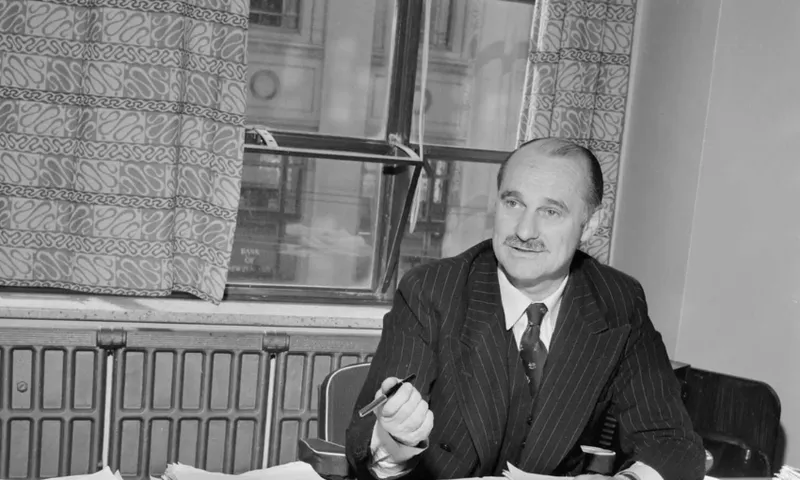
The story takes a turn away from Sutch and the questions of “lost” vs “waylaid” (after of course the lingering accusation that he was a KGB agent) and towards the one woman in the party: Morva Williams. “The bush once again became an ink-blot test onto which New Zealanders projected their own preoccupations, and into these Morva Williams had gone missing.” As the only woman in the party the press of the 1930s had a field day “conjuring the shocking possibility of sex”. Summers, via historian Chris Maclean, discovered how the experience trailed Williams both physically and mentally: her back never recovered and her reputation was tainted by the prurient nature of the narratives surrounding the story.
At 193 pages Green Sea isn’t a large book but is majestic, and not just the writing. Te Herenga Waka University Press have chosen to wrap Summers’ words in a hardback with a dust cover and embossed lettering; such lush treatment now relatively rare in Aotearoa publishing. Peel back the dust cover and the Green Sea is in fact a square of alarming, way-finding orange. It’s a fun piece of production but that colour will crop up again and again throughout the book as paths evaporate and you’d give anything for the lost to see those “bright orange triangles” again.
I am not much of a tramper. I’m too anxious. I am scared of slipping over a rocky edge (falls occur frequently in Green Sea) and of having my family separated by untimely death. Yet I love trees. I love solitude. I crave the cleansing effects of the deep bush. This conundrum is precisely what Summers writes into and it is, like all literary medicines, both soothing and stirring. There are troubles in these pages I hadn’t met before; mysteries. It’s a beautiful worry of a book, intricately woven by careful, clever hands.
Green Sea: Lost in the New Zealand Bush by John Summers ($40, Te Herenga Waka University Press) is available to purchase from Unity Books. Summers is appearing at WORD Christchurch on Saturday September 5, giving a masterclass in writing non-fiction.
The Spinoff Books section is proudly brought to you by Unity Books and Creative New Zealand. Visit Unity Books online today.

Claire Mabey
Claire Mabey is a children's author of The Raven's Eye Runaways, The Raven's Eye Rebellion, and a picture book Cass and the Beast illustrated by Jill Calder. For a long time Claire worked on literary festivals and is the founder of Verb Wellington. She lives in Te Whanganui-a-Tara with her partner and son.


