Seven burning questions about the election and negotiations, answered

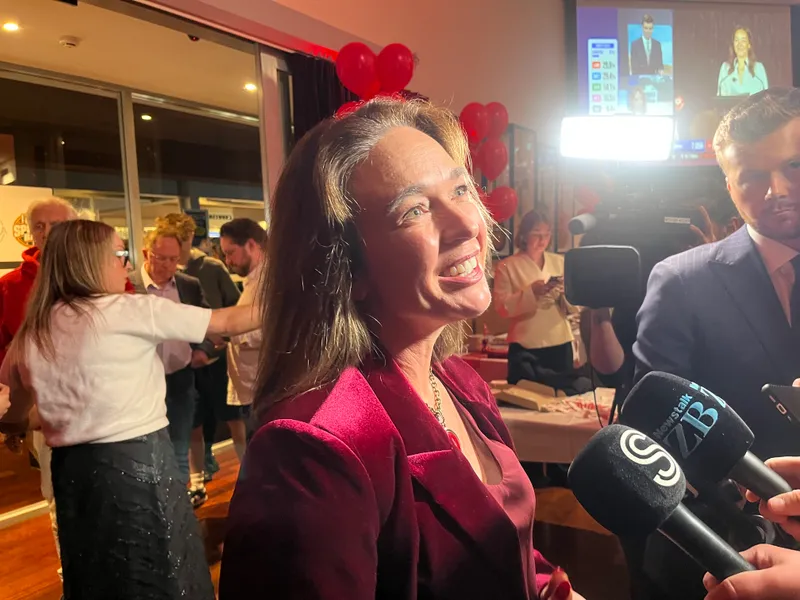
Nicola Willis, Qiulae Wong and Chris Hipkins.
Don’t roll the credits just yet: we still need to see the full parliamentary picture.
And the winner is… nobody? Our most baffling MMP election yet has left us all in a rather awkward position as we contend with a bloodbath of blue bloods, knife-edge preliminary party vote results, razor-thin margins in electorates and other appropriately violent political metaphors. A thousand curses upon those who have spent the last few weeks swearing that the circus is nearly over when it’s really only just begun.
Naturally, we’ve all got questions. And since we’ve had to sharpen up our parliamentary arithmetic this election cycle, The Spinoff is here to make some sense of the absurdity.
Which electorates are hanging by a thread?
There are six key seats you should be keeping your eyes on when the special votes come in. National’s Hamilton East incumbent Ryan Hamilton has a 456-vote lead on Labour’s Georgie Dansey. In Mt Roskill, Michael Wood could unseat incumbent National MP Carlos Cheung with a current 262-vote lead. There are 140 votes separating Labour’s Craig Renney and incumbent Greens MP Julie Anne Genter in Wellington Bays, with Renney holding the lead. As the Greens historically have strong support in the special votes, they could still take this one back. In the Wairarapa seat, incumbent National MP Mike Butterick is only sitting 139 votes ahead of Labour’s Kieran McAnulty.
Then there’s Te Tai Tokerau. Te Pāti Māori candidate Aperahama Edwards leads with a 436-vote margin over Hūhana Lyndon of the Greens. This is another consequential race, and you could argue it’s actually in the left bloc’s best interest to make sure Te Pāti Māori retains that seat. If Lyndon – who already has a seat off the party list – takes the win, that’s one fewer overhang seat on the left and makes their path to power harder.
Also worth a mention is Hutt South, where incumbent National MP Chris Bishop is 889 votes behind Labour’s Ginny Andersen. That's a pretty big margin to overturn and it's a long shot that it will flip to Bishop, but stranger things have happened. Bishop is one of the National’s biggest brains and if he loses the seat, he’s out of parliament and leaves a big gap in terms of caucus talent, so there's a lot riding on this one.
How big is this overhang?
Super. The preliminary results leave us with 131 MPs, which is an extra 11 MPs on top of the 120 our parliament is supposed to house. Of the 131 seats, 67 belong to the right bloc (National, Act and NZ First), 57 are in the left bloc (Labour, Greens and Te Pāti Māori) and Opportunity’s seven seats make up the rest.
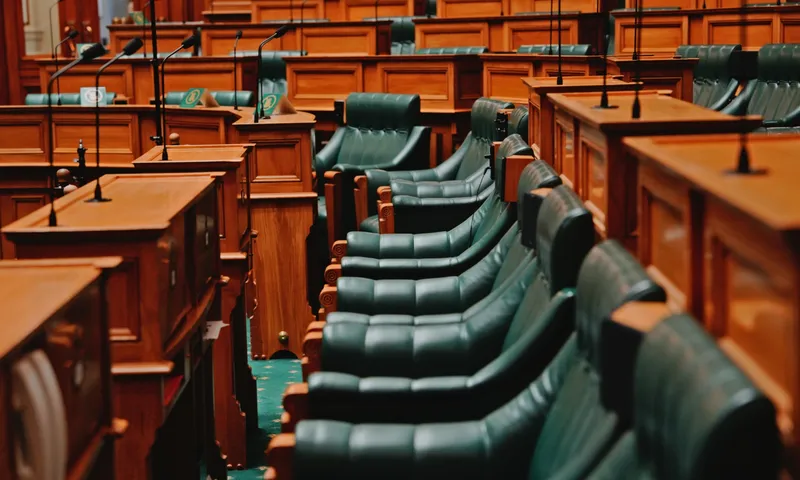
How does this happen? By a party winning more seats than its share of the party vote entitles it to – here, National has produced seven extra seats, and Te Pāti Māori four. If the likes of Hamilton East and/or Wairarapa flipped, it would shrink our oversized parliament down and still give the government coalition a majority.
So, even though the right has more seats, there’s still a chance for the left to form a government?
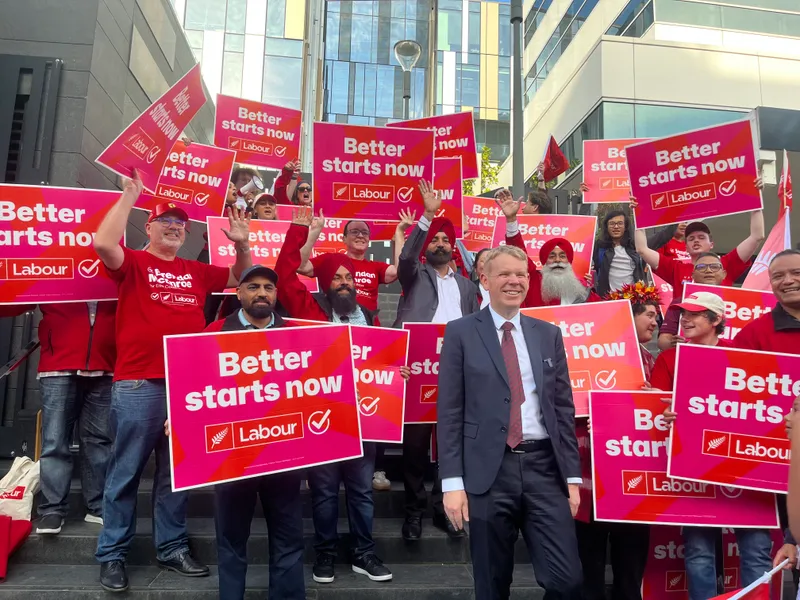
Kinda. Sorta. The reason you didn’t hear any concessions or victory speeches from the major party leaders on Saturday is because the results are really too tight to try to call anything concrete. There are nearly 400,00 special votes to be counted still, and because these votes historically favour the centre-left, a boost to Labour and the Greens at the expense of an Act or NZ First seat is still on the cards. That, plus a couple of flipped seats, could create a majority for the left if it partners with Opportunity.
There’s also the possibility of a 65/65 split, a hung parliament. With no side having enough seats to form a government, the right and left blocs (the left here including Opportunity) could try reaching across the aisle – which is why you’ve heard the likes of NZ First deputy leader Shane Jones having to, again, rule out working with Labour. In this scenario, Opportunity could side with the right bloc and give it a nice boost.
Will National really stick by its Opportunity rule-out?
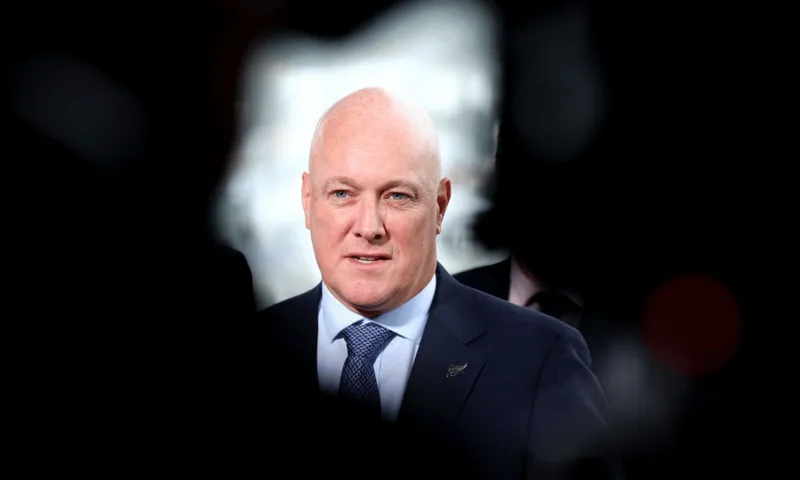
I really wish the party could be clearer, guys. Luxon has spent many months repeating his commitment to not work with Opportunity, but when push comes to shove, who’s to say the prime minister – or his caucus – wouldn’t do anything possible to remain in power?
One of Luxon’s senior ministers, Mark Mitchell, found a soft strategy to support backing out of that commitment in an interview with 1News on election night. “We’re in MMP, and we have to wait and see,” Mitchell said. “We’ve got no control over what voters do. They make their own decisions, they decide what the makeup of parliament is.”
This morning, Luxon said he was planning to call Opportunity leader Qiulae Wong "shortly" – which he clarified to mean within the next few days or the next week. "I intend to talk to [Wong], I intend to build a relationship with her and try and find common ground with her, too," he told RNZ's Morning Report.
Then there are National’s coalition partners. Act Party leader David Seymour has left the door of opportunity ever so slightly ajar. As has NZ First’s Jones, who told Q+A host Jack Tame on Sunday morning, “let’s just wait until what the specials reveal”.
What does Opportunity actually want?
Well, I think they got it. They’ve spent a near-decade trying to break into the halls of power and they’ve finally gone and bloody done it. They might be keeping their fingers crossed for a wee boost in the specials too, which could earn them another seat.
These political newbies will also be hopeful they could help form the next coalition. Wong told reporters on Saturday night that if she doesn’t hear from either Luxon or Hipkins by the end of the weekend, she’ll be the one picking up the phone. Her preference is to ring the party with the highest number of seats, which makes Luxon the first call – if he answers. Opportunity also has a curious constitutional technicality in that coalition negotiations need a 75% majority approval from the party’s board, or the agreement is vetoed.
What will a centre-right government look like without National’s high flyers?
A mighty diva has fallen in the great forest of parliament and her name is Nicola Willis, one-term minister of finance. She’ll continue her ministerial responsibilities while the coalition carries on in a caretaker role until the next government is formed.
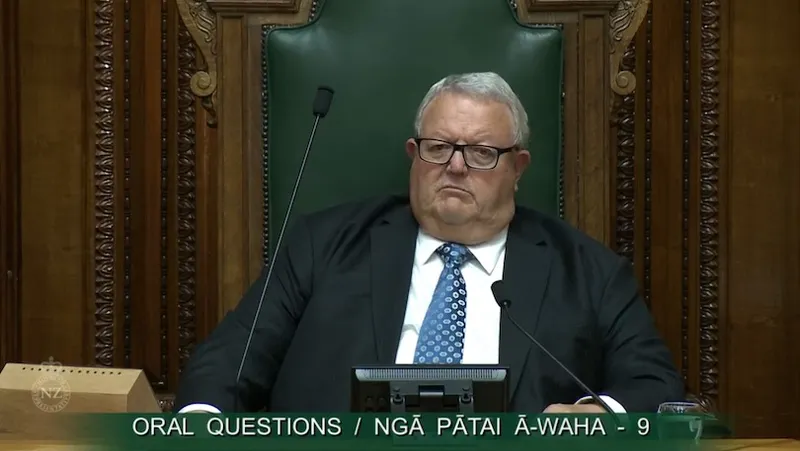
Walking out the door with her is mega minister Paul Goldsmith, Bishop (likely) and speaker of the House, Gerry Brownlee. It’s hard to say who the heir apparents for the 20 portfolios now up for grabs will be. Which is where Act – having hit a historic high of 10.9% – comes in with more bargaining power. Party leader and associate finance minister David Seymour has already suggested himself for the finance minister job, but Luxon has said putting forward a National MP is a “non-negotiable” for him in the next coalition. Could it be commerce and consumer affairs minister Cameron Brewer’s time to shine?
There are a few other meaty portfolios – justice, defence and attorney-general in particular – in the air. New Act MP Paul Henry seems the most likely new media and communications minister. Another new Act MP, James Christmas, was once touted as a possible future attorney-general when he was a National Party candidate in 2023. And while NZ First has the smallest share of the vote in this three-way coalition, it does have experienced MPs in caucus with Alfred Ngaro being a former minister.
They’ll also need to nominate a new speaker of the House. Once all our MPs are sworn in at the start of the next parliamentary term, their first job will be to elect a speaker. If the government coalition returns to power, it seems most likely that the current deputy speaker, National’s Barbara Kuriger, will take over the reins.
Dare I ask… coalition by Christmas?
Hahahaha. Oh man. Oh shit that’s a good one. Hahaha fuck. Well, let’s just say that the coalition negotiations last election took 41 days to complete after election day, and there’s only 47 days between November 7 and December 25. However, it seems highly unlikely anybody (except for maybe Qiulae Wong) will be trying to enter serious negotiations until the specials are counted on November 27. God help us all.

Lyric Waiwiri-Smith
Lyric is an award-nominated politics reporter at The Spinoff. She covers parliament from the press gallery, pens the weekly column One MP, One Pint and is endlessly curious about what makes our decision-makers tick. Off the clock, Lyric loves a live gig, a cold brew, and being a Wellingtonian (on a good day).
Sign up to Two Ticks, delivered straight to your inbox.


