'That's how you cheat death, Māui': Terri Te Tau's spacetime tips and tricks

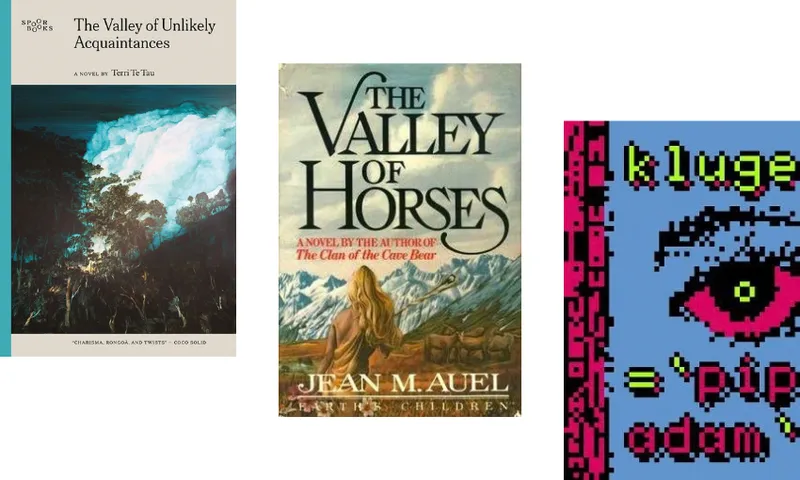
Terri Te Tau is author of the novel The Valley of Unlikely Acquaintances, published by Spoor Books (Image: The Spinoff)
Made possible by
Welcome to The Spinoff Books Confessional, in which we get to know the reading habits of Aotearoa writers, and guests. This week: author of The Valley of Unlikely Acquaintances, Terri Te Tau.
The book I wish I'd written
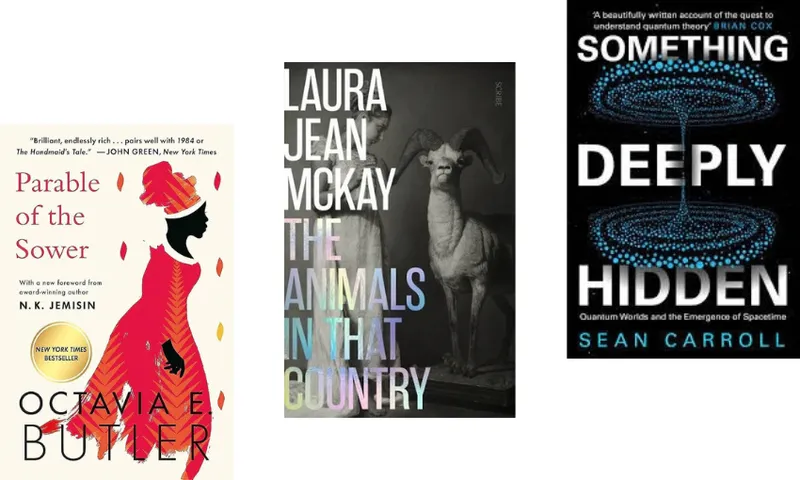
The Parable of the Sower by Octavia Butler. It’s a dystopian novel written in 1993 but is set between 2024–2027. The story is told through the journal entries of Lauren, who lives with a condition called hyper-empathy where she feels the physical pain and pleasure of the people around her. It has a debilitating effect on her, especially when people on a drug called Pyro destroy her community, and violence becomes an everyday occurrence. The story balances this brutally graphic world with complex characters and a poetic philosophy that pulls everyone together. I also love Octavia Butler’s Xenogenesis Trilogy, which is an epic story of evolution, human nature, racism, sovereignty, whānau, alien erotica, agency and consent.
The book everyone should read
The Animals in That Country by Laura Jean McKay because it's clever and hilarious and a good reminder that us humans aren’t the centre of everything. The story follows Jean, who is working at a wildlife centre when a pandemic that enables humans to understand animals spreads across Australia. Jean is on a mission to find her granddaughter and is accompanied by Sue the dingo as they navigate the chaos together. I miss Jean and Sue and wish I could have coffee and a ciggie on the front porch with them.
The book I want to be buried with
Something Deeply Hidden: Quantum Worlds and the Emergence of Spacetime by Sean Carroll. But just before I die, I’ll open the Universe Splitter – a quantum-induced universe bifurcation app that Sean Carroll mentions in the book. In one field I’ll type "die as usual" and in the other field I’ll write "continue living as usual." Then the app will choose which universe I continue in, and my other newly emerged self will continue in the other reality (that’s how you cheat death, Māui).
The first book I remember reading by myself
Here Comes Puffing Billy by Esta de Fossard. It’s a story about the restoration of a wee train that used to go past our house in Belgrave just outside of Melbourne. After a landslide the train was abandoned in a tunnel for years until the townspeople got together and lifted the stones by hand from the track, washed off his cobwebs and gave Puffing Billy a brand-new coat of red paint.
The book I pretend I've read
A Brief History of Time by Stephen Hawking. I read the first couple of chapters when my kids were babies so I could try again now that I’m not so sleep deprived. Also, Ancillary Justice by Ann Leckie. I have read some of it so can tell you that one of the characters (the main POV character?) is called Anaander Miana-ai, which is possibly the loveliest and most satisfying name to say out loud.
Utopia or dystopia
Dystopia. I just re-watched the entire Walking Dead series while finishing an art project that required hundreds of thousands of hours weaving into the night. And I don’t regret it, apart from seasons seven and eight, which are a bummer, but season nine sets things back on track. I like seeing how people pull their shit together and get super resourceful. Sometimes people love their friends so much they risk getting their faces eaten off by zombies and that’s beautiful.
Fiction or non-fiction
Fiction because that’s when we get to try out the non-fiction stuff in different situations and contexts to see how it might work.
It's a crime against language to...
…think that the version of the language we personally speak is better or more correct than someone else’s. Katherine D. Kinzler’s book, How you say it: Why you talk the way you do, and what that says about you, made me aware of how much racial prejudice is connected to language. She argues that linguistic discrimination needs to be talked about because it leads to the marginalisation of people based on how we speak, which gets filtered against cultural stereotypes and other racial bias.
The book that haunts me
The Wasp Factory by Iain Banks. I found it in the bookshelf and read it when I was 11 or 12. I was so disturbed by the psychological fuckery that the dad pulled on his kids, and how they went on to harm others because of the lies he told them. I was intrigued by the story and how it was written though; it would be interesting to read it again to see how my adult understanding of it aligns with what I remember.
The book that made me cry
The story ‘Stag Dance’ by Torrey Peters. It’s part of a short story collection by the same name. It follows a gang of lumberjacks illegally felling timber high in the mountains somewhere near Yellowstone. The foreman promises them a dance, and those who wish to are invited to wear a triangle piece of fabric over their crotch to signify that they will attend as women and can expect to be courted by the other woodsmen leading up to the dance. It’s told in the poetic lumberjack vernacular of Babe Bunyan, a very burly and highly skilled woodsman who would like nothing more than to don his very own triangular ‘skooch.’ This story is so brilliant in its tender and brutal moments that made me laugh as well as cry.
The book that made me laugh
I recently read kluge by pip adam and loved the voice of the AI narrator, whose perspective on the world is so perfectly placed for deadpan delivery. Also, Hera Lindsay Bird by Hera Lindsay Bird and other writing by this writer makes me laugh a lot.
If I could only read three books for the rest of my life they would be
- The Māori Dictionary (whichever one Tīmoti Kāretu thinks is the best)
- The Forager’s Treasury by Johanna Knox
- The Valley of Horses by Jean M. Auel (some reasons given below)
The book character I identify with most
I get really easily influenced by book characters. When I read Keri Hulme's The Bone People I started Aikido lessons to get tough like Kerewin. I also found The Clan of the Cave Bear series in the bookshelf as a kid and wanted to be like Ayla in her Valley of Horses era – she invented horse riding and has a pet lion. When Jondalar comes along, she gets to show off how she invented fire making with flint and then he shows her his flint knife knapping and love making skills. Today Ayla would take out every survival program, she’s not going to sit around starving it out.
Encounter with an author
The first author I remember meeting (apart from the authors who attended the 1991 Masterton International Storytelling Festival) was David Hill when I was at intermediate in 1993. He took a bunch of us from different schools out to Castlepoint for a couple of days on a writer’s camp. David had recently written See Ya, Simon and I remember being really captivated by the story and learning about what led him to write it. We did a bunch of writing sessions with David then ran around on the beach making up silly songs. I remember so feeling free to be as bonkers and imaginative as we wanted. I loved that trip.
The Valley of Unlikely Acquaintances by Terri Te Tau ($38, Spoor Books) is available to purchase from Unity Books.
The Spinoff Books section is proudly brought to you by Unity Books and Creative New Zealand. Visit Unity Books online today.

The Spinoff Review of Books
A smorgasbord of books thoughts and formats by The Spinoff.


