The ‘soundtrack of Aotearoa’: Che Fu’s Navigator, 25 years on

Che Fu's smash-hit 2001 album Navigator is now 25 years old. (Image: Flying Nun. Design: Emily Wong/The Spinoff)
Che Fu’s seismic sophomore album was released in 2001 and immediately took over the airwaves. How did it feel to be there?
At 25 years old Che Fu’s Navigator still feels as fresh as the summer it changed everything. His sophomore solo release joined the crest of a musical wave that was shaping a local sound for the new millennium and the album’s arrival has become local music lore. Navigator debuted at number one and stayed there for three weeks, eventually going triple platinum. It went on to win five Tūī awards, the Silver Scroll for ‘Misty Frequencies’ and sell over 60,000 copies.
Che “Fu” Ness and his record label, Sony Music, dropped the album on November 5, 2001 – just in time for summer. Perfectly tuned with breezy beats and those distinctive vocals, it travelled far and wide. Around the country, but especially Auckland where he grew up, the CD sat on stereos and car consoles, where it was played again and again. On the cover, an armoured Che Fu carries a high-tech device in one hand and son Loxmyn in his backpack, presenting a vision of Aotearoa futurism.
And Navigator was something new, fusing genres to reflect a city and music scene that were coming of age. The scene matured and Che Fu did too. He’s now 52 and two-time inductee into the New Zealand Music Hall of Fame (with Supergroove and, most recently, for his solo work). Touring nationwide this month, he’ll be joined by his son Loxmyn and The Kratez to mark the album’s 25th anniversary, which coincides with a repressing of the album on vinyl.
Looking back now, what do people remember of Navigator’s arrival?
Melodownz
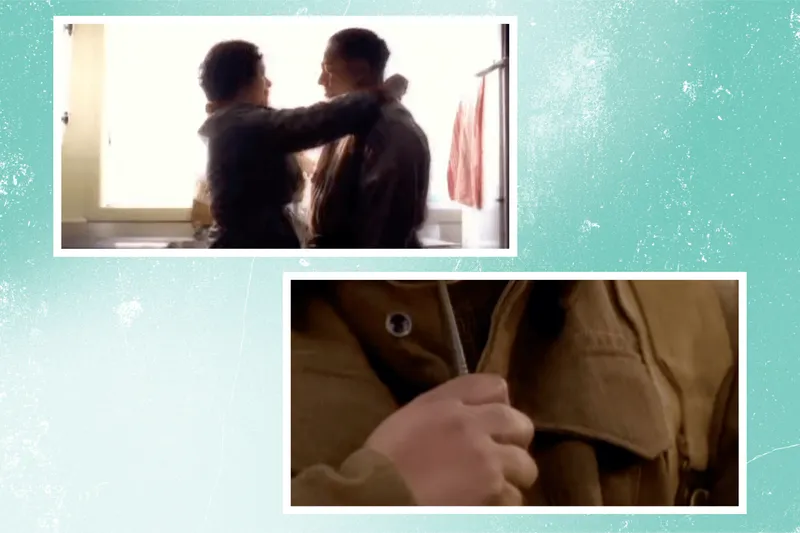
Bronson Price, better known as Avondale rapper Melodownz, reckons Navigator is a New Zealand classic, one that has a special place in his heart. “I was a kid when it dropped, but I still remember the ‘Fade Away’ video feeling next level – the Kratez in their khaki suits, that whole war-like setting and the atmosphere around it.”
‘Fade Away’ was the top-selling local single in 2001 and the music video was a smash hit too. A tribute to 28th Māori Battalion directed by Matthew Metcalfe and Greg Rewai, the video won best music video and best single awards at the 2002 New Zealand Music Awards, where Navigator also took home album of the year and slew of other awards. “Years later, I even sang ‘Fade Away’ for a school choir audition, so that song has stayed with me for a long time.”
The legacy of ‘Navigator’ still shapes the local music scene. “The whole album has such a unique sound and identity,” says Price. “It’ll always be one of my favourite New Zealand albums.”

Simon Grigg
Audioculture founder Simon Grigg remembers Navigator soundtracking what was a “wonderful High Street Pasifika summer”. He was given a promo cassette of Navigator by Fish, Che Fu’s manager. “It went from car to house to office on continuous deep soulful rotation until I retired it for a CD, which I still own – signed.”
At the time Grigg owned record label Huh and BPM records, located at number 10 High Street. Those blocks were a music hub and Che Fu was part of the family. “As the street evolved in the 90s into a cultural and musical hive in a proudly South Pacific city, Che grew with it, from a kid in his school band to a man whose words and delivery helped define us all.”
Just as significant as that creative output was everything drawn into his orbit. “I still recall hearing my go-to track ‘The Mish’ pounding out of De Bretts one afternoon, with P-Money’s huge drum sound wafting down the street we then all called home,” Grigg recalls. “A record for the ages? No, an ageless record.”
Diggy Dupé
Che Fu was one of Auckland rapper Diggy Dupé’s biggest influences. “Man, ‘Misty Frequencies’ is probably, besides the ‘Waka’ remix, my all-time favourite Che Fu song.”
The pair, who are both Niuean, collaborated on a track for The Panthers soundtrack in 2021 (Che Fu’s father, reggae artist Tigilau Ness, was a founding member of the Polynesian Panthers) and both grew up in Grey Lynn, where Che Fu was a “hometown hero” for Dupé.
He was in primary school when Navigator came out. “I remember seeing the ‘Fadeaway’ video clip on Juice TV and thinking, ‘man this dude, he’s just from down the road’.” Seeing him on television and at the dairy put things into perspective. “He’s basically global yet he’s staying local, that’s one of the biggest things I’ve taken from him,” Dupé says. “And also to be proud of his Māori side, that influence was more of a personal one.”
Kim Boshier
Boshier, now the managing director of Sony Music New Zealand, was promotions manager at the label in 2001 and worked closely with Che Fu and his manager Fish. “I was responsible for working the songs at radio and doing the album publicity.” The Sony crew had been fans of Che Fu’s work with Supergroove and his debut ‘2 B Spacific’, so head of A&R Malcom Black signed him to the label. ‘Navigator’ was their first album together. “Within our team we’d heard the demos and were excited about the potential but there was a lot of discussion/disagreement about what the first single should be. One day Fish asked me to go out to the old Revolver studios in Royal Oak to listen to the two options.” One was ‘Fade Away’. “Che, Fish and I listened to the two tracks multiple times but to me it was a clear choice. I took ‘Fade Away’ to radio a few weeks later, Che and the Krates shot an incredible video and the rest is history.” ‘Random’ was next, followed by ‘Misty Frequencies’, another crossover hit that connected with a whole new audience. “We all knew the album was great and we had high expectations so we were just stoked that it had connected in such a meaningful way,” Boshier says. “Che deserved it, he’s a genius.”
Martyn Pepperell
Wellington-based music journalist Martyn Pepperell was 19 when the album dropped. He remembers it being “bloody everywhere” and pretty much all anyone played for about two years straight.
When asked for recollections he instead proffers questions of his own. “We could talk about how for two summers in the early 2000s, Navigator was the soundtrack of Aotearoa. We could talk about the incredible cover art. We could also talk about what a bloody legend Che is. We could even talk about how he was inspired to write the album’s APRA Silver Scroll-winning single ‘Misty Frequencies’ by growing up listening to 95bFM in Tāmaki Makaurau.”
Che Fu is a legend, Pepperell says, but “he’s also just one of us.”
Geneva AM
“I grew up with this album,” says musician and producer Geneva Alexander-Marsters. It’s still an “absolute banger” with themes that remain relevant today, she says. “I feel like we are all navigators in our own life path, as I grow older I can understand more layers of the songs.”
Growing up in Grey Lynn, Alexander-Marsters lived on the same street as Che Fu and his family. Navigator saturated the neighbourhood – taking over its cars, radios and TV sets. “It made me feel proud of being from the same neighbourhood.”
She thinks that iconic cover image of a young father with his “big flip phone iPad thingy” spoke to the optimism of the turn of the century. “We wanted to position ourselves as people who move toward the future, supporting the next generation and adventuring out into the unknown.” And now? “I think we need that curiosity and adventurous spirit now more than ever.”

Alexander-Marsters thrashed her treasured CD on her Discman and stereo. “There were a lot of themes in his music that totally embedded themselves in my generation that had a similar background,” she explains. “Seeing someone like us, from the same place, made me feel like we could achieve anything we wanted. We all felt like Grey Lynn is the coolest place in the world and I think that kind of visibility is so important.” She credits Che Fu’s work with charting a course for many other artists. “Including myself.”
Grey Lynn has changed a lot since 2001. Soon many homes, including her mum’s, may be acquired by NZ Transport Agency Waka Kotahi for its Northwest Busway project. “As a strange twist of fate, Navigator may be the only remnant of my childhood that remains, which shows how important music is when it comes to memories and thinking about the past.”

Emma Gleason
Emma Gleason is a staff writer at The Spinoff and an award-winning fashion journalist. But it’s not just clothes that interest her, you’ll find her exploring tasty cheese, influenza outbreaks and more important things right here. She has experience with some of the country’s leading media outlets as well as the toaster in our kitchen.
Sign up to Rec Room, delivered straight to your inbox.


