'Heavy on fiction but seasoned with poetry': Anthony Lapwood's reading diet

Anthony Lapwood is the author of the novel, Mincemeat.
Made possible by

Welcome to The Spinoff Books Confessional, in which we get to know the reading habits of Aotearoa writers, and guests. This week: Anthony Lapwood, author of recently-released novel Mincemeat.
The book I wish I'd written
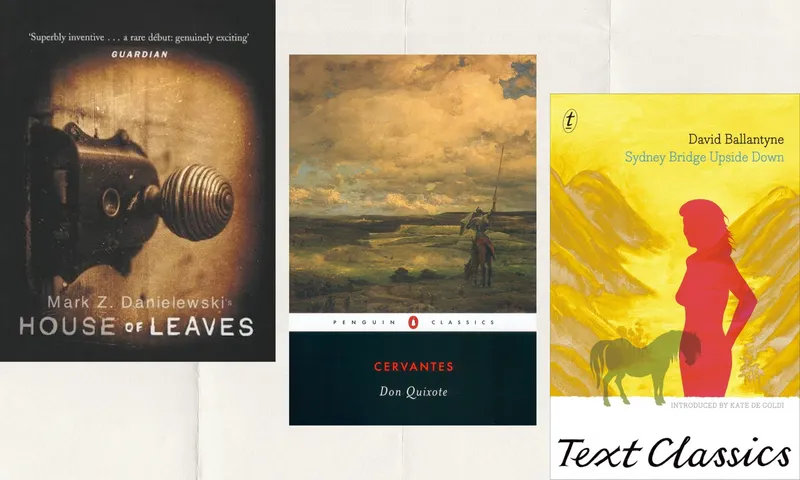
I tend to think we each write the books only we can write, but I admire plenty of writers. I still get a thrill when I think about reading House of Leaves by Mark Z. Danielewski. It’s known for being formally audacious, with footnotes inside footnotes and text flowing in all directions around the pages, even tunnelling through them. (Apparently, Danielewski flew to his publisher’s offices to typeset the book himself because he didn’t trust anyone else to get it right.)
The design completely serves the story, where a house is discovered to be bigger on the inside than on the outside. (Can’t the same be said of books, and people?) It’s a terrific idea, developed through an engrossing narrative that is genuinely unnerving. Hats off to Danielewski for even attempting this feat of a novel, let alone succeeding in it.
The book everyone should read
Don Quixote by Miguel de Cervantes. It’s a truly delightful and surprisingly accessible novel, and it’s so familiar from pop culture that reading it is like falling in love with someone you already fancied. The adventures of a roguish figure running up against society is as appealing as ever. And the fact Don Quixote adopts his knightly persona after reading too many chivalric romances feels current too – as we become increasingly saturated with various media competing to shape our ways of seeing.
While the novel is definitely a doorstopper, its episodic structure means you don’t have to read it in one big gulp – if you take breaks, you’ll still be able to piece things together. In fact, its two parts were published 10 years apart (in 1605 and 1615), so you could replicate that experience! I took a couple of weeks off in-between them but found myself itching to get back in the saddle.
The book I want to be buried with
Almost anything by Ursula K. Le Guin, but preferably the whole lot. She was a sophisticated, inventive and compassionate thinker who wrote speculative fiction from a deeply humanist perspective. Her work is full of care – for words, for people, for stories. She often uses genre to conduct compelling thought experiments (famously asking, in The Left Hand of Darkness, if we eliminated gender, what would remain?). But while her stories are philosophical and political, they are also thrilling and moving, and never lose sight of the power of people and community.
Le Guin also wrote one of my favourite essays, “The Carrier Bag Theory of Fiction”, in which she argues that heroes and conflict are not central to narrative. Instead, she says: “A novel is a medicine bundle, holding things in a particular, powerful relation to one another and to us.” Yes, give me that medicine!
The first book I remember reading by myself
I remember obsessing over a book about a ladybug (it may have been The Grouchy Ladybug by Eric Carle) when I was very young and still learning to read. I would get mad at myself every time I stumbled over a word. When that happened, I would go right back to the beginning again. It took a long time, but I eventually made it from start to end without a mistake. Or else, maybe I abandoned the task. I forget which way things ultimately went.
Fiction or nonfiction
My reading diet is heavy on fiction but seasoned with poetry and non-fiction. I think what draws me to fiction is that it’s the form closest to – or best able to emulate – the experience of being human. Fiction can be full of poetry and facts, but it’s driven by a kind of fusion of the two, a seamless feeling-logic. That’s also why I like writing fiction; the process is both structured and intuitive.
The most underrated book
A New Zealand book that has received some deserved but overdue attention in recent years is Sydney Bridge Upside Down by David Ballantyne. It’s in the Aotearoa Gothic tradition in which, in this instance, the abandoned castle of a European Gothic tale is replaced by an abandoned slaughterhouse, still serving as a site of repressed memory and guilt. And the unreliable narrator of Ballantyne’s classic is full of repressed thoughts and feelings, mostly to do with sex and death. The story is set in an isolated coastal township and really captures a persistent darkness at the heart of New Zealand society which is bound to upset our fragile self-image as a pastoral paradise from time to time.
Encounter with an author
I’ll forever be grateful to Eirlys Hunter for a piece of wisdom she shared in a community writing workshop many years ago, when I wasn’t sure whether writing was something I should continue to pursue. She said: “Writing never gets any easier, but you get better at it.” It was the best encouragement. What a relief to learn there is no end to be reached, only the journey to enjoy! That even great writers are still learning! How freeing to realise that the question of how to tell a story has no single, definite answer, that every story is told its own way! The job and the great fun of writing, it turns out, is creating and solving problems, endlessly.
Best thing about reading
I’m an introvert and there has been no greater activity invented for introverts than reading. As the infosphere gets increasingly busy and noisy, my appreciation of books has only grown. When you read a book, you’re in control of the experience. You can go at your own speed, you can pause and reflect, revisit and savour passages, and collaborate imaginatively with the author. Books are rich with story and information and beauty – far more than any other media – but they don’t bombard you; they make space for you and let you participate in your own way.
Best place to read
I can and will read anywhere. (The exception is when I’m sandwiched between self-important people having loud conversations on the bus.) But there are optimal conditions: usually when I am freed from chores, tucked up on my favourite chair by the window, with a pot of tea and a snack at hand, and a cat on my lap.
What I'm reading right now
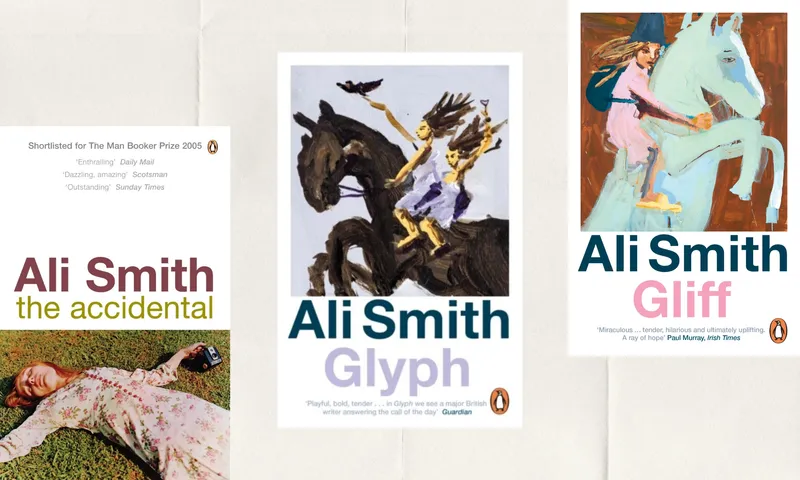
I have nearly finished reading The Accidental by Ali Smith. I arrived at her work late, through the recent Gliff / Glyph novels. The Accidental follows a family of four as a stranger interrupts their lives – at first beguiling them, before proving to be a mirror that reflects who they are with a little more honesty than some can bear. It’s crafty and gripping, and Smith is another writer who plays with form in a way that is intensely purposeful. Her management of narrative feels organic but is highly controlled, and destabilising, as she cuts in and out of the perspectives of the characters, mid-flow, mid-sentence, chapter by chapter. The techniques are very filmic – which is fitting, since films and the act of filming play a central role. I have been slowing down my reading, just to try and make the book last longer.
Mincemeat by Anthony Lapwood ($38, Āporo Press) is available to purchase from Unity Books.
The Spinoff Books section is proudly brought to you by Unity Books and Creative New Zealand. Visit Unity Books online today.

The Spinoff Review of Books
A smorgasbord of books thoughts and formats by The Spinoff.


