Can Ginny Andersen regain Hutt South – and maybe even knock Chris Bishop out of parliament?

The mighty Hutt South. (Image: The Spinoff)
Here's why it's shaping up to be one of the most exciting races of the election.
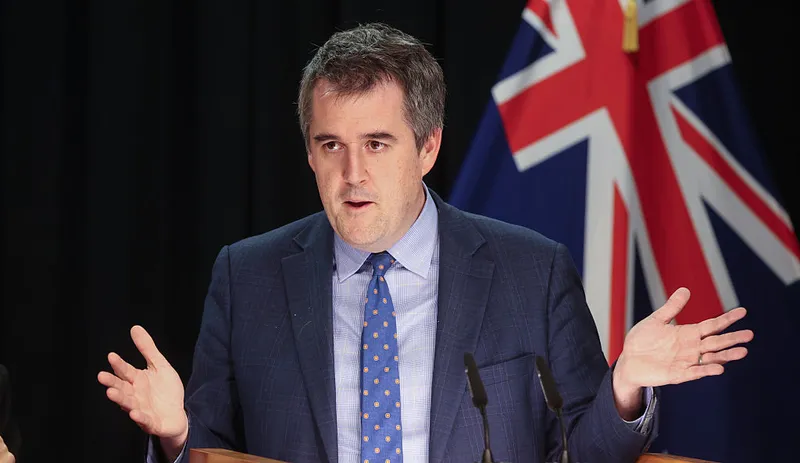
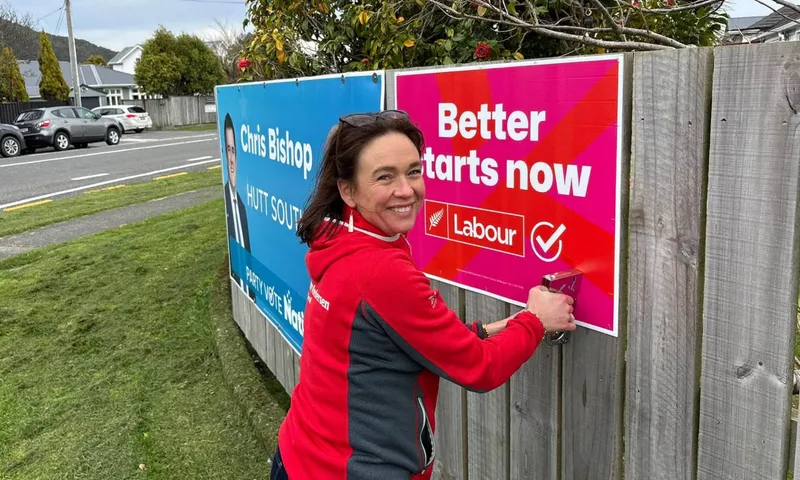
Chris Bishop has a lot riding on Hutt South. Should he lose his electorate, National may be saying goodbye to one of its star ministers in what could be an exodus of senior talent: even though Bishop is third on the list, a poor party vote percentage for National puts him at risk. His opponent Ginny Andersen, meanwhile – whom he took the seat off in 2023 – would likely make it into parliament via her 12th placing on the Labour list even if she didn't manage to snatch the electorate back. That doesn't mean she won't be fighting hard – don't underestimate the symbolic importance of winning back a seat and potentially sending a longtime National MP out the door.
Take it from someone born and raised in the Hutt Valley: very rarely do interesting things happen here. This election will be the exception.
The players
This race is a straight shootout between two frontrunners: incumbent National MP Chris Bishop and Labour’s Ginny Andersen. The latter won the seat in 2020, losing control in the 2023 blue wave when Bishop scooped up a 1,332-vote margin. The difference in party votes was even tighter, with National gaining 685 more votes than Labour. Hutt South is often seen as a bellwether electorate, with the party that wins the party vote here often taking out the election.
In a distant third were the Greens, who this year have former press secretary Courtney White standing in the seat. Opportunity’s Ben Wylie-van-Eerd, a scientist, is also running, as is NZ First’s Alistair Boyce. The latter is best-known to most as the owner of the famous Backbencher pub across from parliament (which is in the Wellington North electorate).
An electorate poll conducted in mid-September showed strong support for Andersen, with 42% of respondents keen to give her their vote. Bishop saw 30% support, and White came in third with 9%. On the party vote, Labour is ahead at 36%, while Greens have edged into second strongest with 18.5% to National’s 17%. The poll was commissioned by Victor Consulting, which was founded by a staffer to the former Labour government, Clint Smith, and the margin of error is +/-5.9%.
The lie of the land
Hutt South got a slight shape-up in last year’s boundary changes, now including the former Wellington Central suburbs Newlands and Woodridge. In return the electorate lost Epuni to the neighbouring Remutaka seat. Hutt South stretches as far north as Kelson and as far south as the Wainuiomata coast, surrounded by the Wellington Harbour.
These are typical Labour heartlands. From the seat’s inception in the 1996 election to 2017 it was served by Labour MP Trevor Mallard, who was knocked off the throne by Bishop. Labour-aligned Ken Laban (whose sister Winnie was the first Pasifika woman to be elected to parliament, representing Labour, in 1999) won last year’s local election to become Lower Hutt mayor. In Remutaka, which takes in the likes of Naenae, Stokes Valley and Upper Hutt to the north, Labour leader Chris Hipkins has been the local MP since 2008.
But voters have taken a punt on Bishop twice now, and he has a rare attribute that some may find endearing: actually wanting to be known as someone from the Hutt. On door-knocking duty recently, Bishop told The Post he felt he had “a really good chance” as he spent most of his time speaking with undecided voters. “What will be, will be,” Bishop said. “I want to win the seat. I also want to lift the party vote.” He was less positive but possibly more realistic back in July, when he said it was “highly unlikely” he’d hold onto the seat if National’s party vote was as low as polls were predicting.
The big issues
Like many corners of the country, infrastructure is a key concern for Hutt South. Earlier this year, the massive Te Ara Tupua shared path – connecting Petone to Wellington City – opened after four years of work and $349 million spent. Funding was secured for the project under a Labour government, but it’s Bishop’s face as the local MP and minister for transport and infrastructure that has been at the forefront of the finished product.
There’s also Te Wai Takamori o Te Awa Kairangi, formerly known as Riverlink, a $1.5 billion project to add in a new State Highway 2 interchange as well as two new river crossings, shift the Melling station 300m down the road, and widen and deepen the Hutt River. The project was originally costed at $450m in 2021 and expected to fully open in 2026 – it’s now not likely to reach full completion until 2031, setting up the Hutt for years of disruptions.

Also along the Hutt River is the stalled Ava rail bridge replacement project. The government and Hutt City Council agreed to go halfsies on a clip-on pathway to keep Ava’s communities (which include schools and a large retirement village) connected to the other side of the Hutt River. But a flaw in the proposed design means the project is now on hold.
The Victor Consulting poll found 51% of respondents were most concerned with the cost of living. Unemployment in Lower Hutt reached 5.3% in June, up from 4.6% the year prior – just a smidge lower than the national average. On a recent visit to the Lower Hutt-based not-for-profit Youth Inspire, which prepares young people for work, The Guardian noted there were around 500 locals on the provider’s waitlist.
Meanwhile, 19.5% of respondents had the health system as their top concern. Hutt Hospital services the entire Hutt Valley (around 157,103 people), and is notorious for its overcrowding and long wait times. Its infrastructure is also lacking, with nurses recently telling RNZ the hospital was suffering from leaks in sockets and carpets, collapsing ceilings and peeling wallpaper. Long-awaited neonatal upgrades are on the way, but at the cost of putting an equally long-awaited maternity ward on hold. Health minister Simeon Brown has laid blame for the downsized – but priced-up – project on the former Labour government.

Lyric Waiwiri-Smith
Lyric is an award-nominated politics reporter at The Spinoff. She covers parliament from the press gallery, pens the weekly column One MP, One Pint and is endlessly curious about what makes our decision-makers tick. Off the clock, Lyric loves a live gig, a cold brew, and being a Wellingtonian (on a good day).


