How do the different parties fare on disability issues this election?

Image: Emily Wong/The Spinoff
Where those vying for your vote stand on disability support and funding, accessibility standards, benefits and more.
Myriad issues will influence how people vote on November 7, but one area that concerns a growing number of New Zealanders is disability policy. As many disabled people know, it can be a struggle to find specific policies that will impact our community, and to know which party truly has our best interests at heart. With that in mind, here’s a round-up of the bigger parties’ policies on disability, as well as their track records on disability issues to date.
Labour
Labour's most significant policy related to disability this election is its promise to repeal the Disability Support Services Act, which was passed in September with the aim of setting up a formal framework for disability funding. There was widespread opposition from the disability community as the bill made its way through parliament, and while changes were made following the select committee process, concerns remained.
“Instead of working alongside disabled people and carers to build a system that supports independence and self-determination, National has rushed through laws that give ministers greater powers to determine who gets support and on what terms,” said Labour disability spokesperson Priyanca Radhakrishnan when the law was passed. “Labour will repeal this flawed legislation and replace it with rights-based legislation that is drafted alongside disability communities.”
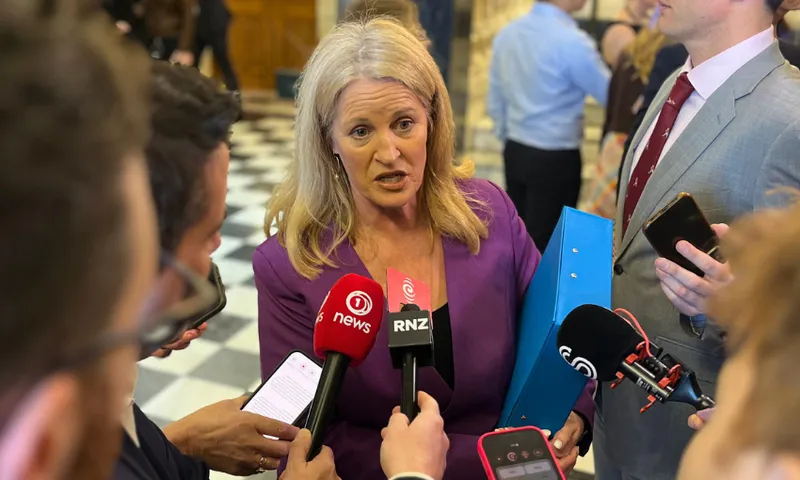
National
National has no specific disability policies for this election, but its approach to disability in government has focused on making support more consistent, and financially stabilising disability support services (DSS). Earlier this year, disability issues minister Louise Upston announced that more choice and control over funding support would be given to disabled people, after significant backlash over changes made to disability support in 2024. In 2024 National also announced a five-year commitment to provide $1.1 billion to disability support services funded by Whaikaha, however in late 2024 Disability Support Services was moved from Whaikaha to the Ministry of Social Development.
Greens
The Green Party has promised to introduce a disability rights law based on Te Tiriti o Waitangi, with enforceable accessibility standards, and provide easily accessible and timely income support to meet all disability-related living and medical costs, regardless of relationship status and cause of disability.
The party says it will also work towards all disabled people being able to live in safe, accessible, affordable housing in the community of their choice, including by setting robust universal design standards for public and private housing. Earlier this year, Kāinga Ora was reported to have cut its target of having 15% of new public housing builds be accessible.
The Green Party's disability policy also addresses transport, a major concern of the disabled community. The Greens have promised to reintroduce the 75% subsidy for the Total Mobility taxi scheme after it was cut to 65% this year, making it easier to use and increasing the number of mobility vehicles to meet demand.
New Zealand First
New Zealand First has no obvious disability-focused policies this election, but in parliament this term the party introduced a member’s bill on accessibility standards. It was not selected from the ballot so did not get a reading, but the Accessibility Standards Bill would build accessibility into new schools, transport hubs, and public buildings rather than adding modifications later on. It’s not clear if NZ First will reintroduce the bill to the members’ ballot next term.
Opportunity
One of the Opportunity Party's key policies is a universal basic income, or citizen's income, of up to $370 a week, or $19,400 a year. This would apply to all New Zealanders over the age of 18 and would replace current benefits, such as the Supported Living Payment. This would be paired with a specific universal disability allowance, which is projected to provide around $6,000 a year in additional support. The party would also allow for needs-based top-ups. The party says this universal citizen's income would not replace specific disability funding for transport or assistive technology.

Marlo Schorr-Kon
Marlo Schorr-Kon is a political and disability issues writer based in Tāmaki Makaurau. He writes for 95bFM and occasionally The D* List.


