How Michael Jackson moonwalked into the centre of pop culture again

Image by Tina Tiller
From a Michael Jackson impersonator being mobbed in Christchurch to a litany of Michael Jackson references dropped in parliament, Aotearoa has gone MJ mad again.
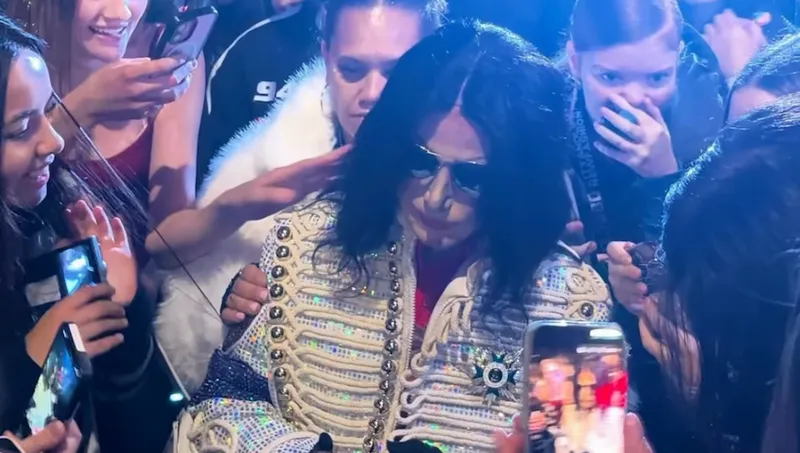
It’s 10.30pm on a chilly Saturday night on The Terrace in Ōtautahi and Michael Jackson is getting mobbed right outside Fat Eddie’s. Hundreds of frenzied Gen Zs erupt into a chant of “Michael! Michael! Michael!” as the tiny figure in a holographic jacket makes his way through the crowd, posing dutifully for selfies in the endless sea of phone screens. One girl screams “Michael, I love you, Michael!” at the back of his wigged head until her voice goes hoarse. She soon settles into a gentle Jackson-inspired “hehe” instead.
It’s not just the garden city that has come down with a heavy dose of Jackson fever of late. With the film Michael on track to become the highest-grossing music biopic of all time, and his 1983 song ‘Billie Jean’ hitting number one in the Billboard Global 200, Jackson has moonwalked his way back into pop culture even in little old Aotearoa. In parliament, Rawiri Waititi dropped a plethora of Jackson references in his post-budget speech, while wary parents across the motu report their Gen Alpha kids going gaga for his back catalogue.
All of this sits awkwardly alongside his chequered legacy. Michael Jackson paved the way for black artists in modern popular music, single-handedly reshaped the music video, and still holds the record for highest-selling album of all time. Michael Jackson also faced multiple allegations of child sex abuse since the early 90s. Some of these were heard during the 2005 criminal trial in which he was acquitted, the subject of new Netflix documentary The Verdict, while others emerged posthumously in the HBO documentary Leaving Neverland.
While the Jackson estate has vehemently denied all claims of sexual abuse, the lingering allegations leave us, like so many things in 2026, wrestling with a bunch of different conundrums and perspectives at once. How is it, in a post MeToo world, that someone accused of committing sexual abuse against children can be back at the centre of culture? Does Gen Z actually revere Michael Jackson, or is he just meme fodder? And who is this mysterious Michael Jackson impersonator moonwalking his way through the streets of Christchurch?
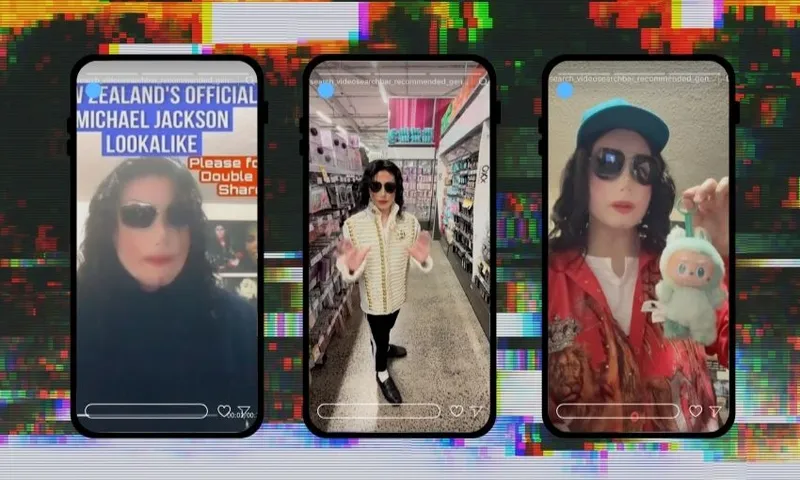
My first port of call for answers was to go straight to the man himself, aka New Zealand’s only Michael Jackson impersonator, aka OmeMJ, aka Joel. “I’m a Gen Z Michael Jackson lookalike, which isn’t something you hear very often,” he chuckles. When out of character, Joel is completely unrecognisable as his hehe-ing counterpart, best known for viral TikToks about “Ree-hehe’s Pieces” and “La-hehe’s” (Labubu’s). “I’m very quiet, reserved and shy,” he tells me in a bustling Christchurch chocolate cafe. “I hide behind Michael to do all of that.”
Joel has been a Micheal Jackson fan since he was a kid in the mid-2000s – “I was infatuated, I loved how he looked, I loved the moves, I was just obsessed” – but it was witnessing touring Michael Jackson impersonators that changed everything. When he was in his early teens, he saw Kenny Wizz and and Dantanio Goodman perform live: “Little me just thought ‘wow, that looks so much like Michael’.” In 2015, he was devastated when famed American lookalike Michael Kiss had to end his Christchurch show after just 20 minutes.
“My Dad had a bit of a Karen moment and complained, and then we got a call from the guy himself saying he could come and do a meet and greet,” Joel recalls. “He came to our house and brought a little basket of gifts, and I was just like ‘I have to find a way to do this’.”
From then on, Joel spent years in his bedroom secretly honing his dance and voice impersonation skills, as well as his makeup, including crafting the perfect nose. “Obviously the makeup was not good at the start – no foundation, the cheapest wig possible, and a little bit of contour,” he says. As his confidence built, he started appearing as Jackson on instant video chat sites like Omegle and OmeTV. “People loved it, which really helped me,” he says. “People would always say ‘oh my god, it’s OmeMJ’ and I was like… ‘I like that name’.”
It’s only in the last year that OmeMJ has taken off on TikTok and Instagram. “I wanted to make the kind of content that people would want to see Michael Jackson doing, like him crashing out or him doing reviews. So that’s what I did, and it just went massive.” He’s known for tackling internet trends like tasting viral fruit ice-creams, recording ASMR videos, and doing ‘67’ as Michael Jackson, often telling viewers to “get out” to end the video. “I did that first in a blooper video, and now it has become my trademark.”
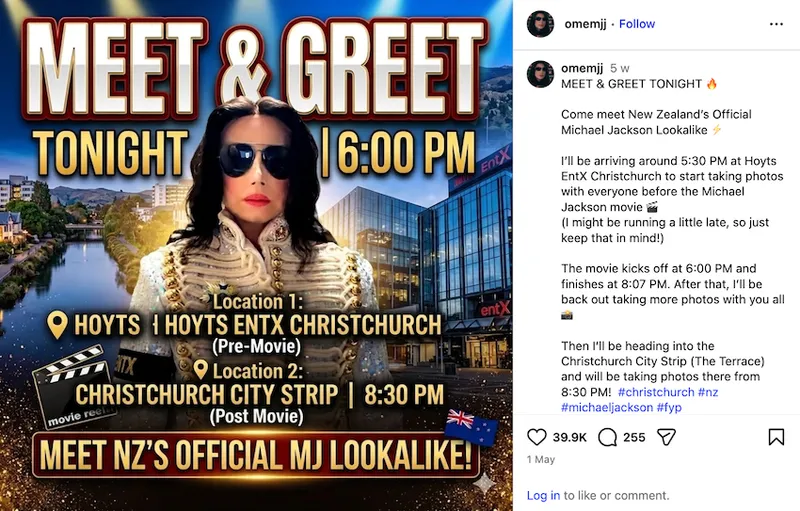
After one Halloween appearance on The Strip last year, Joel seized the release of the Michael biopic to host his first “official meet and greet” – something he says started out as a joke. “I made a post saying ‘I’m gonna be at this movie theatre, come for a meet and greet with me, or come watch the movie’, thinking about 10 people would show up.” It received over two million views and over 10,000 shares. When he showed up to Hoyts EntX, the 300-seat cinema had sold out with hehe-ing fans. Some had even brought their own Reehehe’s Pieces.
Since then, the Christchurch in-person appearances have only grown in scale and intensity. “It can be scary,” says Joel. “People cry, they hug me, they are drunk, they are following me filming on their phone, they touch me and won’t let me go.” When he needs to seek refuge in the city, the good people at the similarly internet famous Timezone have taken him into their back room. Other times, people will make comments about “the kids and the controversial stuff” in public. “I just say as Michael – ‘hey yeah that’s not very nice’,” he says. “You’ve got to stay in character.”
This moment leads me to address the biggest elephant in the chocolate cafe: what does Joel think of the years of child abuse allegations against Jackson? “I’ve stood by him through all the allegations,” he says, steadfast. “People are mean. I don’t believe any of it, it is a money grab.” I asked if he had watched Leaving Neverland, the two-part HBO documentary in which two men detailed years of childhood sexual abuse at the hands of Jackson, which was removed from all streaming platforms in 2024 following a lengthy legal battle with the Jackson estate.
“On mute I did.” he says. “I just wanted to see the new pictures.”
Read any comments section on any news clip relating to the allegations and you will see thousands of fans similarly standing by Jackson in 2026. And with the Michael film swerving the child abuse chapter entirely thanks to a $10 million reshoot, it raises more questions about the role of the biopic in shaping his legacy. After meeting Joel and watching Michael and Leaving Neverland back-to-back – the most whiplash double feature of all time – I rang Nabeel Zuberi, associate professor in media and communication at the University of Auckland.
“I think it shows the way that biopics and documentaries have become much more promotional in nature. They’re often funded by the estates or the record companies, and in this instance are just about extending the post-death life of Michael Jackson,” says Zuberi, who teaches a popular music on screen course. “One thing I’ve noticed in the last few years is more students thinking a biopic is a documentary, even though it’s got actors in it. I’ve observed that the lines are becoming more blurred between these forms and genres.”
Zuberi wasn’t aware of the viral rise of OmeMJ in Christchurch, but he’s not surprised to hear that Michael Jackson has taken off with Gen Z and Gen Alpha. “He was kind of memeable, even back when we didn’t use the word memes,” he says. “His moonwalk and his gestures and dance moves were being replayed constantly on Motown – it was like he was designed to be turned into a GIF, long before they even existed.” He adds that Jackson’s polymorphous identity as a “weird child, man, alien” may also appeal to younger generations.
Beyond the Michael biopic and Jackson’s endless memeability, there’s also the broader trend of younger generations increasingly turning to popular culture from before they were born. “Nostalgia is always going to be there as part of popular culture – I yearned for 1960s pop music when I was growing up in the 1970s,” says Zuberi. He references Simon Reynolds’ Retromania, a book which posits that popular culture is increasingly turning its gaze backwards as we hurtle into the unknown. “It’s about music, but it’s also about a general slowing down of the future.”
And while Zuberi still has Michael Jackson’s Off the Wall in his vinyl collection, he hasn’t played it in years. “I just don’t want to contribute anything towards the valorization of this particular artist, whether they’re dead or alive,” he says. “I am hoping the pushing of Michael Jackson back into the public sphere dies down quickly, but at least it gives us another opportunity to look at the mechanics of how pop culture is working – although I wait with hesitation as to who the next artist is that they’ll try and push this machine onto.”
Back in Christchurch, Joel certainly has no plans to retire OmeMJ. His next big city meet up is slated for June 27 in honour of Michael Jackson’s death, complete with signed posters and merch. He just launched his own Cameo account, and gets messages every week about doing surprise appearances at weddings and birthday parties. “I think people are just excited that there’s a Michael figure in the country,” he says. “In Hollywood you’d have lookalikes everywhere, but you never see a lookalike just walking around Riccarton Mall.”
And so does he think the local Michael Jackson-aissance is going anywhere, anytime soon?
“No,” he says. “He’s just too powerful.”

Alex Casey
Alex Casey is a senior writer at The Spinoff with over a decade of experience writing about popular culture and social issues in Aotearoa. She lives in Ōtautahi and likes watching reality TV and walking the dog, occasionally at the same time.


