I knelt in Jason Palmer’s blood – his death still haunts me 16 years later

Nurse Cathy van Miert will never forget May 15, 2010 (Portrait: Supplied. Composite image: The Spinoff)
In 2010, corrections officer Jason Palmer died after being punched in the head by prisoner Latu Kepu. Sixteen years on, nurse Cathy van Miert remembers trying to save his life on the prison floor, and the many injustices she believes Palmer was dealt in death.
This feature was made with the support of the Auckland Radio Trust, sponsors of the Vince Geddes In-Depth Journalism Fund.
Additional reporting by Madeleine Chapman.
I still wake up smelling his blood. Not as a metaphor, but in the literal sense that only someone who has knelt in a man’s blood as his life ebbs out of him will understand. Sixteen years later, if I close my eyes, I can still smell the metallic tang pooling under my knees mingled with the stench of vomit on the concrete floor of Unit 16A at Spring Hill Corrections Facility. I can feel the grit sticking to my skin while prisoners shriek in their cells.
I was the first nurse on the scene when prisoner Latu Kepu stepped out of his cell and ended Jason’s life with a single punch. I was there before the ambulance arrived. I was there while Jason was still on the floor, fighting for his life, before the event had been translated into reports, findings, legal argument and institutional language. I saw his jaw locked shut. I saw the airway obstructed with vomit and blood. I was shouting “status one, brain injury, decerebration” over the cacophony of the roaring prisoners because I knew, as a nurse, that I was looking at a catastrophic brain injury.
The public account of Jason Palmer’s death has always felt incomplete. The official narrative, throughout the coronial inquest, its findings, and the media reports at the time, placed great emphasis on the concrete. He fell back and his head hit the concrete, end of story. That Jason Palmer died was simply bad luck. A tragedy. I do not believe Jason died because of bad luck.
This is the story I have carried since May 15, 2010.
Four weeks earlier – the night I met evil
People romanticise evil, as if it arrives dressed in theatrics. In my experience, it walks into a cell block wearing Corrections-issue greys, smelling of sweat and damp concrete, and radiating a kind of deadened vacancy that makes your instincts recoil.
It was April 14, 2010, a night cold enough that your breath fogged in the units. Central Control rang Medical in a state of urgency. “Officer needs assistance, Fourteen Alpha, now!” They had called us before the situation was remotely under control, not the first time this had happened at Spring Hill. Of all the places I’ve worked – psych secure, emergency departments on New Year’s Eve, inner-city wards – Spring Hill was the only place where I felt like the people in charge routinely escalated risk simply by misunderstanding a situation.
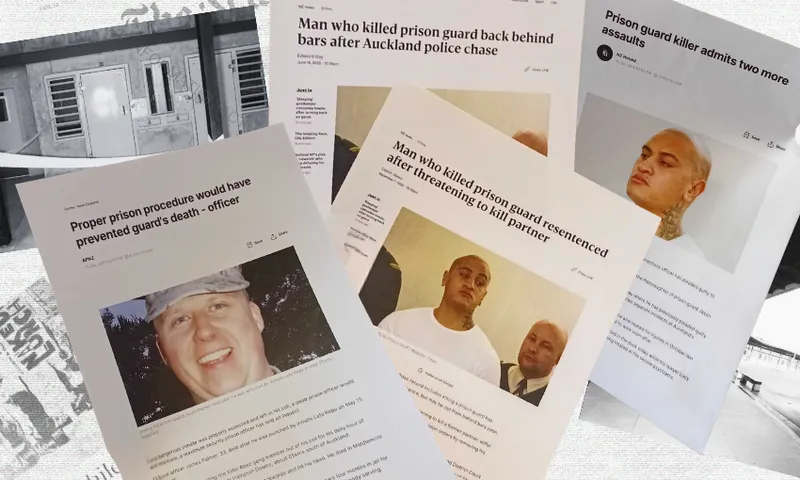
Unit 14A was shaped like a figure eight – two loops with the staff base in the middle – and as I stepped through the gate, I saw six officers jogging after Latu Kepu: 21 years old, roughly 120kg of pure brick shithouse, arms and neck covered in Killer Beez tattoos.
He was angry because he had been moved to a cell without a TV. He had smashed the sprinkler, and was refusing transfer to a dry cell. I’ve never seen such a mismatch of power. Multiple officers could barely get him onto his knees. He looked to me like he was doing his utmost to injure the officers that were trying to restrain him. This would later be described in the internal investigation as a “minor assault” where Kepu “pushed past an officer”.
It didn’t look “minor” to me, and neither was the response. After the incident, he was relocated to Unit 16A and placed on direct segregation, a 23-hour lockdown. In other words, he was known to be a danger to other prisoners as well as staff.

I was ordered into the cell to check for injuries. He was kneeling, cuffed behind his back, face purple, veins standing out like wet ropes. I have been in rooms where people genuinely intended to kill me. I have never felt fear like the fear I felt in that cell. The air seemed blackened around him, as if violence had its own gravitational field. I didn’t know then that I’d met the man who would end Jason Palmer’s life.
He screamed for the cuffs to be loosened as his hands were swelling. I asked a manager if they could be adjusted. What followed was 10 minutes of officers trying random keys as if they were dealing with a novelty set from a joke shop.
Spring Hill Corrections Facility
To understand the situation that occurred on May 15, 2010, you need to understand the prison that Jason Palmer walked into every workday.
Spring Hill Corrections Facility was opened in 2007 by the Labour government, with the philosophy that they could create a kinder, gentler prison. It was one of three new prison builds to account for New Zealand’s growing prison population. What made Spring Hill different was its focus on rehabilitation, work opportunities on-site, and the new campus-style layout.
New prisons meant a whole bunch of new prison staff, who were hired fresh rather than bringing in experienced officers from older sites. People who had never learned how to read a unit by the shift in noise or the tone of a prisoner’s breathing. Good “people managers” were sought, rather than hardened veterans of the system.
In theory, it sounded progressive. In reality, many of the staff were green. One afternoon, weeks before Jason died, a chronically ill prisoner collapsed in the yard. I was the responding nurse. Remember, this was the high security unit, yet prisoners were still allowed to have access to things like brooms. So there I was, kneeling on the concrete, checking his airway and breathing, surrounded by seven large men, three of whom had broomsticks resting across the backs of their shoulders like makeshift weapons.
There was an officer standing nearby, happily “supervising”, but his presence didn’t make me feel any safer. In the end, when the prisoners began making comments about “cracking heads”, I de-escalated the situation myself.
That is the environment Jason walked into.
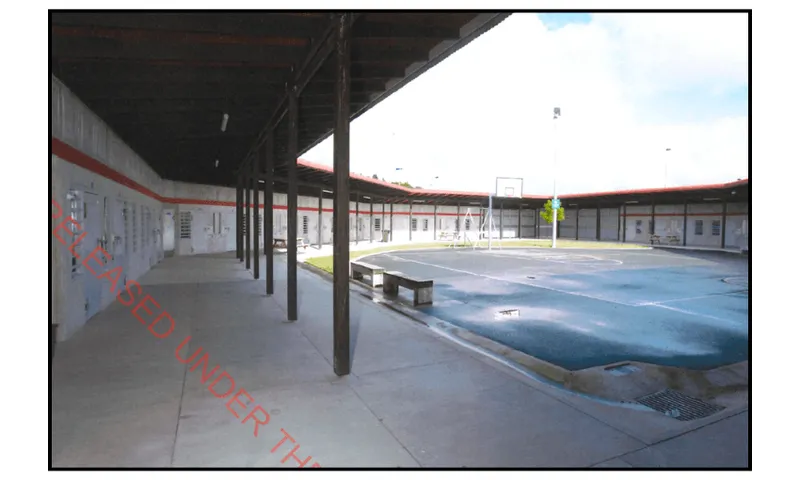
On that fateful morning, the three officers (including Jason) who unlocked Kepu’s cell had a grand total of 14 months’ prison experience between them. While the other two had police experience, one of the other guards on duty in 16A that morning, Rodger Hinton, had been with Corrections only a few months. He was in his 50s and just needed some income after losing money on an investment property.
Jason was disciplined, alert, conscientious. He did his checks properly. He filled in his paperwork. He called things out, which wasn’t always appreciated by his colleagues. One described him as “arrogant” at the coronial inquest. He file-noted prisoners when they broke the rules. He was the kind of officer who would never leave a gate unlocked or skip a round because it was raining. His older brother in the US would later say Jason believed his life was in danger and told senior staff about it. In December 2009, Jason emailed a friend who worked in another prison and said: “Can’t wait to have the opportunity to get to leave SHCF when I can.”
The friend replied: “Just remember not all prisons are like SHCF. Most are better.”

The night before that terrible day, Kepu was reprimanded once again. He had been released from direct segregation two weeks prior and now had more interactions with other prisoners and their cells. He’d gone into another prisoner’s cell (twice) and stolen items were later found in his own cell. Jason, as his case officer, had had enough. He was going to charge him with misconduct this time. The matter was escalated to the Jason’s superior, who made the decision to reclassify him from high security to maximum security, meaning a transfer to Paremoremo Prison in Auckland.
Why he hadn’t already been transferred after multiple incidents (Kepu’s file notes were dense with write-ups) and being placed on direct segregation (the closest thing Spring Hill had to maximum security), I don’t know.
That night, Kepu should have been on immediate transfer but since the prisoners were already locked down for the night, the manager left it for the next day. On Saturday, May 15, the transfer request was put in to Paremoremo for Monday due to the logistics of transferring a prisoner over the weekend.
The punch
I was in the main medical unit, mid-handover at 1pm on May 15, sipping cold coffee and tuning out the background radio chatter. In prisons, you learn to ignore the noise unless you hear two words: “Break break.” That’s the universal signal for an emergency.
False alarms were routine because PDAs (personal distress alarms) often went off by accident. Protocol required two officers to individually confirm the person was safe. On ordinary days, confirmation came within seconds.
This time it did not settle. The phrases came through in fragments and you could hear out-of-breath officers responding one by one as they ran to the unit.
I looked at my colleague – 24 years old, newly qualified – and said, “Grab everything. This is real”. We loaded every piece of trauma gear onto the mule: oxygen, defib, suction, St John’s backpack. Policy said we should wait to be formally called, but the pattern of radio responses told me everything. Someone was badly hurt. Possibly dying. As we boarded the mule one of the officers I knew shouted “officer down!”
My colleague drove as fast as he could while my internal dialogue was “fuck, fuck, fuck”.
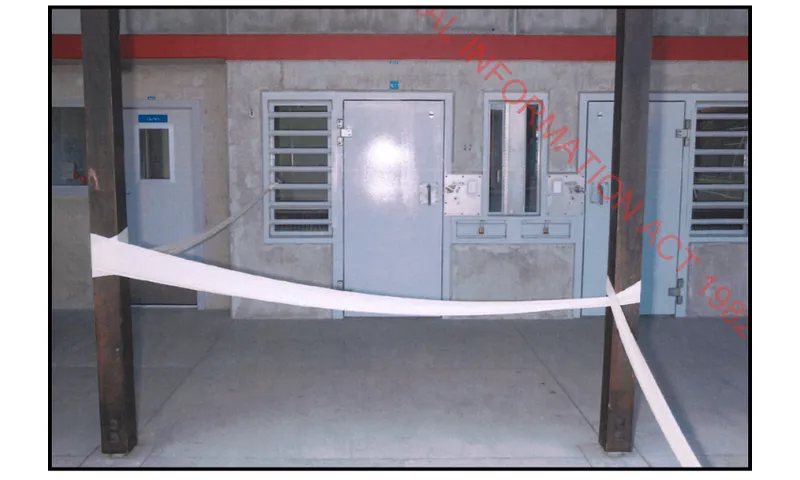
As we arrived at the gate, I could see Jason through the bars. He was in the recovery position, blood spreading beneath his head like a spilt can of paint. Three officers stood around him frozen. I could see Jason was in serious trouble. I broke the no-running rule and sprinted the rest of the way.
The number one priority was that he was not breathing. His jaw was locked tight in full trismus, that iron clamp of the masseter muscles you sometimes see from trauma like a powerful punch and also in catastrophic neurological injury. You can’t ventilate someone with trismus. You can’t clear an airway. His teeth were shut like a vice and he was biting his tongue.
An officer (that I later found out had paramedic training) was standing to my left. I asked the officer to help me pry Jason’s mouth open despite it being against protocol because otherwise Jason was going to die there and then. It wasn’t textbook; it was sheer physical strength and timing, and it gave me just seconds. As soon as he forced the mouth open, I pushed a medical device, the Guedel airway, straight in before the jaw snapped shut again. Without that officer’s help, Jason would have died on the concrete within minutes.
I still couldn’t bag to give oxygen because the airway was full of vomit and blood from where he had bitten his tongue. There was no flexible suction tube to clear the Guedel airway. I used a suction instrument, the Yankauer, to clear the vomit and blood as well as I could. Suction. Bag. Suction. Bag. Each cycle bought me a few seconds. His oxygen saturations climbed to the high eighties, fell again when the vomit refilled, and climbed again only when I cleared enough to ventilate. At one stage, the plastic oxygen nipple snapped off the ambu-bag I was using to ventilate. I shouted for another. Someone ran up from Medical with another one. Four minutes felt like 40. I quickly tested his response to noxious pain stimuli (pinching a fingernail); the response confirmed my worst fears. He was decerebrate – catastrophic brain stem injury.
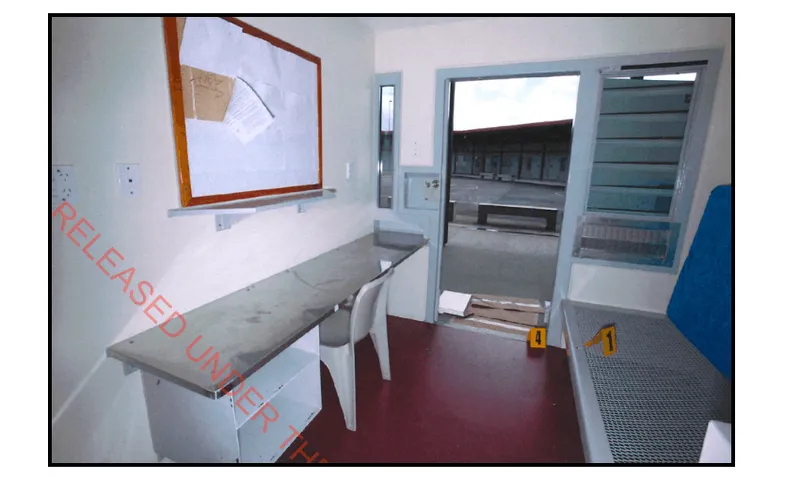
We had no direct phone to the ambulance service. No radio channel that patched through. All communication had to be relayed to an officer in the chaos of the unit, and from him to Central Control, then relayed again to 111 – a ridiculous game of telephone tag while a man’s brain was dying.
All the while, the prisoners were pressed against their windows. I remember them screaming, hitting the glass, making throat-slitting gestures, fake-masturbating. The noise was so overwhelming I had to shout into an officer’s ear so he could relay my words.
I shouted to the officer in contact with Central Control: “Decerebrate posturing. Status one. Brainstem injury. Where is the ambulance?”
Latu Kepu punched Jason Palmer at 1pm. I arrived at 1.04pm. The ambulance didn’t arrive until after 1.30pm.
Twenty-six minutes kneeling in Jason’s blood.
Twenty-six minutes watching the life leave a man who had been on the job for less than six months.
I had intended to continue supporting Jason in the ambulance but was told by my colleague that if I did that I’d likely be sacked for abandoning my post. I checked my watch because if it was after 2pm, my shift would have ended. It was 1.45pm.
As we watched the ambulance drive away, I told my younger colleague quietly, “He is not going to make it.”
The aftermath
There was no formal debrief. My shift ended right after the ambulance drove away so I went home. I was never asked by management to describe what I witnessed and performed medically, and no one took a proper clinical account from me as the first nurse on the floor. The internal investigation would later note, very briefly, that there should have been a proper defrief to understand what, if anything, went wrong with prison systems.
The following afternoon, staff were summoned to the whare. We were told Jason had passed an hour earlier. Then we walked in procession to 16A to bless the spot where he fell. Prisoners screamed “One down, two to go!” and mimed throat slitting gestures through their windows.
Standing there, listening to the jeering, something inside me split. I nearly resigned on the spot.
In the unit, the chaplain and the kaumātua were standing there, looking around quietly, waiting for someone to show them where to begin. No one met anyone’s eye. There was this odd, directionless milling about.
Then it hit me: none of the staff who had been there the day before were present and all of Jason’s blood had been scrubbed out of the concrete. (This was done before the police could complete their scene investigation, another minor note in a “nothing to see here” internal report.) No one knew exactly where he had fallen or what to do because no one had been there the day before. Except me.
I didn’t realise everyone else was given compassionate leave. But then I had a different manager.
The chaplain and the kaumātua kept glancing around, looking for someone to indicate the place. Their eyes moved from face to face, waiting for a gesture that never arrived. In that strange, suspended moment, I realised they were waiting for the only person in the unit aside from the prisoners who could possibly know.
I stepped forward because there was no one else. I walked them to the exact patch of concrete where his blood had been. The spot that still lived in my muscles and my hands and my scrubs.
They nodded. The blessing began. The prisoners howled through the windows like it was entertainment.

I was genuinely horrified when I found out Kepu had been charged with manslaughter and not murder. They could prove he intended to assault Jason, they said. But they couldn’t prove, beyond reasonable doubt, that he intended to kill him, or even that he knew the punch could kill him. He pleaded guilty and was sentenced to just over six years in prison.
In Kepu’s sentencing, the judge said “the fact that you had no intent either to really seriously harm or to kill Mr Palmer is relevant to the length of the sentence to be imposed”. (Kepu would go on to attack two other guards and, in 2022 was convicted of threatening to kill his former partner while on parole.)
Corrections told the coroner’s office that no inquest was necessary. A prison guard had never been killed at work in New Zealand before but no need to investigate further, apparently. The coroner held one anyway.
I attended every day of the inquest, terrified I would be called. I assumed I would be, as the first medical personnel at the scene. If the inquest was to determine how Jason died and why, surely there’d be interest in the medical response? I did all I could in extraordinary circumstances, but Jason needed a lot more. With a head injury of that severity, Jason didn’t just need an ambulance, he needed someone qualified to intubate him before or during transfer.
I did not have direct communication with 111. I could not speak directly to the call handler and say, in clinical terms, what I was seeing: severe head injury, inadequate airway, two-person bagging, urgent need for advanced airway support. If I had been able to communicate that directly, I believe the urgency and type of response may have been different. I couldn’t have told the coroner with certainty that the outcome would have changed, but I could have said that the system prevented the clinical reality from being communicated properly at the point when it mattered. That system, in my mind, needed interrogating the most.
But I wasn’t called. The courtroom spent hours debating whether Kepu should have been made to place his hands on the wall during unlocking. One staff member even suggested perhaps Jason could have been standing with his feet in a better stance.
No one questioned the staffing make-up on the day; no one wondered why a ground ambulance was called, meaning a one-hour drive to Middlemore Hospital from Waikato, or why it took so long to arrive at the unit. No one was questioned about how Jason’s condition was communicated to the ambulance staff and whether it matched the severity of his injuries. No one asked any of the questions I had been asking myself since May 15.
Poor Rodger Hinton, the guard with virtually no prison experience, who said he heard Kepu make multiple threats against Jason. Out of everyone who worked with Jason and dealt with Kepu, it felt like Rodger – one of the newest members of staff that day – was the one most on trial. Like one man was being interrogated instead of the system. Rather than consider just who else might have heard these threats in the weeks leading up to Jason’s death, and what was or wasn’t done in response, it became all about what Rodger specifically did or didn’t do that morning. Why didn’t he report the threat that he heard just hours before Kepu attacked? Why didn’t he escalate the issue? I told Jason, he said. And besides, it was common knowledge in the prison that Kepu and Jason didn’t get along. Everyone knew.
When the coroner’s report came out, it found little fault with Corrections or Spring Hill at large. Recommendations included developing a transfer policy for reclassified prisoners (there wasn’t one), considering adopting alternative unlock methods and training officers to adopt a specific stance when unlocking prisoners.
The only person reprimanded in the entire coronial inquest? Rodger Hinton. “Mr Hinton’s failure to report the threats made against Mr Palmer that morning played a material part in the events that unfolded later that day.”
I handed in my notice the next week.
Corrections still calls Jason Palmer’s death a “tragic accident”. Ministers read from the same script. Jason Palmer did not die because of a random workplace mishap. He died after a known dangerous prisoner punched him. He died after warnings had been missed, minimised or left unresolved. He died in a prison culture that confused good intentions with competence. He died in a system far too ready to call the result tragic and move on.
Helplines
The Grief Centre – 0800 331 333. For grief counselling, support groups and information about all forms of loss, grief, trauma or difficult change, weekdays 8.30 – 5pm.
Victim Support – 0800 842 846. Support for people affected by crime and traumatic events, 24/7.
Need to talk? Free call or text 1737 any time for support from a trained counsellor.

Cathy van Miert
Cathy van Miert is a former registered nurse and medical writer. She is the author of Inexplicable: Coercive Control, Narcissistic Entitlement and the Murders We Call Senseless and writes at cathyvanmiert.substack.com.


