Seven ways this will be a different election

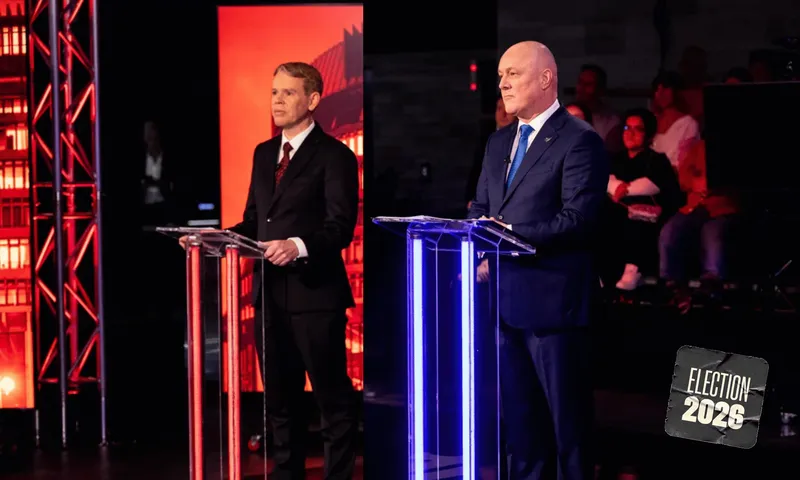
Chris and Chris, the sequel. Image: The Spinoff
So much the same, so much different – these are the firsts in 2026.
Today’s the day. The polls are open at advance voting sites across New Zealand. If you’re not enrolled, do it now; consider yourself not too late but really early for the box-office 2028 local elections. And who knows, given how close things are, there could always be another general election in the new year.
As for today, it’s already, as heavyweight political scientists everywhere are saying, a “funny old election”. There are a multitude of firsts, or things that are likely to be. For example …
Everything is the same
If it all feels a bit deja vu, that’s because you’ve already seen it. You have to go back to 1993 to find the last time the leaders of the two big parties (Jim Bolger and Mike Moore) were going at it for the second election in a row.
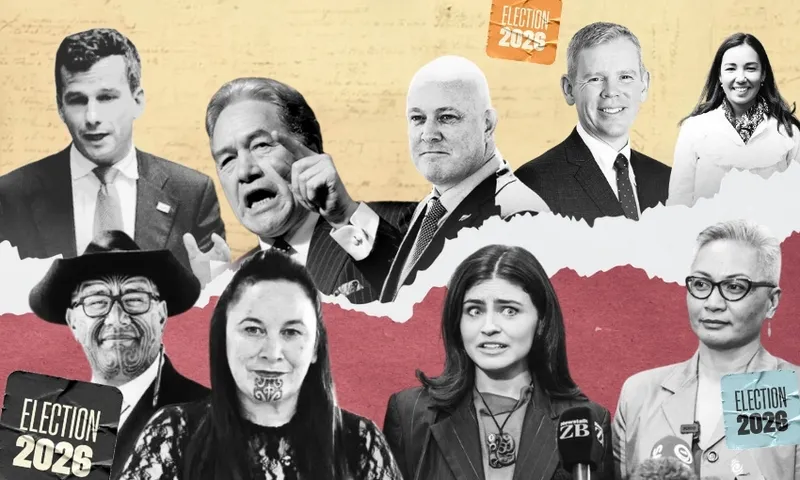
Zoom out and look at the firmament of parliamentary party leaders, and they’re the same leaders as 2023, with one exception: Chlöe Swarbrick has replaced James Shaw. Otherwise, it's the same parade.
Something could be different
Never under MMP has a new party broken into parliament without being grafted from an existing party. Opportunity, at its fourth time of trying, is on the brink of doing just that. It’s far from a done deal. But having hit the 5% threshold in nine of the last 10 published polls, it is the best chance to date.
Purple drain
National and Labour have been entwined together in an underwater dance – crawl through 50 years of polling for TVNZ, for example, and you won’t find them simultaneously so doldrummed.
Historically unpopular
Even if National were to hit the 32% of the latest 1News/Verian poll (a jump from the high-20s of most recent polls) and return to power, that would be the lowest result for a government-leading power under MMP. The next lowest would be Bolger’s National, which hit 34% in 1996.
(In 1931, Gordon Coates became prime minister despite his party only winning 27% – although, as Winston Peters would have you remember, he came from the smaller party in coalition.)
The least popular PM
Whoever gets the swipe card to the ninth floor, it’s set to be the least popular prime minister in the MMP era. Sorry, but that’s just what the numbers say.
An overhangover
There have been a number of overhangs in MMP elections – in which places have been added to parliament owing to a party winning more electorate seats than its party vote would otherwise produce. But never have we seen anything close to this.
On the left, te Pāti Māori is looking to shift the balance of power by encouraging supporters to split their votes and generate and overhang. On the right, super-rich donors, candidates and former party leaders are urging a similar strategy to engineer disproportionate numbers. Each has a serious chance of winning. Each faces legitimacy risks, should it work and prove decisive.
Either: the first fully fledged coalition to return in MMP
For all the noisy disagreements within the tripartite coalition, it survived the term, despite being the first of its kind, with three parties having multiple ministers around the cabinet table. If returned to power, it would therefore be the first to do that.
To look at it another way: outside the two big parties, Jim Anderton is the only person to serve two consecutive terms as a cabinet minister under MMP.
(It is possible, of course, that a National-led government could return with one or both support parties offering confidence-and-supply; or Opportunity doing a deal; and/or some kind of minority fandangle.)
Or: the first one-term National government
This is New Zealand’s sixth National government. If unsuccessful this time, it will be the first not to be re-elected after one term. Every one of those first National five, in fact, won three times in a row.
It would also be the first one-term government under MMP (Labour had two previously).
That would also mean something else. Keith Holyoake was prime minister for a short burst in 1957. He took National into opposition, then back to government in 1960. There has been no prime minister to serve non-consecutive terms since. Could Hipkins end that drought?
Finally, I am ready to stand corrected, but surely – surely – a Hipkins victory would be the first time in any country in the world a prime minister called Chris has been replaced by a prime minister called Chris only to be replaced by a prime minister called Chris. What a time to be alive.

Toby Manhire
Toby Manhire is editor-at-large at The Spinoff. He loves to cast a pod, whether it's Gone By Lunchtime, At Large or Juggernaut. He is a former editor of The Spinoff and has worked as a journalist in NZ and the UK since the last millennium.
Sign up to Two Ticks, delivered straight to your inbox.


