I read 200 books while trying to escape postpartum depression

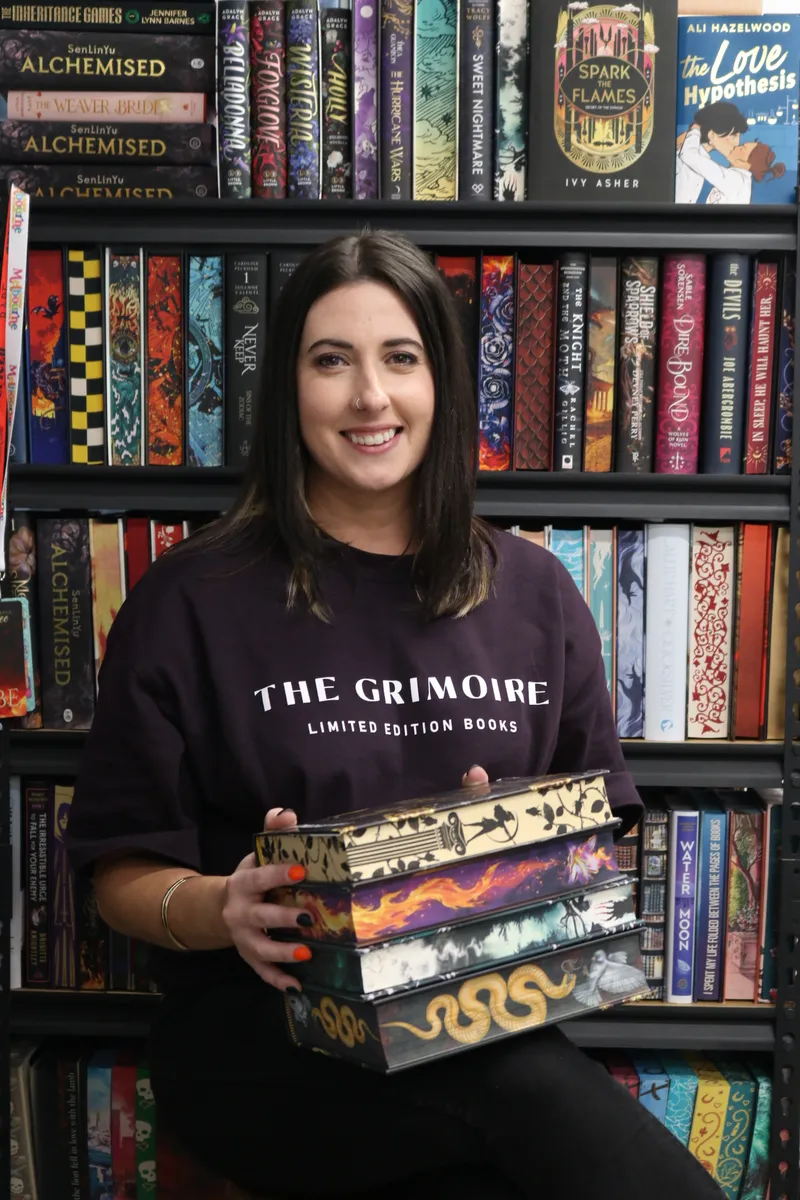
Anastasia George runs The Grimoire, an award-winning online bookshop for special editions (Photo: Supplied)
Made possible by


Anastasia George reveals the mental health trials that led to her starting The Grimoire, an award-winning online bookshop for special editions.
When I think about the first few months of my son's life, I remember walking. A lot. When he was six weeks old I went to brunch with a friend and then took him for his six-week vaccinations. By the end of the day I was so overwhelmed and on edge that when my husband walked through the door that afternoon, I walked straight back out. Nothing had happened and we hadn't had an argument. I just had to get away from everything. I walked 13 kilometres before eventually ringing my husband and asking him to come and pick me up because I couldn't make it home.
I was in a perpetual state of flight. There was no peace. I felt empty and anxious, my back was always up; I was always waiting for something terrible to happen. This was postpartum depression, although it started before my son was born.
I'd known throughout my pregnancy that something wasn't right. We had been trying for eight months to get pregnant and when I finally saw the positive test, my first thought wasn't relief or joy. It was, “Oh god, what have I done?”
Fear snowballed. I grew terrified that I had already ruined this child's life before he was even born. I was so frightened of hurting him or doing something wrong that I struggled to connect and bond with him while I was pregnant. Eventually my sister messaged me and said, in a very blunt and loving way, “If you do not tell your OB that you are not OK, I will.” It was a threat, and I knew she would follow through. I eventually told my OB that I was struggling and she connected me with Little Shadow, who helped me navigate what was happening. Eventually I was admitted into the Maternal Mental Health programme at Wellington Hospital.
Having a child and being pregnant is often talked about as one of the most wonderful and joyous life experiences of life. When I didn't feel that, I felt like a failure. Why wasn't I loving this? What was wrong with me that I couldn't find joy and love in something women have done every day, all over the world, for thousands of years? The less joyous I felt, the harder I struggled; and the harder I struggled, the worse I felt. It became a self-loathing spiral.
I wanted, needed, to find a tribe. Only this was near impossible because most days I found it hard to leave the house or talk to anyone. I was incredibly lonely. I would pull up to my weekly SPACE class and have a panic attack in the car. I was terrified of being there with all these other new mums who seemed to be having a great time and loving their babies, while I was barely hanging on. I forced myself to go because I wanted my son to make friends, and every week I hoped it would somehow feel better. It never did.
As my son got older, he started sleeping through the night but wouldn't sleep during the day unless he was in the pram. So I walked. From three months old until he was eight months old, I walked approximately 15 kilometres a day with him. On my worst days I walked 25 kilometres. I would keep going until my flight instinct settled enough that I could go home. Walking was one of the ways I managed to get through those days, but eventually I found another way to escape: books.
While my son lay in front of his black-and-white books I read for short periods. I didn't watch TV because I had convinced myself that screens were bad for children. I catastrophised about damaging my son's baby brain. I avoided my phone too. My social media feeds were full of people with babies and advertisements for baby things: a constant reminder of all the ways I thought I was failing. At night, I struggled to sleep because I was terrified of SIDS and would stay awake listening to my son breathe. So, I would read.
Over six months I read around 200 books.
Books gave me a chance to pause in my own skin. When I was reading, I wasn't in fight or flight mode. I wasn't looking for threats everywhere, waiting for the other shoe to drop or ruminating on all the ways I was ruining my son's life. I could stop running and sit still for a while.
There wasn't one particular book or character that got me through it. I was reading romance, romantasy and fantasy; stories about women finding themselves through challenges. Their challenges weren't about getting their baby to sleep. They were wrestling with dictators taking over worlds, wars; things that felt, to me, like real problems. I was inspired by women who were changing their worlds, standing up for what they believed in and refusing to be afraid.
Reading didn't heal me. The therapy and the work I did are what healed me, and I will never pretend otherwise. But reading went hand in hand with that process. When I was struggling to live in my own body and accept who I was and the situation I was in, I could escape into new bodies and new worlds. Romance, romantasy and fantasy let me live thousands of lives and experience thousands of things while staying safe in my lounge at home. The stories had happy endings, and when I was struggling to imagine my own future, those endings gave me a small amount of hope that I would eventually find mine too.
By the time my youngest was seven months old, I had mostly come out of the worst of my depression. I was better, but I also didn't really know who I was anymore. My husband, Aaron, started asking what I wanted to do. Did I want to stay at home? Go back to work full-time? Study? I honestly had no idea. What I did know was that I'd fallen back in love with reading, and I had become increasingly frustrated by how difficult it was to get the special and limited editions I wanted in New Zealand. I'd spent plenty of time trying to find particular editions, dealing with international shipping and retailers that didn't always have the edition they appeared to be selling. I'd complain about it, try other stores and wonder why it was so hard for New Zealand readers to access books that were readily available elsewhere.
So when Aaron suggested I open a bookshop one night after the kids were in bed, it wasn't completely out of nowhere. I'd already been thinking about the problem, even if I hadn't been thinking about a business as a solution.
I immediately came up with every reason under the sun why a bookshop was a terrible idea. We were in a recession. I was an accountant. What accountant would open a bookstore in a recession? But the idea stuck. A few months later, Aaron asked me over lunch, “If you were to open a bookstore, what would you call it?” The name came to me straight away: The Grimoire. That's when the idea finally became real.
The Grimoire wasn't created because I thought other women needed books to get through depression. Other women already knew about the joy of reading and escapism. I simply wanted to make the special and limited editions I had struggled to get in New Zealand more accessible. If I was having trouble finding the particular editions I wanted, I figured other people probably were too.
What I hadn't anticipated was the community. Because I'd removed myself from social media I had no idea how many people were out there sharing a love of books. Since opening The Grimoire, I've met people from all walks of life through their love of reading and special editions. I've found people who want to nerd out about books, who are comfortable talking about sex and pleasure, who are willing to explore stories they might once have considered taboo, and who have had their own difficult experiences and come out the other side.
I don't think The Grimoire would exist if I hadn't gone through postpartum depression. I would still have read, because I've always read, but I don't think I would have fallen back in love with it to the extent that I did. I probably would have gone back to my old job and carried on with life. Instead, I found books in a completely different way, and through them eventually found a community I didn't even know existed.
I talk about my experience with postpartum depression openly now because I remember how alone I felt. If one woman reads this and feels less alone because of it, then putting myself out there is worth it. I don't want anyone to think that books will heal postpartum depression. They won't. But they can help. Getting help isn't embarrassing, and struggling doesn't mean you're failing at being a woman or a mother. I know that now.
Where to get help
Little Shadow – Mental health support, from pregnancy through to the early years of parenthood.
Perinatal Anxiety and Depression New Zealand – Championing perinatal wellbeing in our communities.
Lifeline – 0800 543 354/0800 LIFELINE (7am-midnight), or free text 4357 (HELP). Here to listen and help.
Depression Helpline – 0800 111 757 (24/7), or free text 4202. To talk to a trained counsellor about how you are feeling or to ask any questions.
Suicide Crisis Helpline – 0508 828 865 (0508 TAUTOKO). If you, or someone you know, may be thinking about suicide, call for support from a trained counsellor.
Samaritans – Free call 0800 726 666 for support for anyone who is lonely or in distress (24/7).
The Spinoff Books section is proudly brought to you by Unity Books and Creative New Zealand. Visit Unity Books online today.

Anastasia George
Anastasia George is the founder of The Grimoire, an award-winning online bookstore for special editions based in Wellington.


