
Ardern has indicated the government is seeking National’s backing. Luxon says the party doesn’t see the need for hate speech laws but will look at the government proposal, writes Anna Rawhiti-Connell in this excerpt from The Bulletin. To receive The Bulletin in full each weekday morning, sign up here.
Musk, free speech and where we draw the line
After a brief hiatus, hate speech law and concurrently, debate about free speech has entered the chat again following Kiritapu Allan’s announcement on Sunday. I was asked a couple of weeks ago on my Friday morning spot on TodayFM whether I thought we could constructively talk about this subject. I enthusiastically replied yes, with the caveat that I wasn’t confident that it would be constructive online. That was a bit of a cop out as it ignores the fact that in 2022, online discourse is almost a proxy for what we understand to be speech. That’s been well highlighted in the eight million articles (unscientific estimate) about Elon Musk’s acquisition of Twitter and speculation about the changes he plans to make. The Front Page has a great listen and read on Musk, free speech and where we might draw the line.
Ardern looking for broad consensus, seeking National’s backing
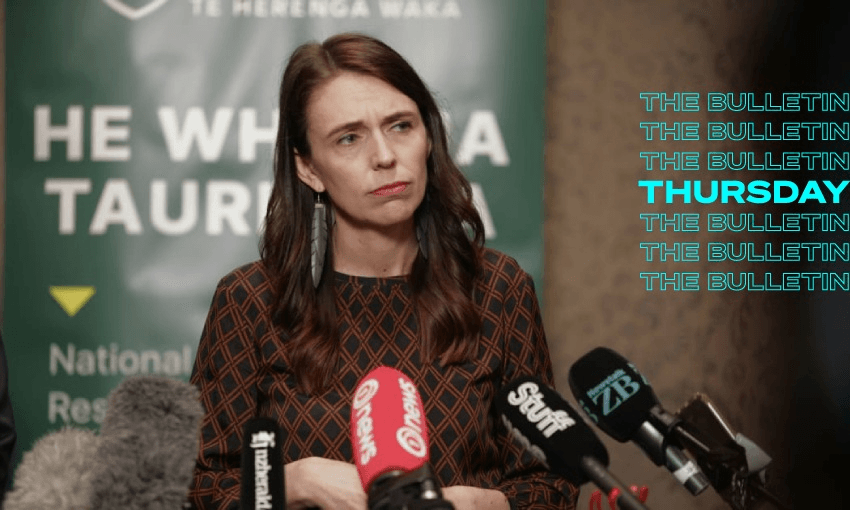
During the two-day counterterrorism hui on Monday and Tuesday, the prime minister added some clarity to where the government might be heading on hate speech law. As Newsroom’s Marc Daalder reports Jacinda Ardern is looking for broad consensus, indicating the government would seek National’s backing for a slimmed down reform package. Daalder writes that the prime minister’s comments suggest that the government may leave the definition of hate speech as it currently is, which only includes discrimination on the basis of race, ethnicity or national origin. There’s been a case underway in Wellington this week where a judge was being asked to rule on the current law not covering hate speech about people’s sexuality.
National doesn’t see need for hate speech laws
Opposition leader Christopher Luxon also opened the door and let a crack of light shine on his perspective yesterday saying the party strongly supported free speech. “We don’t actually see a need for hate speech laws,” he said. He went on to say the party “would look at what the government’s proposing, when it gets it on paper and puts it into detail.” He was challenged to state a position on hate speech law on Tuesday by Jonathan Ayling of the Free Speech Union.
New study reveals levels of discomfort about expressing views at universities
On Nine to Noon yesterday, Kathryn Ryan interviewed Dr Jamin Halberstadt, co-author of a new study about how comfortable students feel to express views on certain areas in the classroom. It found that between 20 and 40% of students from Otago, Auckland and Victoria Universities felt uncomfortable “speaking up and giving their views” on gender, politics, religion, and sexual orientation. I think it’s worth noting the US study that creates the comparison for the New Zealand study was conducted by the Heterodox Academy. Though the academy says it’s explicitly non-partisan, it has been criticised for having an ideological slant and creating a moral panic about free speech on campus, noting in its introductory blog that “academia has become a left-leaning tribal moral community that is a hostile environment for non-liberals”. I think it’s equally important to note that Halberstadt was very cautious about not extrapolating beyond the New Zealand study’s data and did not assign possible causes to the results.