
A more structured set of qualifications is poised to replace NCEA entirely by 2030, pleasing the current system’s copious haters, asks Catherine McGregor in today’s extract from The Bulletin.
To receive The Bulletin in full each weekday, sign up here.
Scrapping the system
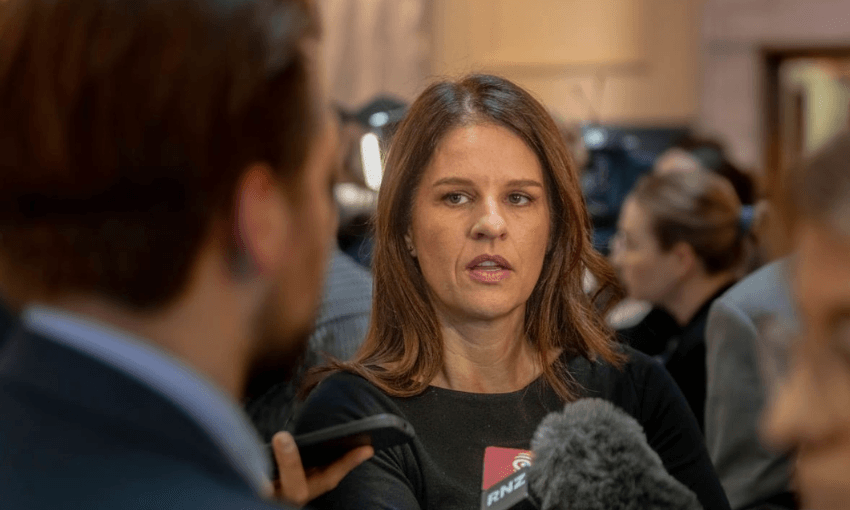
While an announcement on the future of NCEA was widely expected today, few predicted the government would propose abolishing the entire system. But that’s exactly what education minister Erica Stanford and prime minister Christopher Luxon announced yesterday morning: a phased plan to replace all three levels of the National Certificate of Educational Achievement with a new, more structured qualification framework. The proposed system will see Year 11 students working towards a new Foundational Skills Award from 2028, focused on literacy and numeracy. Year 12 and 13 students will then study for two new national qualifications: the New Zealand Certificate of Education and Advanced Certificate of Education, to be introduced in 2029 and 2030 respectively. Students will be assessed using a mark out of 100 alongside letter grades, with English and Maths compulsory in Year 11 and a minimum of five subjects required in Years 12 and 13.
A broken model
Critics of NCEA have long argued that the system’s flexibility – once seen as a virtue – has instead led to confusion and declining standards. According to Auckland University’s Claudia Rozas, NCEA “created an illusion of educational equity” by offering choice without addressing deeper inequalities. While students in low-income schools are often given a narrower range of subjects and pushed towards internal assessment, “it is simply not the case that all students in low socio-economic schools are going to struggle with external assessment”, she said.
Speaking to Q+A’s Jack Tame on Sunday, Jamie Beaton, founder of tutoring business Crimson Education, said the current system was leaving students unprepared for the future, without the resilience necessary for higher education or professional success. “If you have an education system that’s super chill and relaxed, you create these adults that can’t actually function in the workplace,” he said. For Stanford and her officials, the final straw was a recent ERO review that found the system failed to ensure coherent learning programmes, was “difficult to understand”, and was not preparing students for future achievement. “That report was hugely influential and formed the basis for discussions about what to do not just with Level 1, but the entire qualification,” reports the Herald’s Jamie Ensor (Premium paywalled).
The politics of education reform
Today’s announcement represents the most ambitious and potentially contentious education reform since NCEA was first introduced in 2002. In The Post (paywalled), Luke Malpass called it “a brave move” that could prove the “crowning achievement” of Stanford’s ministerial career. But the scale of the overhaul – and its long implementation timeline – means it’s unlikely to deliver any political payoff before the next election. While education is a personal priority for Luxon, he may not be in office by the time the first cohort graduates under the new system.
Meanwhile Labour has expressed openness to the changes, while questioning the speed and scope of the changes. Education spokesperson Willow-Jean Prime warned that “previous rushed overhauls have led to students being the guinea pigs for failed change – like national standards – so we must get this right”. The Greens are more adamantly opposed. Spokesperson Lawrence Xu-Nan said the party “[remains] entirely unconvinced this is what our school system needs. In fact, it risks throwing the baby out with the bathwater.”
Why schools are walking away
For many elite and private schools, the government’s announcement is validation of a move they’ve already made. In recent years, an increasing number have either ditched NCEA or introduced parallel pathways such as Cambridge International or the International Baccalaureate (IB). Cambridge, widely seen as a more traditional academic model, is heavily exam-based and taken over two years, while IB offers a broad spread of subjects and extracurricular components like sport and service. Educationalist Nina Hood told Chelsea Daniels, host of the Front Page podcast, that the rise of these alternatives stemmed partly from concerns about NCEA’s lack of consistency: while some students are studying hard all year, others “can just opt into what are perceived to be the ‘easiest’ standards” and end up with the same qualifications, sometimes without sitting a single external exam.
While defenders of NCEA say it provides valuable flexibility, the reality is that trust in the system has eroded. As Malpass noted, even if it did produce world-class outcomes, a qualification that isn’t seen as credible is no better than a currency no one accepts. The next five years will reveal whether its replacement fares any better.
- ‘So many issues’ but ‘alright, I guess’: What students actually think of NCEA
- Can all students be excellent?