After two years on the throne, Kuīni Nga wai hono i te po is forging her own path

Kuīni Ngawai hono i te po celebrates her second Koroneihana as the Māori monarch this week. (Photo: Kīingitanga. Additional design: Emily Wong).
Today is the second day of the second anniversary of the coronation of Kuīni Nga wai hono i te po. Known as Koroneihana, the four-day event sees people from around the country, and the world, gather together at Tūrangawaewae Marae to celebrate the coronation of Te Arikinui.
Yesterday, hapū and iwi from around Tainui waka gathered to honour their loved ones. Today, iwi from across Aotearoa will do the same. Tomorrow, leaders from around the world, MPs and other politicians will arrive. On Saturday, Kuīni Nga wai hono i te po will deliver a much-anticipated speech to the nation.
Following her father’s death in August 2024, Kuīni Nga wai hono i te po spoke publicly for the first time at last year’s Koroneihana. She used the opportunity to outline her priorities as the successor to her father’s throne. The economic prosperity of Māori was the main theme, signalling what was to follow over the next 12 months.
Since her father’s passing, Kuīni Nga wai hono i te po has continued with the expected roles and responsibilities of the Kīngitanga. The regular annual events of poukai throughout Waikato, manu kōrero and kapa haka competitions, gala dinners, and Koroneihana preparations have consumed much of her time since her ascension to the throne. But Kuīni Nga wai hono i te po has also set her own direction for the Kīngitanga movement.
A highlight of her reign so far has been the launch of an iwi-backed $100m sovereign wealth fund, announced at the Ōhanga ki te Ao economic summit held in Waikato last November that brought together leaders from Australia, Europe, North America, Asia, and the Pacific. “Every opportunity must deliver real outcomes for our people and solid returns that grow wealth for generations to come,” she said during her speech at the event.
The fund forms a key part of a wider strategy for the development of the Māori economy, now estimated to be worth approximately $126bn. Aligned closely with Waikato-Tainui, the Kīngitanga is combining its forces with other major political and strategic leadership bodies, sector-specific collectives and advocacy networks and major iwi post-settlement governance entities to work towards a burgeoning Māori economy and mana motuhake for Māori.
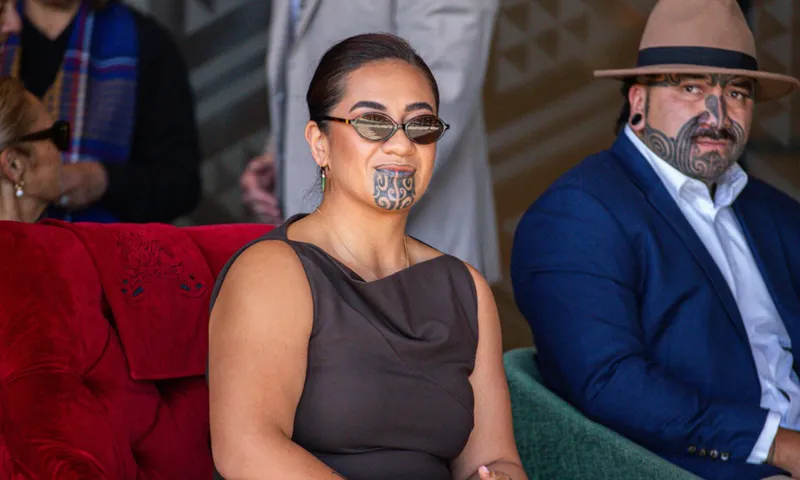
“Ōhanga Ki Te Ao is a chance to achieve our economic aspirations independently of government in our pursuit of self-determination, sustainable futures and thriving peoples,” Nga wai hono i te po said during her maiden speech as monarch.
The economic focus builds on the legacy of Kīngi Tūheitia Pōtatau Te Wherowhero VII, the father of Nga wai hono i te po. Tūheitia was a strong advocate for kōtahitanga, national unity, social justice, and indigenous cooperation across the Pacific – a legacy that Nga wai hono i te po has continued during her reign.
Among her many regular commitments, Nga wai hono i te po has continued to foster positive relations between the Kīngitanga and leaders around the Pacific, including travelling to Rarotonga, where she met with the Ui Ariki – the traditional leaders of the island – alongside members of the Cook Islands government.
In May, she travelled to the United Kingdom where she met Prince William and became the first Māori monarch to meet a British royal at Windsor Castle. She also spoke at the First Nations Major Projects Coalition conference in Canada, highlighting the need to protect the taiao, grow indigenous economies and uphold the right of indigenous nations to lead.
A trip to Dubai was also led by Kuīni Nga wai hono i te po to promote the sale of Māori grown kiwifruit into the market. The initiative, supported by a $5m investment fund, aims to assist Māori kiwifruit growers as they look to double their exports to the region over the next decade.
Beyond economics and international visits, Kuīni Nga wai hono i te po has emphasised the need for preservation of the natural environment. At the royal regatta dinner at Tūrangawaewae Marae in March, she issued an urgent call to action to restore balance between humanity and ecosystems, noting that “the natural world is constantly speaking through rivers, land, winds, and oceans – and it is time to listen”.
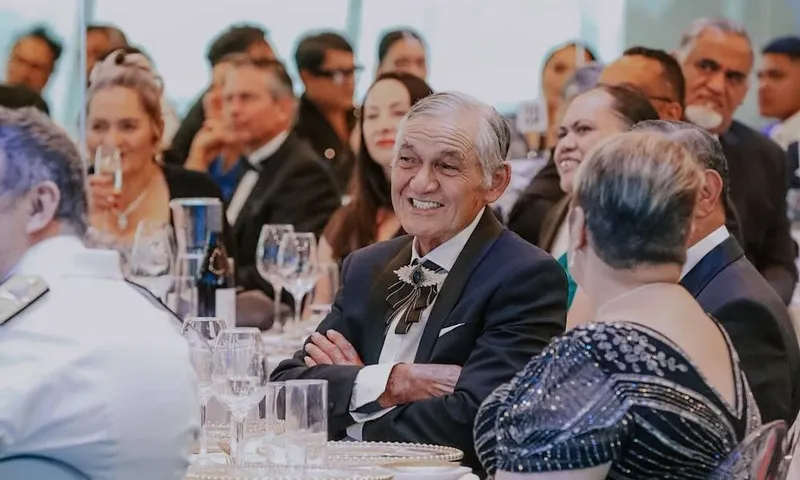
Kuīni Nga wai hono i te po is scheduled to deliver her Koroneihana speech on Saturday afternoon. With an election looming, and two particularly strong candidates standing in the Hauraki-Waikato electorate – Labour’s Kingi Kiriona and Te Pāti Māori’s Hana-Rawhiti Maipi-Clarke, both with strong links to the Kīngitanga – many will be watching closely to see whether the Māori monarch endorses a candidate or party. Her speech is otherwise likely to echo last year’s one, calling for greater economic independence and a strengthening of Māori independence through a thriving Māori language and environment – all of which, she says, will support Māori wellbeing.
As Nga wai hono i te po continues to create her legacy, the role of the Kīngitanga in today’s society will continue to evolve. Established in 1858 to unite Māori tribes, halt land sales to European settlers, and protect indigenous autonomy, the challenges the Kīngitanga and te ao Māori now face have shifted, but kotahitanga remains pivotal in the journey towards mana motuhake.

Liam Rātana
Liam Rātana (Ngāti Wairupe/Ngāti Kurī) is editor of The Spinoff's Ātea section. He is passionate about indigenous and minority issues. Liam enjoys cooking, poetry, photography, and exploring the outdoors.


