Fresh footsteps on old trails: Māori are returning to manage Molesworth Station

Molesworth Station will be managed by Ngāi Tahu Farming. (Photo: Department of Conservation)
Ngāi Tahu will soon manage New Zealand’s largest farm. But beyond the cattle, wilding pines and sweeping valleys lies an older story of whenua, taonga species and connections severed by colonisation.
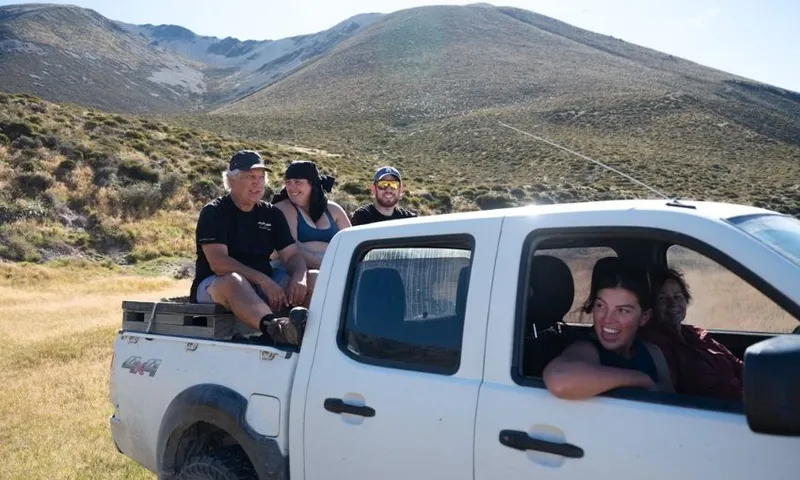
My earliest memory of Molesworth Station is the smell of vomit in my grandparents’ black bighorn. My three siblings and I are packed in the back during a summer holiday in the early 2000s. My older brother and I, exasperated after pulling over for the millionth time for someone to throw up, get out of the car and start walking down the wide open valley.
You can’t see iwi in the landscape: No punga, or bush of any kind. No rākau (unless you count the wilding pines). No red and white signs saying how many metres to the next marae.
Mountain peaks with shingle slopes drop sharply down into the yellow tussock flats. The earth opens to heaven. This is Rangitahi, converging skies, the name used by Ngāti Kurī o Ngāi Tahu for this whenua. In English, it is known as Molesworth Station. At 181,000 hectares – the same size as Stewart Island – it is the largest farm in the country.
After being under the management of Jim and Tracey Ward for the last 24 years, Ngāi Tahu are set to once again become managers of this whenua through its subsidiary Ngāi Tahu Farming. Set inland of Awatere, approximately 120km south of Blenheim, Molesworth is a surviving remnant of early colonial times when surveyors drew sweeping lines across maps, and handed out land to eager settlers.
Molesworth was included in the 1839 land deal between the New Zealand Company (the original colonial property developers) and Ngāti Toa rangatira Te Rauparaha. However, it wasn’t entirely his land to sell. And evidently, the deal didn’t even include Molesworth Station.
In 1847, the Crown acquired the inland area of the top of the South Island from Ngāti Toa. A deed known as Te Waipounamu tried to sort out ownership issues among Te Tau Ihu iwi. My people of Rangitāne – who have iwi connections in the area – weren’t part of this settlement, and received just £100 compensation for the transaction in 1856.
The Crown sought to then purchase the southern end of the inland area with the Kaikōura purchase of 1859. This deal was negotiated by Ngāi Tahu leader Kaikōura Whakatau, and included keeping large reserves for Ngāi Tahu. However, it was less compensation than he wanted and the government never made good on those reserves, including my own tūrangawaewae of Mangāmāunu and Waipapa, just north of Kaikōura.
Meanwhile, the Crown had already begun leasing the whenua inland to farmers, most of whom ran sheep operations. Some of these farmers found stone adzes, pāua shells, and eel baskets. There was even a whare in the valley that was discovered by early European explorers.
This area was not – and arguably still isn’t – conducive to farming. In summer, the land bakes, grass giving way to the dirt underneath. In winter, temperatures drop to as low as -10°C. Successive farming operations have battled the elements, and even worse, the pests.
The conditions were so difficult that farming operations were virtually abandoned by the 1950s. The government stepped in and took over, and the whenua has been managed by Pāmu Landcorp Farming ever since. While the land has mostly been a farming operation, it has also served as a tourist attraction, with the Acheron Road pass open over the summer months.
There are stories of how our people used this inland whenua. In the Molesworth, Ngāi Tahu leader Kaikōura Whakatau hunted for kakapō in the Awatere river. Rangitāne sought refuge deep in the back country here after the Ngāti Toa raids. Like many iwi and hapū, while we currently dwell on the coast on the remaining slithers of our whenua, we once moved according to the changing seasons, moving from place to place to find where kai and resources were most plentiful.
On a recent tipi haere in search of tikumu – a flower with large rau and a taonga species for our people – my teina Hane and I were in awe watching the bubbling of the Waiautoa. It was our first time seeing it this far inland.
One species of tikumu grows only in the alpine areas of Te Waipounamu. The leaves are soft, waterproof and fire resistant – making it ideal for cloaks. One of only three tikumu cloaks still in existence was woven by Ngāti Kurī tipuna Mere Tetahi.
Recently our Ngāti Apa whanaunga Hamuera Manihera and our Mangāmāunu whanaunga Naomi Aporo-Manihera came to teach us more about this taonga. As part of our learning haerenga, we went deep into our rohe, into the backcountry by St James station, which joins onto the Molesworth, to look for where tikumu might grow.
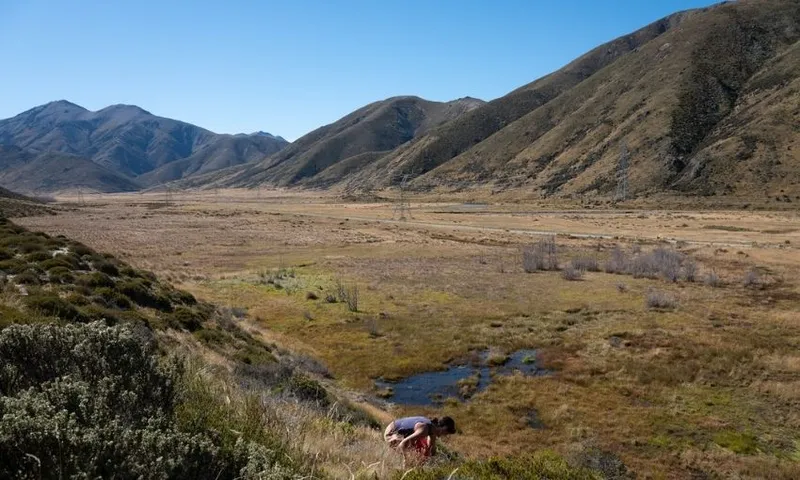
It provided a new way of seeing our rohe. The Waiau Toa snakes all the way behind here. The stories of the inland journeys came to life. We weren’t just coastal people, but when we lost the whenua, our connection inland was severed too.
A whole new array of taonga species opened up to us on this trip. Not just tikumu, but also its spiky hoa taramea, which were used to make perfumes. Hane was given some – the smell is divine.
Our rohe is now opening up to us again.
The station will stay in Crown ownership and remain open to the public. While Ngāi Tahu Farming’s experience operating three high country stations in Te Waipounamu put them ahead of the others who applied, they’ll still need to lay out how they’ll maintain public access and improve weed and pest control.
This is not a small task considering Molesworth has one of the worst infestations of wilding pines in the country. These pine trees can’t be harvested for commercial use, pull water from the rivers and take over the delicate eco-system surrounding them.
In time, I hope the sea of green will be replaced with a sea of the yellow-white tikumu. I imagine the whānau gathered around a camp fire, sharing the stories of the ingoa Māori of the maunga once lost to us. In the morning, we’ll fill our kete with tikumu with cries of “ouch” echoing across the valley whenever we get a little too close to tikumu’s friend. A seasonal pilgrimage restored – fresh footsteps on the trails of old.

Meriana Johnsen
Meriana Johnsen (Kāi Tahu, Kāti Mamoe, Rangitāne o Wairau) is a writer, journalist and communications professional. She has written, produced and presented news, current affairs and long-form features for RNZ, The Spinoff, and The Hui. She is passionate about sharing iwi/hapū stories of old, and writing the stories of today mō āpōpō.


