‘It still belongs to us’: The ‘new Goldie’ painting raises questions over cultural rights

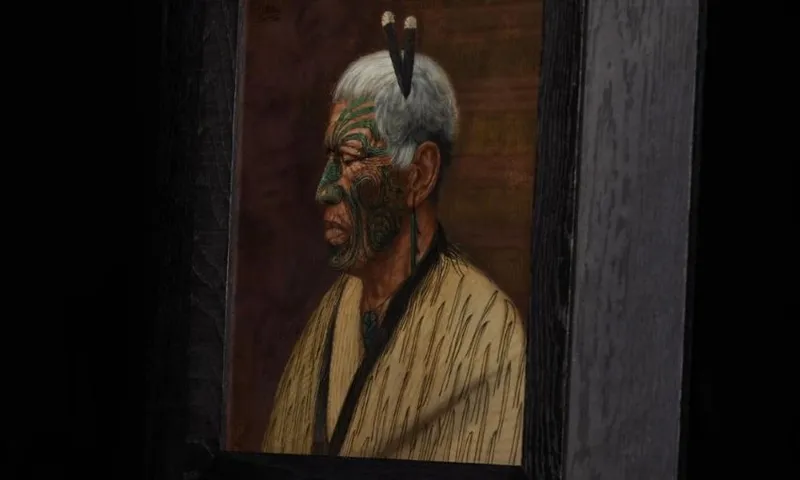
Patara Te Ngūngūkai, as depicted by, allegedly, CF Goldie (Image: Supplied)
A ‘previously unrecognised’ Goldie painting has raised eyebrows in the art world amid questions around its authenticity. What hasn’t grabbed the headlines is what rights, if any, the subject’s descendants have.
Everyone has mana. Everything has mauri. These two concepts are integral to the Māori world view. When an apparent Goldie painting recently resurfaced for sale, the mana and mauri of the subject, artist, owners and auctioneers all came under scrutiny.
A press release from NZ Art Broker claimed the work was “a previously unrecognised” 1917 painting by Charles Frederick Goldie, commonly known as CF Goldie. Titled ‘Lost in Thought, Ngāheke, An Arawa Chieftain’, the release says the portrait was originally exhibited at the Canterbury Society of Arts in 1917 but “disappeared from records” until it was sold in Australia in 2020.
With the help of Te Arawa iwi Tūhourangi, the identity of the subject was confirmed as Patara Te Ngūngūkai – a renowned Te Arawa tohunga responsible for preparing human bones following exhumation for reburial.
“We were contacted a few years ago by someone from the Australian estate that owns the painting researching who the tūpuna was. That was the last we heard of it until this week, when we learnt that it was going up for sale,” Kirikowhai Mikaere, chair of Tūhourangi Tribal Authority, told the The Spinoff last week.
Since then, the work has been withdrawn from sale after doubts were raised about its authenticity. Despite the “extensive technical examination” and research to confirm the origins of the work, some experts claim the painting is an imitation of a Goldie portrait and not an original work by one of the country’s most famous artists.
But authenticity isn’t the only murky aspect of the artwork. The question of what cultural rights descendants have relating to the sale of depictions of their tūpuna has also been raised. As the law currently stands, people who appear in paintings, photographs taken in public places, or any other works of art generally have no rights relating to those images – those rights belong to the artist or photographer. However, these rights are extinguished 50 years after the death of the artist, at which point the work and its likeness become public domain. This means anyone can use the image for any legal purpose. Assuming the painting is an original work of Goldie, then no intellectual property rights would apply in this case, or to any of Goldie’s works.
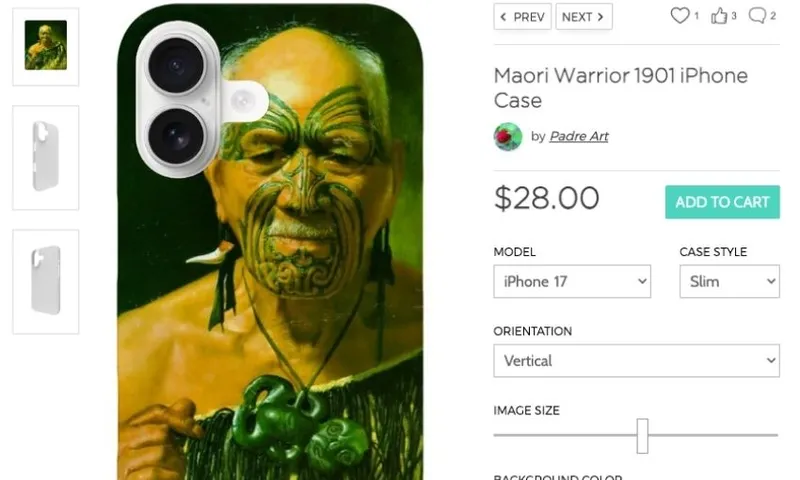
A prolific painter of Māori people, many of Goldie’s works and images of his subjects have been reproduced, including two that used to hang in a Christchurch cafe. Some versions have defaced or altered the subjects, while others can be purchased printed on an iPhone case for under $30. With the images belonging to the public domain, it can be difficult to legally prevent people from using them however they wish.
For Tūhourangi, “It’s a double-edged sword,” said Mikaere. “It’s a beautiful portrait and [there’s] an appreciation for the artwork, the genius of the artist and the depiction of our koroua. But on the other hand, that image being taken and sold for other people’s gain is always a challenging dilemma.”
In the past, some Māori have protested the sale of images of their tūpuna, while others have begun trying to purchase as many of these images as possible. With its estimated price tag of $420,000, purchasing the painting was not a viable option for the iwi, said Mikaere.
“We knew we wouldn’t be able to participate in in the auction, given the price they were looking to get. The silver lining, though, is we can resurface the true narrative of who this koroua was and how special he was,” Mikaere said.
Lynell Tuffery Huria, partner at Kāhui Legal and a leading expert on Māori intellectual property rights, said descendants don’t have many options. “I think we’re getting better at addressing cultural concerns in this space, but we still lack the legislative frameworks.”
Since it was introduced in 1994, no significant changes have been made to the Copyright Act. However, the government confirmed in May that amendments would be introduced due to obligations in free trade agreements signed with the United Kingdom and the European Union in 2023 and 2024. The most significant proposal is a 20-year extension to the term of copyright and related rights protection for most categories of work. However, no proposed changes would impact any of the rights relating to the painting of Patara Te Ngūngūkai.
“His [Patara Te Ngūngūkai’s] iwi have no ability to control the narrative about him or how his painting might be used in the future. There’s nothing that we can do about it within the current intellectual property frameworks, and that’s why the Wai 262 claim was filed back in 1991.”
Commonly referred to as the Flora and Fauna Claim, Wai 262 is a landmark Waitangi Tribunal inquiry addressing Māori intellectual property rights, traditional knowledge and control over indigenous flora and fauna. Alongside Taumata Whakapūmau – a group made up of descendants of original claimants to Wai 262 – Mikaere and Huria have been advocating for greater recognition of cultural rights in the intellectual property space. While the finer details are still being developed, the “Taonga Works Framework” and Tiaki Taonga movement would establish a commission responsible for overseeing the development of frameworks in the space.
“They would decide what’s a taonga work, who the relevant kaitiaki is, what their relationship is with that taonga and what level of protection should be given,” Huria said.
At a practical level, Huria said the painting of Patara Te Ngūngūkai would be covered under the framework. Acknowledgement of the subject’s iwi, hapū and whānau would be required and they would need to be consulted if there were any benefits from the use of the taonga.
The Protected Objects Act 1975, meanwhile, regulates the sale, import, export and transfer of culturally significant objects. While taonga tūturu – objects made, used or brought to Aotearoa by Māori and more than 50 years old – receive the strongest protections, including mandatory registration and restrictions on who can buy them, other historic objects are subject to different rules.
Historic portraits of tangata whenua do not qualify as taonga tūturu as they were produced by Pākehā photographers and artists rather than being made or used by Māori. As a result, despite their clear cultural significance, they do not receive the act’s highest level of protection.
“At the end of the day, [the painting] ultimately still belongs to us,” Mikaere said. “As much as we can, we will try to exercise governance or kaitiakitanga over it. If it was to be used for purposes that didn’t align, then we would definitely try to step in.”
While work is ongoing, Huria said she was doubtful any meaningful changes would be made in this space under the current government: “It’s a long-term strategy, long-term intergenerational project.”
In regards to the work being withdrawn from sale, Mikaere said: “The world works in mysterious ways, and I can’t help but wonder if this is the koroua exercising governance over his own image.”

Liam Rātana
Liam Rātana (Ngāti Wairupe/Ngāti Kurī) is editor of The Spinoff's Ātea section. He is passionate about indigenous and minority issues. Liam enjoys cooking, poetry, photography, and exploring the outdoors.


