We asked disrupted businesses if the City Rail Link has been worth the wait

Rose Hope outside her K' Road secondhand clothing store Crushes. (Photo: Supplied/Soap Scott)
‘We’re rammed,’ they told us. ‘Busiest lunches ever … it’s better than I thought it would be.’
Rose Hope has heard all the excuses. “It’s not safe,” people have told her, or, “they took away the carparks”. Hope’s secondhand clothing store Crushes has been based on Karangahape Road for 13 years. She watched foot traffic nosedive during Covid, then continued struggling as the economy faltered.
When her landlord tried to raise her rent, Hope told them: “There were 60% more [pedestrians] in 2019 than now.” In December, Hope and the store’s co-owner Sarah Firmston moved Crushes into a larger corner store. Initially, it worked, but, “we tanked in winter,” she says.
Around her, others capitulated. Bar Celeste, Sri Panang and Charlie’s Bar all closed, while record store Flying Out and the 35-year-old bar Verona went into liquidation. The music venue Neck of the Woods went under too, saved by a last-minute fundraiser.
When the City Rail Link opened last month, Hope noticed change happening quickly. “The street is visibly more busy,” she says. “[People] have discovered us because of the trains.”
That’s led to more customers coming to her store, and more sales. Recently, a woman Hope describes as a “brunching granny with a backpack” told her: “I haven't been here since George Court was a department store.” George Court closed in 1988, almost 40 years ago.
Exactly one month since Auckland mayor Wayne Brown declared the CRL open and pocketed the ribbon, Tāmaki Makaurau’s gleaming underground train network appears to be living up to its promises.
While it’s still early days, train usage is nearly double what it was a year ago, meaning foot traffic around its five new hubs has exploded. In turn, the businesses that managed to hold on through years of disruptions are enjoying their best trading in years.
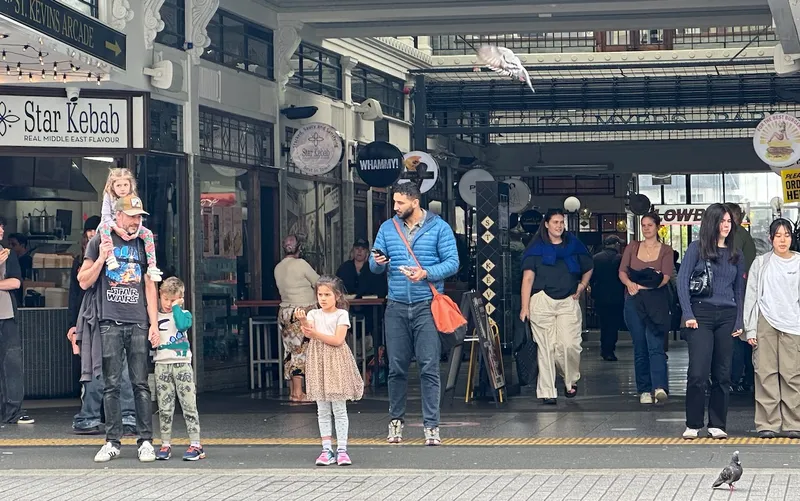
“Thank fuck” might be the best way to sum up the gratitude and relief expressed by retailers across multiple interviews with The Spinoff.
“It’s honestly been amazing,” says Elie Assaf, the co-owner of Pitt Street’s Lebanese Grocer. “The extra demand at lunchtime has definitely put a bit more pressure on our little team, but it’s a very good problem to have … we have had some of our busiest lunches ever.”
Jack Young agrees. He opened his Pitt Street bar No.7 in the middle of 2021, enticed by cheap post-Covid rent. “Stupid me said, ‘Let’s do it,’” he says. “The carrot that was the train station kept me going. Somehow we scraped by.”
Since the CRL has opened, Young says his bar’s been “rammed”. He’s seen many new faces and has a full house on weekends. “It’s been pretty mad … we’ve been flat out,” he says. Soon, renovations will double his floor space, taking advantage of this boom. “It’s probably a little bit better than I thought it would be.”
Roy Ward says the same thing is happening at his beloved bookstore. Six years ago, The Green Dolphin opened in St Kevin’s Arcade. Ward was full of hope but a series of setbacks knocked it out of him. “We lived through the renovations there, we lived through the improvements to K Road, we lived through the build of the stations,” he says.
Ward calls all that upheaval “disruptive”. “We’ve never had anything we could call normal.”
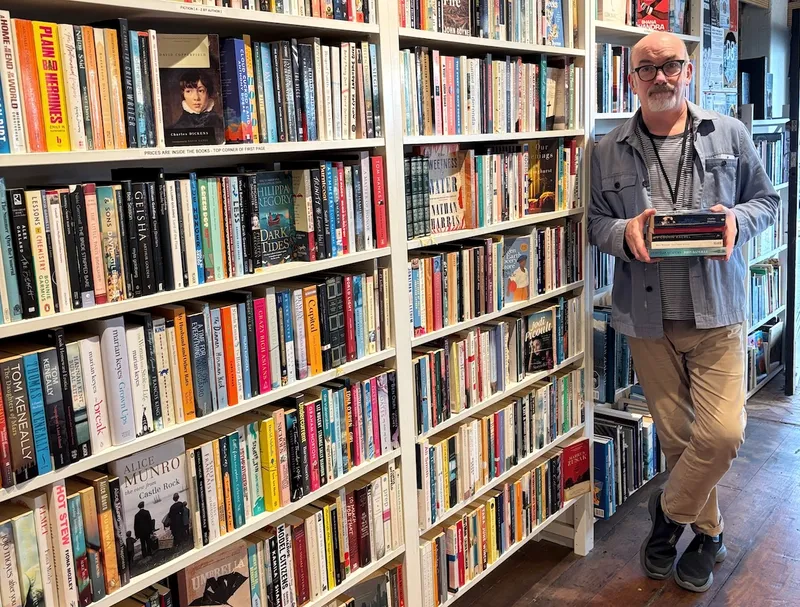
When The Spinoff spoke to Ward, he was at his counter in his new location next to Crushes, watching over a store filled with parents and kids. It was school holidays and he’d just sold three books: a Little Golden Book, a My First Picture book and a pop-up pictures book.
“K Road has such a mixed reputation,” Ward says. “But my point of view has always been [that if] you get people here in numbers, all that other stuff just fades away.”
Train usage has soared since the CRL opened, data supplied by Auckland Transport confirms. In its first week, Auckland’s rail network recorded 528,007 boardings, 62% up on the week before, and a new record.
Boardings dropped in the second week to 506,000, and again in the third to 466,445 – but that’s still up 89% on the same period last year. An AT spokesperson says numbers are expected to increase again around this weekend’s All Blacks game, and when schools return next week.
All that train usage has led to exactly what businesses want: a surge in foot traffic. A live chart showing pedestrian movements around the city centre shows above-average numbers across almost every site monitored since the CRL opened on September 13.
That chart is available on the website for Heart of the City, an organisation created to advocate for inner-city businesses; it turned down the opportunity to comment for this story.
Carolyn Young, Retail NZ’s chief executive, did pick up the phone. She believes retail success is a simple equation. “For people to come into stores and spend, you need people on the street, you need foot traffic,” she says.
Right now, the CRL appears to be delivering that. The question is whether those numbers keep growing, or stagnate. “Early success is getting people to use it right now, but that’s not going to determine whether or not the investment and the length of time that businesses have had those disruptions [was worth it],” Young says.
Retailers who have held on during desperate times deserve the rewards they’re getting, says Young. Yet she believes it will be a long time before the true impact of the CRL can be assessed. “That can’t be measured until we get two or three years down the line.”
After more than a decade of tough times, Hope, from Crushes, can’t help but feel optimistic. On a recent Friday, the nearby Bestie cafe had queues for a table, Lebanese Grocer was packed, and Hope’s secondhand store was getting crushed by people browsing racks of pre-loved clothes.
She points out the weather is warming, and summer and Christmas loom. Hope just needs the economy to pick up so customers have more disposable income to spend. “I’m selling a lot of $10 hair clips,” she says. Yet, for now, “the period of holding our breath is over”.

Chris Schulz
Chris Schulz is a contributing writer at The Spinoff. He's an award-winning journalist from Tāmaki Makaurau who has spent 25 years working for local publications. His specialties include live events, pop culture, infrastructure and Aotearoa music.


