The Nelson Tenths are coming home – now comes the hard part

Hēmi Sundgren argues treating the Nelson Tenths like pā harakeke is the way forward. (Design: The Spinoff)
The return of 7,500 acres and hundreds of millions of dollars is not the end of the Nelson Tenths story. Te Here-ā-Nuku trustee Hēmi Sundgren argues the real test is what happens next.
There are moments in our history that feel like endings: signatures are placed, agreements reached, numbers settled. But every so often, those moments are not endings at all – they are thresholds. The resolution of Te Here-ā-Nuku, the Nelson Tenths, is one such moment. It is not the closing of a chapter, but the opening of a question of what will be done now that the Tenths are, in part, made whole?
The Tenths – more than just parcels of land – once stood as symbols of hope and a brighter future, promises that history ultimately left unfulfilled. Today, the weight of that legacy rests on the trustees of Te Here-a-Nuku Trust, established to support the litigation and hold the trust assets. Yet, it’s crucial to understand the return of the land and compensation is far from a simple reversal of loss.
In the 1840s, as the New Zealand Company laid out the settlement of Nelson and its surrounding districts, our tūpuna entered an agreement that was both pragmatic and visionary. One-tenth of the settlement – 15,100 acres – would be reserved in perpetuity for Māori. The Nelson Tenths was not a gift. It was an economic instrument designed to provide the basis of an endowment, anchor participation in a rapidly forming economy and ensure that Māori prosperity would grow alongside the settlement. The promise was clear, and it was formalised in law through an 1845 Crown Grant known as the Spain Award.
The original promises were quickly broken though, with only a small portion of the Tenths actually reserved as intended. Much of the land was instead sold, leased, poorly managed, or lost altogether. Pā, urupā, and cultivations that were supposed to be set aside separately from the awards never received proper allocation. This was not an isolated incident, but part of a long-standing pattern of neglect – a failure that extended beyond policy to a fundamental lack of responsibility. Despite this, from petitions in the 1800s to legal challenges in recent times, our community has consistently fought to reclaim what is rightfully theirs.
This was never just a Treaty grievance in the political sense, it was a binding legal obligation grounded in trust and property law. In 2017, the Supreme Court affirmed that the Crown owed fiduciary duties to the customary owners of the Tenths. In 2024, the High Court confirmed those duties had been breached in fundamental ways. These findings did not create new rights but recognised the enduring nature of ones long ignored.
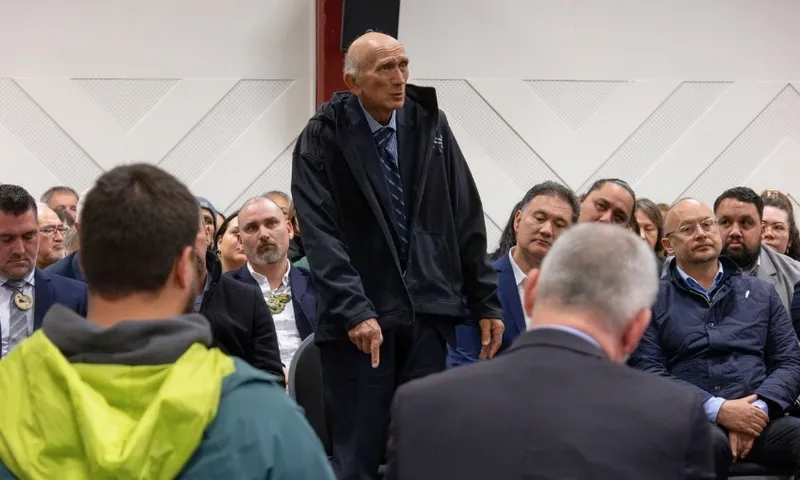
The Resolution Agreement reached under Te Here-ā-Nuku marks the culmination of that struggle. Approximately 7,500 acres of land will be returned across Te Tauihu, alongside hundreds of millions of dollars of financial redress for land that cannot be restored. It brings to a close one of the longest-running legal disputes in New Zealand’s history and formally acknowledges the Crown’s failure.
This is mana restored – but restoration must be understood carefully.
It would be easy, in this moment, to see the return of whenua and the scale of redress as an opportunity for direct and immediate utilisation – land or money as something to be divided, accessed, or occupied in ways that meet present-day expectations. That instinct is understandable – it speaks to a deep and legitimate desire for reconnection. But it also carries risk.
The Tenths were never intended to function as a series of individually consumed benefits. They were conceived as a perpetual endowment – an intergenerational economic base that would produce returns over time, not be diminished by use. If we shift that purpose now – if we treat the whenua or pūtea primarily as a place for direct allocation or fragmented use – we risk undermining the very mechanism our tūpuna fought to secure.
This is the uncomfortable truth at the heart of this moment: To make the Tenths whole is not to replicate the past, but honour its intent. And the intent was clear: Collective, enduring prosperity.
The opportunity before us is to re-establish the Tenths as a true endowment in accordance with our values – something protected, grown, and deployed with purpose. But perhaps the better way to understand this is not through financial language alone, but something more familiar.
The Tenths endowment is like the pā harakeke. At the centre sits the rito – the generational core. It is never cut. It is protected, nurtured, and allowed to grow, because it ensures the survival of the whole. Around it are the awhi rito, and beyond them the outer leaves, which can be harvested carefully and with intention. The strength of the pā harakeke is not in how much you take, but in how well you understand what must remain and the effort involved to nurture and care for the plant.
If you cut without discipline, the plant weakens. If you harvest too close to the centre, you compromise its future. But if you tend to it properly – protect the soil, root systems, and core, – if you take only what is appropriate and allow for regeneration, it will sustain generations. This is not a novel concept.
This is the model the Tenths now call us toward. The endowment is the rito. It must be held intact and protected from fragmentation, overreach, and the pressures of immediate demand. Around it sits the capacity to generate returns – those outer leaves that can be harvested to support the wellbeing of uri. The role of leadership is not to maximise extraction, but ensure balance: that what is taken today never compromises what must endure tomorrow.

Reconnection does not sit in the cutting of the rito, it sits in the weaving: Me tōngai harakeke e te iwi. The great orators of our Taranaki homeland called on this metaphor to reconnect, collectivise and be resilient in the face of adversity, Tohu and Te Whiti at Parihaka also uttered it as a unifying call to non-violent action. By weaving together our efforts and aspirations, we honour both our tūpuna and our descendants, ensuring the legacy endures and flourishes for generations to come.
The benefits generated from a strong and disciplined endowment can be woven back into the lives of our people through education, cultural revitalisation, environmental restoration and pathways that strengthen identity and belonging. In this way, the Tenths fulfil their purpose not by being consumed, but by enabling a network of outcomes and impacts that bind uri back to whenua, to whakapapa, and each other.
This is the quiet power of an endowment model: It requires restraint and clarity of purpose. It also requires us to hold fast to an idea that can feel counterintuitive in a moment of return: That the greatest expression of ownership is not always use, but stewardship.
Economically, this challenges us to think beyond conventional models. Not simply as asset managers, but as stewards of an intergenerational base. One that must grow, adapt, and respond to changing conditions, while remaining anchored in its founding purpose.
Culturally, it asks us to redefine reconnection not as proximity alone, but weaving participation, identity, and contribution. It asks us to invest in the things that bind us to each other and our history, even when those investments are not physically tied to land use.
Environmentally, it positions iwi not as passive recipients of returned land, but as deliberate kaitiaki – able to protect and enhance whenua precisely because it is not overburdened with competing demands.
And in governance, it requires a shift of mindset. From grievance to guardianship, recovery to responsibility, urgency of redress to the patience of stewardship.
None of this diminishes the significance of what has been achieved. If anything, it elevates it. Because it recognises that the true value of the Tenths does not lie in their immediate use, but in their enduring potential.
So we are left with a more difficult, but more important, set of questions:What does it mean to honour an endowment? How do we protect something not just for ourselves, but from ourselves? And how do we ensure that the benefits of this settlement are felt deeply by our people without compromising the foundation that makes those benefits possible?
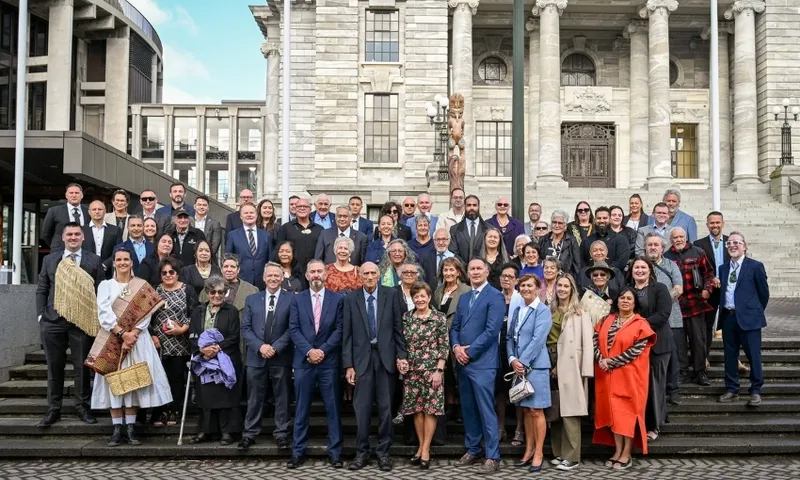
The resolution agreement does not represent justice completed, it represents justice returned to our care and stewardship. For 180 years, our tūpuna fought to have this obligation recognised. Not so that it could be consumed, but so that it could finally function as it was always intended.
The Tenths are coming home – but not as they left. They return as a test of our discipline, our unity, and our foresight. A platform not just for reconnection, but for permanence. A reminder that the greatest responsibility we carry is not to maximise what we can take today, but to safeguard what must remain tomorrow.
What is built from here will define whether the Tenths are merely settled – or truly made whole.

Hēmi Sundgren
Hēmi Sundgren (Ngāti Toa, Ngāti Raukawa, Te Ātiawa ki Whakarongotai, Ngāti Koata) is the chief executive officer of Ngāti Tama ki Te Waipounamu Trust and a member of the Te Here-ā-Nuku negotiating team. Hēmi has held a number of senior executive, advisory and negotiation roles for Te Ātiawa (Taranaki) and Taranaki iwi, including work on the Mounga Taranaki settlement completed in 2024. His current focus is on iwi development, environmental stewardship, and advancing the aspirations of Te Tauihu whānau. He writes about the Nelson Tenths as both a contemporary issue of justice and a deeply personal intergenerational story for many Māori in Te Tauihu. Hēmi has also acted in a senior advisory and negotiation capacity for Te Ātiawa and Taranaki iwi, and most recently with respect to the Mounga Taranaki settlement claim, which was completed in 2024.


