Greatsouth on making music and what it really means to be a good Kiwi

Greatouth in his native south Auckland (Photo: Geoffrey Matautia)
With his new album, Hellhole of the Pacific, Greatsouth turns Māori history, taonga pūoro and alt rock into a challenge to New Zealand to reconsider the stories we tell ourselves.
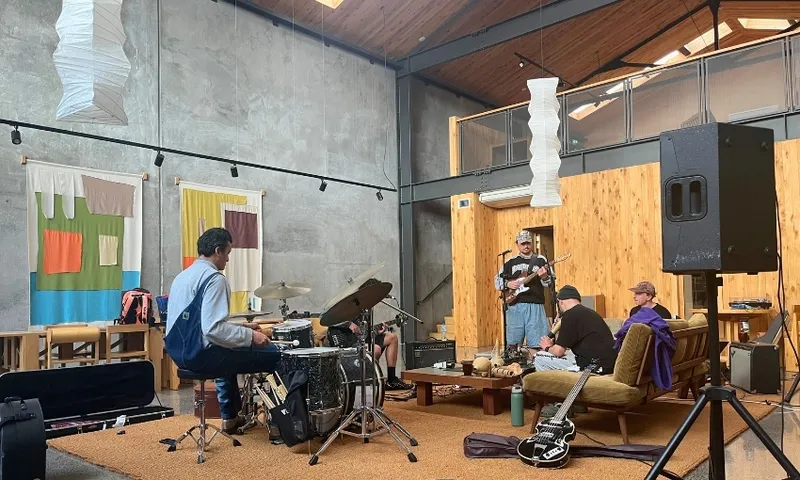
The Mitsubishi Galant with faded red paint about to peel off like bad sunburn confirms I’m in the right place. You don’t see a lot of cars like this in the gentrified Auckland suburb of Grey Lynn. A thick, brown curtain drapes the glass wall at the front of Aesium Music House, providing a barrier to the afternoon sun and a cushion for the waves of Māori alt rock bellowing out across the gully.
A young man carrying a backpack walks past, peering curiously towards the noise, the ancient rhythms of this whenua pulse beneath our feet. The sounds might not be heard too often in this part of town now, but the area once served as the beating heart of Auckland’s urban Polynesian community.
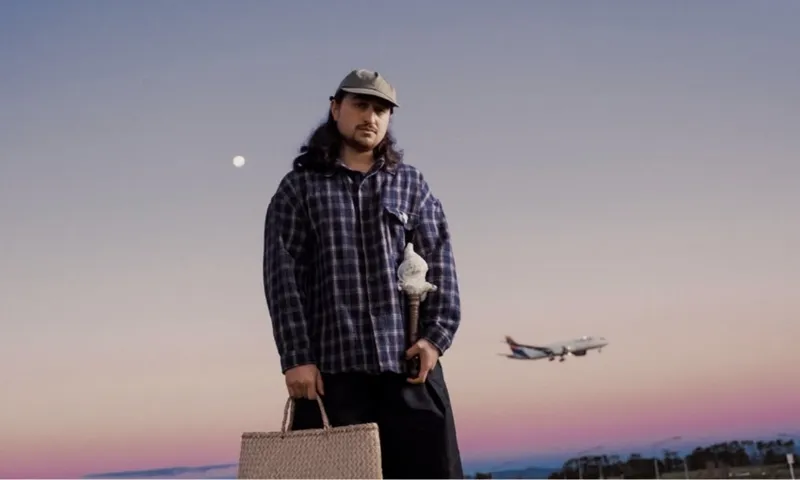
Musician Payton Taplin, better known as Greatsouth, opens the door and instantly sticks his hand out for a hongi, followed by a quick hug. He’s wearing an Ed Hardy trucker cap that mostly hides a low, dark brown ponytail, a black, long-sleeve Raiders shirt and Checks Downtown Men’s x Canterbury denim rugby shorts with multi-coloured woollen socks and no shoes.
The other band members offer up handshakes, fist bumps, or hongi. Rāhara Tito-Taylor is on the drums, Silas McClintock (aka Silas Futura) plays taonga pūoro, Akshay Raju-Morrison plays bass and Matt Hunter (aka Kenny Sterling) on guitar.
Nominated for a Silver Scroll and set for his first international tour in Australia next month, the 27-year-old is figuring out how to juggle life as a working artist, father of two and fiancé while working full-time in a communications job. He’s just released a new album, Hellhole of the Pacific, which was three years in the making.
“I went to Amsterdam for the JBL Music Academy (a music talent search and mentorship event) in 2023 and that trip made me want to fully dive into making indie and alt rock,” says Taplin.
A big part of that inspiration came from the reception Taplin, then performing under the name FABLE, received from the participants at the workshop.
“They were just tripping out. They just thought it was the coolest thing ever. It triggered something in me to just lean into what makes me special or unique,” he says.
Born and raised in Papakura, south Auckland, with tribal connections to Motuti in the Far North, Taplin admits the style of music Greatsouth plays wasn’t commonly heard in his neighbourhood growing up. What was a regular feature though, was the guitar, which he continues to play today. Taplin and his seven first cousins, all born in the same year, would go to their grandmother’s house every day before and after school, where she would make them sing.
“She’d bring out her whiteboard and guitar, and then we’d have to learn all of her waiata tautoko. Some of them weren’t even Māori waiata, they were just songs she liked, like country songs,” Taplin says.
However, Taplin credits his time at Auckland Grammar for exposing him to genres of music beyond reggae and hip-hop. Living at the InZone hostel – created to enable Māori students from outside of Auckland Grammar and Epsom Girls’ Grammar school zones to attend the prestigious schools – at the foot of Maungawhau, Taplin created strong connections with manawhenua descendants, particularly those from Ngāti Whātua. “They showed me you can be Māori and not like the things that people traditionally prescribe to Māori,” says Taplin.
Beyond exposure to underground and alternative hip-hop artists like Denzel Curry, Raider Klan, Spooky Black (Corbin) and Bobby Raps, Taplin says the Ngāti Whātua boys also taught him about being comfortable in his own skin. “They just had a Ngāti Whātuaness to them. Everyone would be wearing the latest trends and they’ll be rocking a random mixture of Hunting and Fishing gear and other things. They just did not care. For them, that was just real – not even staunch, but they just knew who they were,” says Taplin.
Taplin also began learning about the history of Ngāti Whātua through his friends, many of whom came from “the hill”. A key part of the modern history of the iwi is not only the occupation of Takaparawhau but also the events leading up to it. Between 1951 to 1952, the Crown evicted large numbers of Ngāti Whātua from their houses along the waterfront in Ōkahu Bay and subsequently razed them to the ground. The locals were forced to move up the hill to live in the area that eventually became known as Boot Hill.
This seeded an appreciation for the history of Tāmaki Makaurau for Taplin – something that grew during his time studying communications and Māori studies at the University of Auckland. Hey says university showed him the deficit narrative he had previously been taught about the country’s history and Māori being an impoverished race that stumbled upon New Zealand by chance was “all shit”.
“It seems so crazy that you could teach something and it’d be false,” Taplin says.
A talented writer, Taplin was inspired by 2019’s Pūrākau: Māori Myths Retold by Māori Writers, an anthology of short stories co-edited by Witi Ihimaera and Whiti Hereaka that reimagines traditional indigenous stories through contemporary literary voices. After reading it, he wrote the song ‘Hellhole of the Pacific’ which also became the name of the album. It’s a nod to the nickname once given to Kororāreka, New Zealand’s first European settlement.
“The whole kaupapa of the album is about questioning what it means to be a good Kiwi. It’s challenging the portrayal of New Zealand as the place with hobbits and beautiful landscapes. There are still lots of whānau doing it tough, infrastructure’s missing, and everyone’s struggling for pūtea,” says Taplin.
While the early hip-hop and reggae influences may have faded, the guitar remains in Taplin’s music. Today, he’s playing a brown and white number, that matches his trucker cap. “Sorry, I got a little bit lost there,” Taplin says to the band as they begin to wind down rehearsal.
Playing live with a group is still a relatively new experience for Taplin, who had previously made music with McCormick alone. The duo were leaning heavily into Brockhampton and Frank Ocean influences.
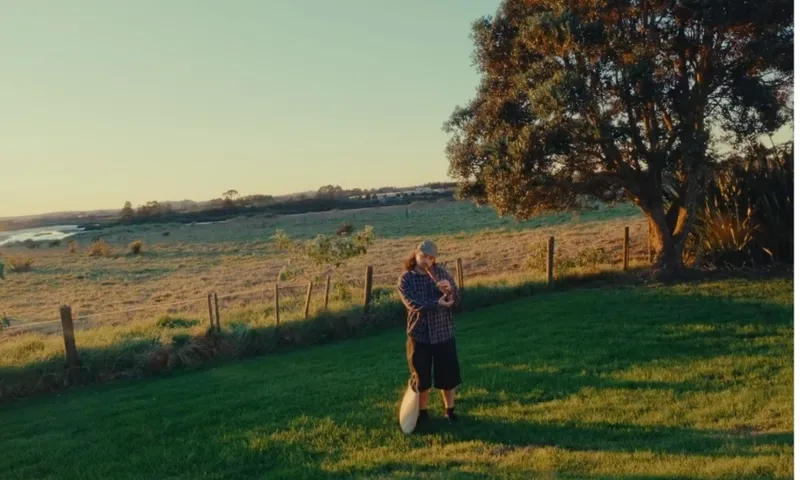
Taplin began experimenting more with taonga pūoro and eventually met Tito-Taylor through taonga pūoro practitioner Al Fraser. Soon enough, the alternative R&B beats gave way to more Polynesian influences, with taonga pūoro featuring heavily throughout the new album.
The opening track of the album, ‘Pukekiwiriki Paa’, features a kōrero between McCormick and Taplin at the pā site near Papakura. It sets a scene for what follows – a mashup of Māori alt rock, kōrero tuku iho, and contemporary takes on ancient issues. There are references stretching from the Far North to Papakura and beyond.
With the album now out in the wild, Taplin is looking forward to a tour in Australia, culminating with a performance at BIGSOUND in Brisbane early next month. Beyond that, he hopes to continue making new music, whatever form that takes.

Liam Rātana
Liam Rātana (Ngāti Wairupe/Ngāti Kurī) is editor of The Spinoff's Ātea section. He is passionate about indigenous and minority issues. Liam enjoys cooking, poetry, photography, and exploring the outdoors.


