The Kiingi Tuheitia I knew, from a step or two behind

Ngira Simmonds was always just one or two steps behind Tuheitia. (Photo: Supplied)
Two years after the death of Kiingi Tuheitia Pōtatau Te Wherowhero VII, his former chief of staff and private secretary Ngira Simmonds remembers him and the ordinary things that made him an extraordinary king.
For years, most of my mornings with Kiingi Tuheitia began in more or less the same way: the morning report. What was happening, who was coming, where he needed to be, what had changed and what problems had appeared overnight. Sometimes the report remained serious, but often it didn’t. A comment, look, or a perfectly-timed piece of sharp wit from the king could send the conversation somewhere completely different.
Two years after his passing, it is one of the things I miss most. I miss talking to him, driving beside him, hearing what he thought about something. Hearing his hopes, aspirations and dreams. I miss giving the morning report and receiving my instructions.
There are many ways people will remember Kiingi Tuheitia. The great occasions are the obvious ones: Koroneihana, poukai, hui-ā-motu, speeches, politicians and international visitors arriving through the gates of Tuurangawaewae, and crowds of thousands responding to his call. Those moments form part of the history of the Kiingitanga and of Aotearoa.
But I often remember him from a different position – a step or two behind him, or sitting beside him in the car. Close enough to notice the small things. I watched him build relationships, rarely making a performance of it. He did not need a grand gesture to reach somebody: A soft smile, meaningful handshake, quiet word, or line of humour delivered at precisely the right moment could be enough. People felt his presence because it was genuine. He met people as himself – he was always himself.
That sounds simple until you understand what he was carrying. Tuheitia inherited much more than a title. He inherited a movement, a memory and a sacred obligation stretching back to the 19th century, when rangatira from across the motu searched for a way for Māori to stand together without surrendering the mana of their own iwi and hapū. The Kiingitanga was not created because Māori lacked leadership; it was created because Māori leadership recognised that some challenges had become too large for iwi to confront separately.
At Pūkawa, rangatira searched for one among them who could carry a mantle of kotahitanga. Eventually, Pōtatau Te Wherowhero accepted that call. But when the first monarch was raised, the rangatira placed something above him: the Bible, the crown of the Kiingitanga. The symbolism is profound. The person raised is given extraordinary mana, but that mana is never simply for themselves. The mantle exists in service of something larger: the people, peace, whenua, kotahitanga, mana motuhake and the wellbeing of those who have the least – pouaru, pani and rawakore.
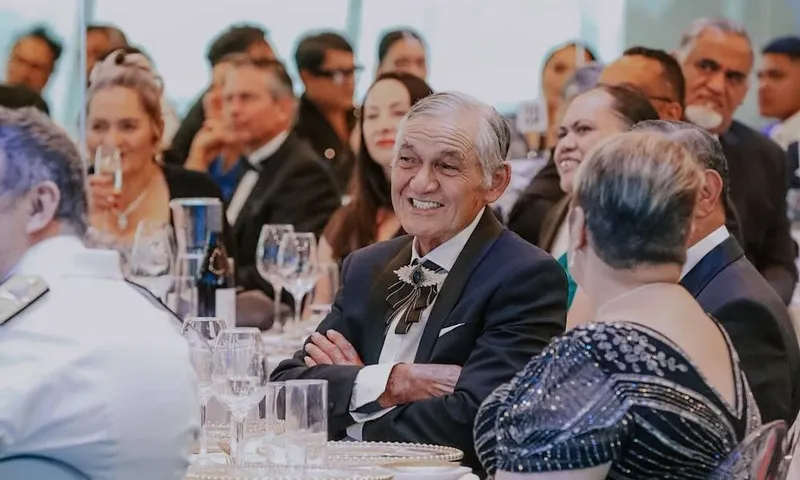
In August 2006, Tuheitia received that inheritance. With it came the teachings of Pōtatau, the peace of Tāwhiao, the political navigation of Mahuta, the persistence of Te Rata, the rebuilding spirit of Te Puea, the quietness of Korokī and the extraordinary example of his mother Te Atairangikaahu. He carried the memory of invasion and raupatu, poukai, relationships with iwi across the motu and a relationship with the Crown shaped by conflict, distance, engagement and reconciliation. He also carried generations of expectation. Then he had to work out how to be himself inside all of that.
No one gives the king a manual. There is no handbook explaining how to stand among rangatira while remaining connected to ordinary people, how to receive the grief of a whānau at a tangihanga and then carry the aspirations of iwi at a national gathering. Much of it can only be learned by living within it.
Tuheitia’s education in the Kiingitanga began long before the mantle was placed upon him. Korokī was his grandfather and Te Atairangikaahu his mother. He grew up watching those who carried the office, observing the rhythms around it: Poukai and tangihanga, the old relationships, the order in which things were done, the way people were received and the obligations that had to be honoured. He learned by watching, listening and turning up.
The Kiingitanga lived not only in its great moments but in its habits: remembering people, feeding people, acknowledging the dead, maintaining relationships and returning to marae year after year. For all the weight of kingship, the foundations of Tuheitia’s own life remained remarkably simple and strong: whenua, machines, friendship, hard work, kapa haka, driving, whānau, Kiingitanga and te iwi Māori.
He was the king, but he was also a son, husband, father, grandfather and friend. Those parts of him did not disappear when he became king; they helped form the person who carried the mantle. He knew what it was to love and provide, worry and forgive, remain loyal, make mistakes and keep going. His life was not built on a performance of perfection – it was honest and it was lived. Every experience seemed to deepen his instinct for people – when to speak, listen, laugh, cry and when simply to stand alongside someone. His life together with Makau Ariki Atawhai was central to everything he did. His children mattered enormously, and his mokopuna were the light of his life. Those relationships grounded him when the public expectations were at their greatest.
Tuheitia wanted more for his people and was not frightened of challenging those around him: politicians, leaders, and certainly those of us who worked for him. He had a way of making us look beneath the obvious and search for more. He understood that mana did not require distance and demonstrated that gentleness and authority were not opposites. He could meet kings and queens, prime ministers and world leaders, and then be completely himself with someone who had simply come to shake his hand at a poukai.
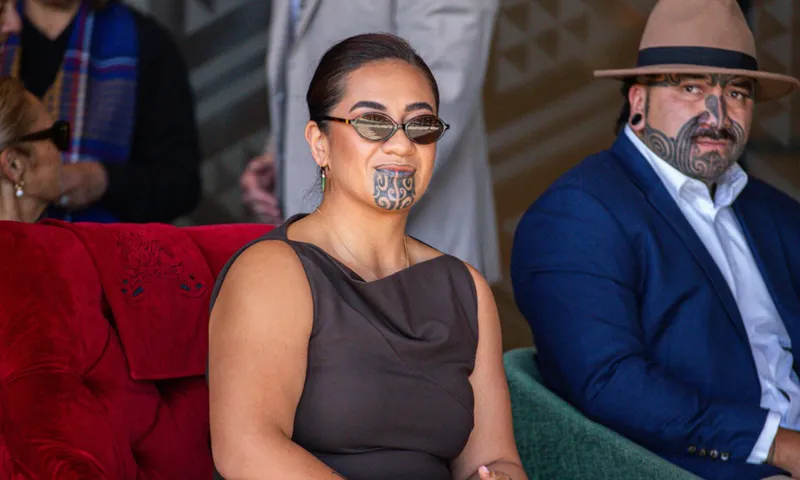
That is what I remember most clearly two years on – not only the photographs or speeches, but the space immediately around them: the car rides, phone calls, laughter, morning reports and moments when the public role briefly fell away and you could see the person carrying it. The mantle was extraordinary and, at times, enormously heavy. But beneath it remained the same man: the same humour, loyalties, love of people and ability to make somebody feel seen and genuinely welcomed. I think that is why his reign connected deeply with many people – he was always himself.
Two years is both a long time, and no time at all. E te kiingi, kua rua tau koe e ngaro ana i te tirohanga kanohi. Kei te tangi tonu te ngākau. There is still an enormous absence, but absence is not the only thing he left us. The relationships remain, as does the confidence he placed in our people. The Kiingitanga remains. His final tongikura called us again to that kaupapa: “Tākiri tū te kotahitanga, tākiri tū te mana motuhake. Stand in solidarity on the path to self-determination and unity.”
And now that inheritance is alive in another generation. As we gather at Tuurangawaewae for the second koroneihana of Te Arikinui Kuini Nga wai hono i te po, our attention rightly turns towards her – her vision, mana and style of leadership increasingly and unmistakably her own. It is powerful, grace-filled, wise and relevant. The mantle passes, but no two people carry it in quite the same way – Tuheitia taught us that. Now we must practice it too. The Kiingitanga survives because it remembers where it has come from, while continually finding the courage to live in the present and imagine what comes next.
Today I remember Kiingi Tuheitia Pōtatau Te Wherowhero VII, and how fortunate I was to watch and learn from a step or two behind. E te Kiingi, moe mai rā i roto i ngā ringa o te Ariki. I still miss talking to you. I hope you haven’t run out of red GloHart lollies.

Ngira Simmonds
Ngira Simmonds (Ngāti Huri, Raukawa) served Kīngi Tūheitia as his chief of staff and private secretary, and as his chaplain. Following the king's passing, during the transition in reign, he also served Te Ariknui Kuini Nga wai hono i te po. Ngira is now kaihautū – strategic Māori partnerships director at Waipā District Council.


