When a homeless person becomes the news

Gate Pā Reserve in Tauranga, where Ross Kennedy died in October 2024. (Design: Emily Wong/The Spinoff)
Made possible by


A murder trial is asking who killed Ross Kennedy. Ruben Miller asks why we weren’t paying attention before.
A friend texted me earlier this week about a murder trial under way in Rotorua. She said it had made her feel incredibly sad – not angry, but sad.
The trial concerns the death of 63-year-old Ross Kennedy, also known as Rosco, whose body was found at a campsite in Gate Pā Reserve in Tauranga in October 2024. Rachael Anne Eddy, 51, has pleaded not guilty to murdering him. The Crown alleges that the two were long-time friends, both homeless, and had spent part of the night before Kennedy died smoking methamphetamine and playing pokies at a nearby bar. An argument followed, and what happened after that is being put before a jury. Where it should be.
The Crown says Eddy went to Mana Meals later on the day Kennedy died and attended another meal for homeless people, provided by Under the Stars, the following evening. It says she spoke to people there about Kennedy and that an associate from that world approached police, then later went with a friend to the campsite and saw the shape of a body beneath a collapsed tent.
Somebody had died, so we started paying attention. Now, the wheels of the law are turning – witnesses are being called, statements examined, medical findings heard, and lawyers are testing the reliability of what Eddy allegedly said at different times and in different circumstances. Her defence has already signalled that the jury will need to consider whether she caused Kennedy’s death and, if so, what was intended. By the end of the trial we may know an extraordinary amount about the final hours of Ross Kennedy’s life.
What we are much less likely to know is how a 63-year-old man came to be living there in the first place. A murder trial doesn’t answer that question. A criminal trial is not a commission of inquiry into housing, poverty, addiction, ageing or the adequacy of social services. Police investigators have a particular job. Prosecutors and defence lawyers operate within rules designed to answer particular legal questions. It’s no criticism to observe that none of them is responsible for explaining the life that preceded the crime.
But it doesn’t seem like anyone is curious about it, and I think we should be. The reporting from the trial has so far been detailed and perfectly legitimate court journalism. But I want the journalism that comes after the court report: the point at which somebody steps outside the courtroom, looks again at the facts we have just been given and asks what sort of society they describe.
Homelessness in Tauranga is hardly a hidden phenomenon. Analysis using the 2023 Census estimated that about 1,920 people in Tauranga were experiencing severe housing deprivation, with the researchers warning that homelessness is difficult to count and the figure is likely to be an underestimate. Tauranga City Council’s own residents’ survey has recorded widespread concern about homelessness, and complaints about rough sleeping and antisocial behaviour have risen sharply in recent years. None of this materialised when Ross Kennedy died. It was there before him and, in ways we cannot yet know, part of the world in which he was living.
The way we talk about homelessness is revealing. Much of the public conversation seems to concern its effects on everybody except the people experiencing it. People sleeping outside shops make customers feel uncomfortable. Then there’s the rubbish, the threatening behaviour, the public drug use, the general disorder. Tauranga’s survey captures both compassion and genuine fear among residents: some describe people sleeping in cars and tents with obvious sadness; others report intimidation and antisocial behaviour. And I would never suggest that these should be dismissed. The shopkeeper opening a business each morning is not personally responsible for solving homelessness, and neither is the parent wanting to take a child to play in a park.
But over time a subtle shift occurs. Homeless people become primarily the problem that their presence creates for housed people. The person becomes an urban management issue; until the person becomes a victim. That’s when we learn their name. Ross Kennedy was more than the description “homeless man” that will inevitably sit beside his name in accounts of this trial. I know almost nothing about Kennedy’s life and do not want to invent a sentimental biography for him simply to make a point. I don’t know what opportunities he had, what decisions he made, who he loved, who he disappointed, how long he was homeless or what brought him there. Perhaps some of that will come out during the trial and perhaps it won’t. We’re not generally interested in knowing about a person while they are alive on the margins, but we often want to know once their death becomes a criminal case.
It is hard not to contrast that with another New Zealand death that has consumed public attention for years. Pauline Hanna died in her Remuera home in 2021. Philip Polkinghorne was charged with murdering her, endured an eight-week trial and was acquitted in 2024. The case generated daily court coverage, endless public discussion, a television documentary and a book. The continued attention is not inherently wrong – Hanna’s death raised serious unanswered questions and the criminal trial attracted enormous public interest.
But when we put these stories beside one another the difference in our curiosity is stark. One death occurred within a world of professional success, expensive property, sex work, infidelity, drugs, private messages, prominent lawyers and an accused eye surgeon. Almost every detail was a headline. The other occurred in a tent in a Tauranga reserve among homeless people who ate community meals. The first case has dragged us in repeatedly to ask what really happened. Shouldn’t the second generate an equally important question: how did things come to this?
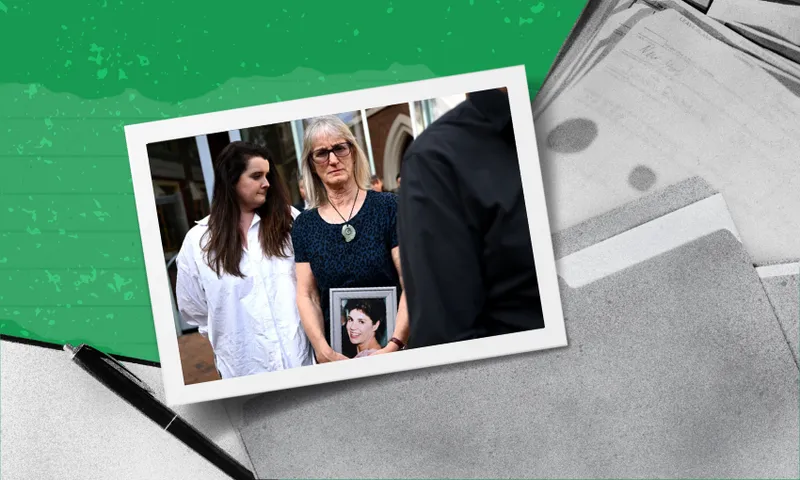
I don’t mean that as a competition between dead people. Pauline Hanna’s life and death deserves no less attention because Ross Kennedy received less. Part of the answer might be class prejudice or media snobbery. But Polkinghorne’s trial contained many of the elements that naturally sustain public fascination. In storytelling terms, it was so rich. But Kennedy’s case is bleaker and, paradoxically, more familiar. Homelessness has become common enough in our towns and cities that the sight of someone living in a tent no longer surprises us. And I believe that’s exactly why this case deserves more attention rather than less.
There are details in the Crown opening that could be thought of as little more than filler. We don’t know their wider financial circumstances and it would be patronising to assume that homeless adults have no agency over how they spend money. But there’s still something striking about people without secure housing feeding money into gambling machines late at night before returning to a tent. New Zealand has spent years discussing the concentration of gambling harm in poorer communities, but within a crime story “they had been playing pokies” appears to function simply as scene-setting. I think it should at least make us curious.
Methamphetamine use is the same. How does serious drug use become embedded in the lives of people who are already homeless? How easy is it to obtain meaningful addiction treatment when you have no stable address? What does recovery look like when the place you return to after treatment is a tent? Does homelessness propel drug dependence, does addiction contribute to homelessness, or are the two so entwined that separating cause and consequence becomes impossible and meaningless?
My career in forensics has probably made me conscious of the imbalance between the attention given to a really bad event and the attention given to everything that came before it. But the criminal justice system is only interested once the threshold of “bad” has been crossed. Nineteen Crown witnesses are expected to be called in Eddy’s trial. There’s a jury and a courtroom set aside for about two weeks. It’s not wasteful; it is what a functioning justice system should do after a suspicious death. The unsettling thing is the fragmented and frequently under-resourced systems tasked with intervening before there is a body.
But prevention has a publicity problem. It doesn’t have “events”. Nobody calls 111, there is no crime scene, there is no verdict and there is very little drama. Success is rarely an event. Crime, by contrast, comes ready-made with its story. There’s an act, an investigation, characters, uncertainty and, whatever way the scales tip, an outcome. Journalism, understandably, loves it.
Whatever led Ross Kennedy into that tent was the first kind of story – the kind with no event in it, and so no headline. His death is the second kind. Which is not an argument that society murdered him or that homelessness should become a status for removing individual responsibility. If the Crown proves that Eddy murdered him, responsibility for that offence belongs to her. Difficult circumstances do not make violence inevitable and disadvantaged people are as capable of moral agency as anyone else. Reducing a person to a product of their circumstances can be another form of dehumanisation.
But acknowledging personal responsibility should not mean that we become oblivious about context. Individuals make choices and those choices are made within conditions. Things like addiction and poverty matter, as do housing and trauma and social connection. All these factors matter if our ambition extends beyond waiting for the next case like this. This may be what my friend’s sadness tapped into. Anger concentrates attention on an offender, whereas sadness looks wider than that.
There is already a tragedy being examined in the High Court at Rotorua. A man is dead and another person stands accused of murdering him. The jury will hear the evidence and decide the legal question it’s been given. Whatever its verdict, though, there are questions left outside the courtroom. Why are people reaching later middle age without secure housing? What happens when addiction, poverty and homelessness reinforce each other? How much of the daily work of keeping vulnerable people alive has shifted to charities and volunteers? What does it say about us that a person can be conspicuously homeless in a public place and still be almost invisible? And why does our curiosity often begin only when the police tape goes up? Those questions are much harder than asking who killed the homeless man. They do not provide the satisfaction of a mystery, and there will be no jury foreperson eventually announcing an answer.
Ross Kennedy’s death has made the world around him visible, and journalism doesn’t have to stop at the courtroom. We can report what happened there and still look beyond it – towards the reserve, and towards everything that functioned as mere filler in the case against Eddy: the meal services, the pokies, the methamphetamine, the housing statistics and all the people whose lives will never generate the level of attention lavished on our most compelling murder cases. The unsettling thing about cases like Ross Kennedy’s isn’t what the trial will reveal. It’s how much of it was already visible, in plain sight, long before he died.
The Spinoff Books section is proudly brought to you by Unity Books and Creative New Zealand. Visit Unity Books online today.

Ruben Miller
Ruben Miller is an author and forensic scientist, with 25 years experience working in the criminal justice system. He also interprets complex evidence for the courts. He tries to stay curious. He's the author of new true crime memoir The Blood Says Otherwise.


