What is Winston Peters' dream date?

If Winston Peters had a time machine, what year would he go to? (Image: Tina Tiller/The Spinoff)
If the New Zealand First leader could use a time machine to ‘make New Zealand great again’, what day and year would he take us back to? The Spinoff investigates.
During the New Zealand First election campaign launch in July, leader Winston Peters said he wanted to “make New Zealand great again, like it once was when we were the number one democracy in the world".
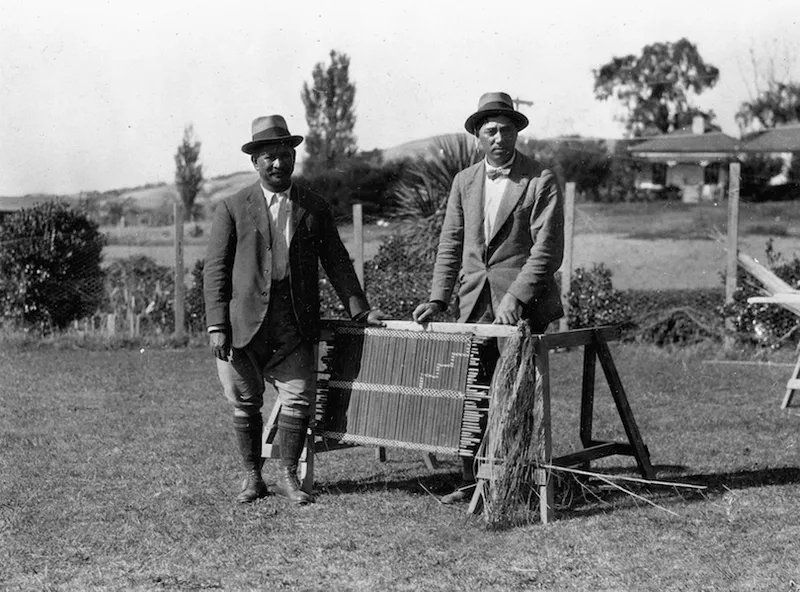
This nostalgic harkening back to a better time has been a theme of New Zealand First’s ever since the party was formed. It’s reflected in their policies, with calls to renationalise the BNZ and bring passenger trains back to the South Island, and in how Peters likes to evoke great men of times gone by, such as Āpirana Ngata, Peter Buck (Te Rangi Hīroa) or Lee Kuan Yew.
If New Zealand First’s goal is to recreate the economic and policy settings of yesteryear, it's worth knowing which yesteryear that is. So when, exactly, in Peters’ view, was New Zealand at its greatest? If he could put the whole country into a time machine, where would he take us? My questions to New Zealand First went unanswered, so I was forced to use clues from his speeches and the process of elimination.
Let’s start with his reference to New Zealand as “the number one democracy in the world”. He’s used this line several times at events during this campaign, in various ways. In Henderson, he mentioned a time “when we were known as the best democracy in the world” and in Blackball he said New Zealand was once "heralded as the best democracy in the world".
Several different universities and thinktanks attempt to rank the quality of countries’ democracy based on factors like ballot access, personal rights and press freedom. The best-known ranking is The Economist Intelligence Unit’s Democracy Index. New Zealand is currently second on the ranking behind Norway, a position we’ve held since 2021. We’ve never been listed as the number one democracy.
Looking across the various other democracy indexes, New Zealand consistently ranks pretty highly, but I could only find one instance where we were placed first. The V-Dem Electoral Democracy Index provides back-dated scores for every year since 1789 based on various law changes in each country. New Zealand topped the list for 1893 after the introduction of universal suffrage and held first place until 1915.
The other way to interpret his “number one democracy in the world” claim is that New Zealand was number one in some undefined metric among democratic countries. The inclusion of the democratic caveat suggests that, whatever this metric was, New Zealand must have ranked below at least one country that was not a full democracy.
That’s a highly specific definition, but I found three years and metrics that fit the bill:
1972, Olympic rowing medals: New Zealand’s one gold and one silver placed us third on the rowing medal tally, behind East Germany and the Soviet Union, both of which were one-party communist states.
1908, sheep per capita: New Zealand was third overall behind the Falkland Islands (a British colony with an appointed governor) and Uruguay (a republic with highly restricted ballot access).
2022, proportion of women in parliament: New Zealand briefly ranked fourth with 50.4%, behind Rwanda, Cuba and Nicaragua, which are all classed as authoritarian regimes by the EIU Democracy Index.
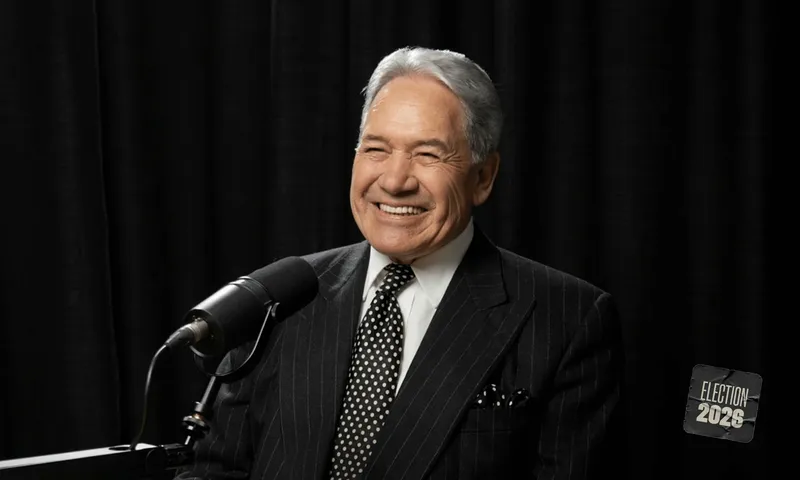
However, Peters isn’t always so certain that New Zealand was “number one”. Sometimes we were just on the podium.
At the New Zealand First conference in 2022 he paid homage to the forebears who “took us to be in the first three countries in the world". In Tauranga, Hamilton and Takapuna this year, he said, “Over the past 50 years we went from being in the top three in the world to a non-competing economy.”
If we take his “50 years” timeline literally, that puts 1976 as the peak year for New Zealand. But it's difficult to find any impressive international metric for New Zealand from that year, other than having the sixth-highest inflation in the OECD and the first-highest number of countries who got so mad at us that they boycotted the Olympics.
Generally though, when Peters talks about “the past 50 years”, he’s referring to the Rogernomics era of neoliberal reforms which began 42 years ago in 1984. Those changes were in response to an already-declining economy, so to find Peters’ perfect date we must go even further back.
According to the Maddison Project Database, New Zealand was one of the top 10 countries for GDP per capita every year from 1938 to 1966. From 1950-1951, we were third among western countries behind the United States and Luxembourg and sixth overall, with the oil-producing nations Qatar, Kuwait and the UAE well ahead of the pack. These figures are inexact estimates but they broadly line up with Peters’ references to New Zealand being a “top three” economy, and inclusion of the Gulf states could explain his caveat of “number one democracy”.
This two-year window lines up with many of Peters’ and New Zealand First’s favourite things: The BNZ became fully state-owned on November 1, 1945. The South Island Limited passenger train service between Christchurch and Invercargill launched on August 1, 1949. Āpirana Ngata and Peter Buck were alive for parts of it (they died on July 14, 1950 and December 1, 1951, respectively). No other current MP had been born, so Peters didn’t have to deal with any of their nonsense.
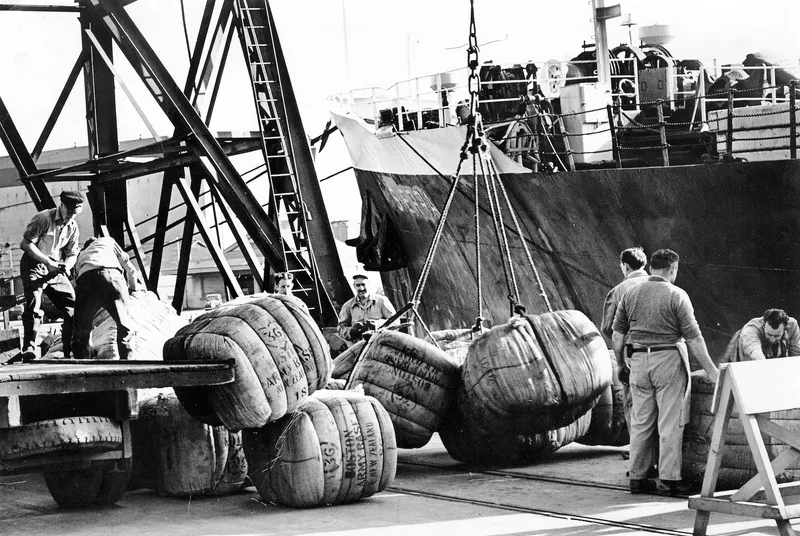
Prime minister Sid Holland referred to this era as the “great prosperity”. Historians generally attribute it to two things: many countries were still rebuilding from the second world war, and there was a huge demand for wool, which was a major export for New Zealand. When the US began strategically stockpiling wool, prices rose by as much as 130%.
The peak of this short-lived wool bubble – and therefore the day when New Zealand had the strongest claim to be the “number one democracy in the world” – occurred on February 9, 1951. A few days later, the waterfront dispute kicked off. Two months after that, the US stopped stockpiling wool and the price crashed by 40%. If Peters is to be believed, New Zealand has been going downhill ever since.

Joel MacManus
Joel MacManus is a senior writer for The Spinoff. He previously worked at RNZ and Stuff, and began his career at Critic Te Ārohi. His writing explores the political, economic and cultural systems that underpin modern New Zealand. He won the 2025 Voyager Media Award for Best Columnist, Opinion or Critique.


