'That blew my head off': Charlotte Grimshaw on the fallout from her family memoir

Made possible by

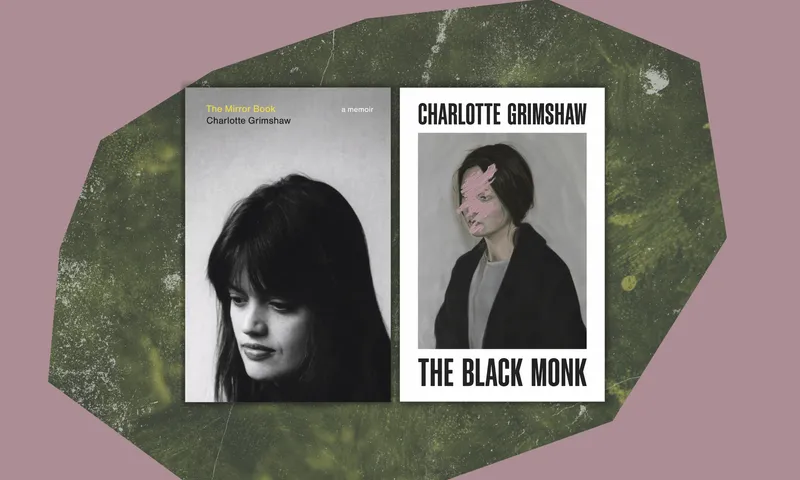
Charlotte Grimshaw spoke to Noelle McCarthy about how her latest novel The Black Monk fits in with her earlier memoir, The Mirror Book – which she later discovered her parents had tried to get re-classified as fiction in the National Library.
Charlotte Grimshaw: What happened was I saw a reference online to material in the Turnbull Library [lodged by her father, CK Stead] and it seemed to be referencing my memoir. And so I asked Karl what it was and he said, "Oh no no no, it's nothing. There's nothing there that you don't know about." I know him very well, and I knew that there was something there, and so I flew down to Wellington. I could access the archive because I was part of the correspondence in it – it's embargoed for five years, but I could get into it.
I discovered that my mother and father had secretly filed statements in the Turnbull Archive saying that The Mirror Book is completely false. That it was written under a delusion, that I had made it all up for literary effect; that everything I say in it is untrue, and that I've made up incidents in it. That the memoir should be redesignated as fiction. That blew my head off. It said that I had written the memoir while suffering from uncured depression, which was completely untrue. I've never had depression. It was devastating.
Noelle McCarthy: Who were they writing to, Charlotte? Were they writing to each other in order to make a record, or were they writing to somebody else?
CG: No, these are statements – they're in the archive among correspondence but they're called statements. So they are pages and pages of statements about The Mirror Book, simply statements that they've put on the record. There's one from each of them, one from each parent and they are specifically setting out that the memoir is completely untrue and should be redesignated as fiction.
NMC: So what do you do in a situation like that? Talking to me, talking about this publicly, does that serve as a correction of the record? Or is it by giving the lecture – and the irony of it being called the Janet Frame lecture when you have those references in your speech to madness mental illness is not lost – but in giving that lecture were you concerned with having your own statement on record as well?
CG: Very much so, yeah.
I was so amazed and horrified initially that I actually did nothing. I still had this idea that I wanted to be the dutiful daughter and be a good daughter and I wanted to be a good person, as much as I could be. I didn't do anything. I didn't refer to it. I didn't mention it. I just absorbed it for months, and then I was invited to do the Janet Frame Memorial Lecture and I thought to myself, I can't do a lecture in the Turnbull Library without referring to this archive. So that's what I will do. Because the thing is, if they had put these statements out publicly, they would be defamatory, you know, because they're not true, but they worked out a way to do it cunningly and because I could access the archive, I just decided, well, I'm just going to talk about this. I got an enormous amount of blowback afterwards. “How dare you? You know, this stuff is embargoed.” I just defied that. I thought I'm just going to defy it.
NMC: It's so rich, Charlotte – forgive me for talking about your life as text, but this stuff is incredibly meta, is it not?
CG: The thing is, when you're in a family, you don't really know what you're dealing with. You're kind of bewildered a lot of the time, but when I read that tone of disdain [in the Turnbull Archive], it set me back. And then I thought, well, I understand – it advanced my understanding at the same time.
In the memoir, I've talked about this idea of a whole life lived in fiction. My father was always a fiction writer and I had this very intense relationship with my father. When I was growing up, we got on intensely well, and it was always this intense back-and-forth between us – the jokes and the games – and and he was always making up stories and I so I grew up with this very very strong interest in what it means to create fiction and I saw it being created out of our lives because I would read his fiction and of course I would see elements in it that I recognised, and so I was always really intensely interested in that. The Black Monk is a progression of that kind of project.
NMC: For a while there, whenever you’d get a bunch of memoirists together, we’d talk about you, and talk about The Mirror Book, and the question of whether we could do what you did – publish a book like that, about the truth of family life, while your parents are still able to read it. My mother had passed by the time I felt able to write about her. But you felt the most honest thing to do was publish while people were able to respond to it. Well, they did respond. I mean, you did get a response!
CG: Sure did! I sure did. Yeah, I obviously agonised about this, and so there were some accusations from my parents and from their friends, saying you should have waited until they were dead. I thought that was specifically the wrong thing to do. Initially, what I was trying to do was communicate with them. But also, you know: fair play. I thought it's all true, and I didn't understand that they would have this massive objection to it because I thought they knew all this stuff. So obviously, I didn't understand what I was dealing with. Someone said to me recently that writing the memoir when they were both still alive was honest, and what they did, putting the stuff in the Turnbull Library without telling me, that was dishonest. The other thing was, the aim was not to have the last word, you know. The aim was to start a – this is a terrible cliché – but start a conversation.
NMC: I’m listening to you, and I’m thinking about myself, of course. And I suppose the question that came to me, Charlotte, is why do we think a book will work? As a way of communicating with family?
CG: Yeah, yeah. Well, because we think that people will understand a fiction book too, because often you know you think you've absolutely set it out really clearly, and then of course you find that people don't really get what you're doing. This is the nature of writing books, isn't it? You think you think you've set something out with real clarity, but of course there's an art to it, you know?
NMC: Like war: “No plan survives the enemy”. No book survives the reader! Did you have that experience that I had after my memoir came out – everybody who talked to me about it didn't talk to me about my experiences, they talked to me about their families and their experiences?
CG: Yes, very much. I don't know about you, but I find that terrific. Once you share, people reciprocate, and I found that great. I absolutely love that. So after I published The Mirror Book, I received so many people's life stories, which was wonderful.
Subscribe to Noelle McCarthy’s Substack, Tell It Slant, for the full interview.
The Spinoff Books section is proudly brought to you by Unity Books and Creative New Zealand. Visit Unity Books online today.

Noelle McCarthy
Noelle McCarthy is an author, broadcaster and producer. Her latest book, Stakes, is about her lifelong obsession with Dracula. Her first memoir, Grand, won best first book of non-fiction at the Ockhams in 2023. She makes long-form narrative podcasts as Bird of Paradise Productions, alongside her husband, John Daniell, and teaches a memoir-writing course called Tell It Slant. Noelle lives in Featherston with John and their daughter and many copies of Dracula.


