Noelle McCarthy on facing people after you’ve told your story of alcoholism and horrible sex

Noelle McCarthy (Photo: Kristine Crabb. Design: The Spinoff)
Made possible by

Having a memoir out is like people have gotten hold of your diary and the reason they have it is because you gave it to them, writes Noelle McCarthy.
After your memoir comes out, if you are lucky, someone will interview you, in a bookshop or up on stage at a writers festival. They will have gone to the trouble – again, if you’re lucky – of reading your book and writing a thoughtful introduction. There’ll be a line in it about your alcoholism, or the horrible sex you’ve had, or the intergenerational trauma that runs though your family story like a bright vein through a chunk of igneous rock. How dare you, you’ll think, reflexively, sitting there smiling in front of everyone. That’s private! And then you’ll remember, all they’re doing is repeating what you wrote.
Having a memoir out is like people have gotten hold of your diary and the reason they have it is because you gave it to them. Sold it to them, actually, for about $3.50 a copy, minus deductions if you’re fortunate enough to be traditionally published. An edited version, with correct spelling and punctuation and some names changed, but an intimate, confessional document all the same.
“Readers respond to candour” my editor said when I was writing my first memoir. Grand was about my mother, the antagonism that gave our relationship claws and a shape. About her drinking and the secrets at the centre of her life, about my own alcoholism and the mistakes I’ve made, the biggest of which was discounting everything she gave me. With Grand I found out it’s not hard to write honestly, you just have to not care how you look on the page. Once the book is out though, the distance you have to keep from yourself, from the you you wrote, in order to function, in order not to die of embarrassment, is a bit of a head-fuck.
When I went into a studio to record the Grand audiobook, the engineer was a young man, a stranger. On that first day, before we had our lunch break, we covered the years from me getting my period to the night I lost my virginity, in a tent in County Kerry, Ireland, and having to pay £50 for the morning-after pill when the condom broke. Over the next three days, I disclosed more to that 20-something-year-old sound engineer in one go than to my husband, my best friend, every medical professional I’ve ever met. The only time he interrupted was to show me how to roll the R in Rangitoto.
I ran into him again in an airport a few months later, watched from beside the baggage carousel as he looked over. Saw his eyes fill up with all of me: first forays into heavy petting in the front seat of my boyfriend’s mother’s Fiat Bambina, the epidural I got giving birth to my daughter, the bumpy feel of the stitches when I sat on the toilet after. He introduced me to his fiancée. She asked how we knew each other. We laughed too long and a bit hysterically.
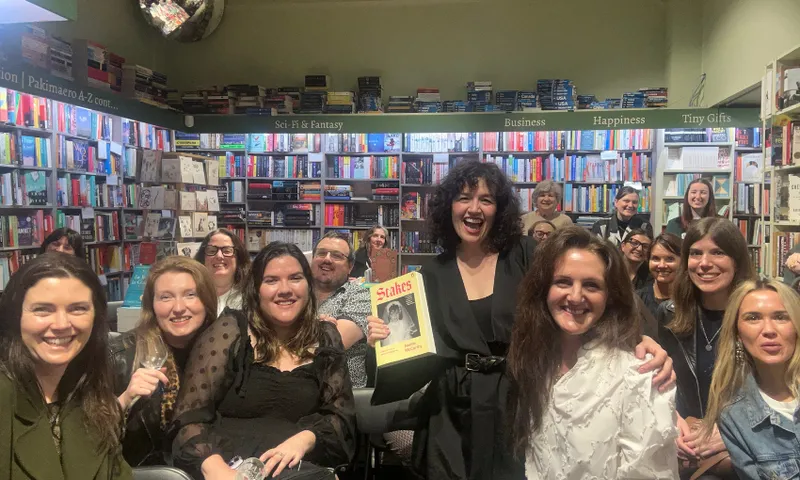
I published another book about my life a few months ago, because a workable definition of a memoirist is someone who doesn’t know when enough is enough. Stakes is about my obsession with Dracula, the novel and the vampire. My mother’s in there too, again. That was a surprise initially – Grand ends with her funeral. I forgot that in the Gothic, death tends to be the beginning of the story rather than the end. What I came to know in trying to write about Dracula was that I’d published a whole book about her without touching the parts of her story that scared me the most, the parts that make the vampire what he is, a monster made up of terrors about sex and death. There’s more sex in Stakes than there was in Grand and what sex there is is darker.
A couple of weeks after the book came out, I walked into a shop and a woman I know put her hand to her heart and gasped audibly. “Oh my God”, she said. Oh my God, what? When you publish a memoir, things you’d lived with all your life become revelations. Not only to strangers and acquaintances. There are people close to me now who were half a world away when I was in my teens and 20s, having the kinds of 1990s sexual experiences that the best thing you can say about them afterwards is: it could have been worse. People who text are tender and sorrowful, genuinely concerned. Texting back to console them, I am usually regretting the level of self-disclosure.
Was it worth it? Isn’t Dracula, the vampire, big enough to carry a book by himself? With his one-name recognition, he’s the Beyonce of monsters, a titan of IP. What does he need with me, muscling in, dragging my addictions and neuroses and trauma behind me like a pile of smelly refuse? If I’m obsessed with Dracula, couldn’t the book just have been about the vampire?
It can’t.
At the start of 2021, I sat in an underground car park in Wellington, sweating, reading The Executive Summary of the Final Report of the Commission of Investigation into Mother and Baby Homes.
Ireland was a cold harsh environment for many… It was especially cold and harsh for women… Women who gave birth outside marriage were subject to particularly harsh treatment…
It was supported by, contributed to, and condoned by, the institutions of the State and the Churches…
I sat there, glued to my phone in the stinking hot building under the James Cook, sweat pooling under my armholes and between my legs, thinking about my Dad’s voice, on the phone a few weeks earlier “They wanted to send her to Bessborough with the first one…”
In January 2021 my mother was nearly a year dead. Grand was a manuscript. It was the first book I published, but a decade earlier I had written another – Dracula and the Secret to Happiness – trying to understand why I was obsessed with the vampire. Reading it back recently, I saw only the gaps; how I carefully, scrupulously had not touched my own family and the house I grew up in, the two babies my mother had before me, one that died, one she had to give away. I drew no lines between the story of the vampire, a sin from the past, rising out of the ground to wreak havoc on the present, and what had happened to generations of young, pregnant, unmarried Irish women. I had not gone near the idea that my vampire fantasy could have come from horror and a fear of the consequences of sex. How, in the culture I grew up in, sin and desire were intimately connected. Both terrifying, both with the capacity to ruin you. Grand dwelt only briefly on the Dracula ticker that is constantly running through my head. Likewise, it didn’t go into all of my experiences of sex. By the time Grand was published, I was rewriting Dracula and the secret to Happiness, trying to fit my vampire fixation into the culture I grew up in, into the idea of sex we had as teenagers and young women, the electric charge of it, the danger and the damage it came freighted with. I had been trying to write about the vampire for a solid 20 years by then, boring anyone who would listen with my larder of Bram Stoker trivia. All the versions of the story were bloodless until I put myself in it.
The sexual harm in Stakes encompasses not only my own experiences but trauma that reverberates down along the generations. People have been curious about the descriptions in the book of long arguments I used to have with my husband. They can’t believe I used to yell at him every day in the thick of #metoo. To which I say: didn’t you? After the Harvey Weinstein stories ran in The New York Times, my memory is of having my teeth bared for a solid month of my life. I was trying to make sense of the rage I felt, lying in bed with a new baby, my body flooded with hormones, in the grip of flashbacks that bided their time inside me, like those viruses you hear about, that can stay alive deep inside in the human spine for 20 years. An ordinary plentitude of violations: rape, assault, what lawyers call grey areas.
Men have been a bit weird about Stakes, some of them. Maybe unsurprisingly. It’s complicated terrain. We’re not going to talk about any of that, one interviewer said. He meant the #metoo stuff. When he asked me to describe what the book was about, I said it’s about a secret history of women that started coming into the light in 2017. There was no follow-up question. Another man only wanted to excerpt sex scenes, requesting first one and then another. We had an email back and forth. I wrote them to be read, I said, but only in the context of the book as a whole, I did not want to give them away for free.
That was uncomfortable for me, facing the knowledge that with this book just like the last one, I’m selling my inner life to you.
It is lucky the reviews have been good. I don’t know that I have the inner fortitude not to feel judged as a person, rather than a writer. You’re farming out your self esteem in one sense. That’s maybe the biggest chunk of truth you have to swallow about yourself when you write a memoir.
Personally, I think it’s worth it. There were things with Stakes I wanted to say, or show at least; about how the shame that comes with sexual violence gets misplaced. And I couldn’t, in good faith, write about my lifelong obsession with a Gothic novel that’s full of lurid, sexualised violence towards women without getting into my own experiences of having my body treated with contempt and spending years afterwards blaming myself. When the vampire terrorises women, he does it in a place beyond language and rational sense. That place felt familiar to me, growing up as a teenager and on into my 20s when I started drinking alcoholically. For a lot of my life, I’ve needed Dracula to explain how I felt, what it was like to grow up in the house of my childhood, what sexual fantasies, even, it was safe to have. It is a relief finally, to be putting words to that.
And a relief as well, to have a wind of change at my back: in the space of becoming a mother myself and my mother dying, three things happened that shifted the earth beneath our feet: #metoo, the repeal of the 8th Amendment to the Irish constitution, and the revelations of what was happening in the Irish Mother and Baby Homes, the awful truth of how a godly society flung away the bones of its babies, the next generations. Three examples of the full, annihilating force of institutional misogyny.
As that stuff was revealed I could feel it in my body. I sweated, I vomited. I couldn’t really understand why I was taking it all so personally. My mother didn’t end up in one of those homes. But she could have. Bessborough was the name of the institution in the city where she lived, the place she could have been sent. That’s what my Dad was telling me, on the phone in 2021. The uncovering of these wrongs has been dark and terrible. But you can’t kill the vampire except by subjecting him to the light of day. “All your girls you love are mine already’, Count Dracula taunts the men in the novel. No they are not, they belong to themselves. Mina defeats the vampire in the end. The experiences I’m bringing forward in Stakes, are best understood as part of a great generational shift that brings hope for the girls who come after us. And I needed to write them down, to pay the debt I owed a novel I’ve loved for 30 years. The satisfaction of that goes beyond artistic enjoyment. Telling the story of your life in writing gives you a sense of agency over your choices that’s fundamentally healing – even if it’s cringey, writing about my teenage self putting her hands down her pants. I still haven’t done the audiobook though. I need my engineer to come back from his OE for that.
The Spinoff Books section is proudly brought to you by Unity Books and Creative New Zealand. Visit Unity Books online today.

Noelle McCarthy
Noelle McCarthy is an author, broadcaster and producer. Her latest book, Stakes, is about her lifelong obsession with Dracula. Her first memoir, Grand, won best first book of non-fiction at the Ockhams in 2023. She makes long-form narrative podcasts as Bird of Paradise Productions, alongside her husband, John Daniell, and teaches a memoir-writing course called Tell It Slant. Noelle lives in Featherston with John and their daughter and many copies of Dracula.


