Has Donald Trump ruined NZ’s economy again?

For the second year in a row, Donald Trump is messing with NZ’s economy
Even if the US-Iran ceasefire holds, the New Zealand economy is not out of the woods.
Once a year, Donald Trump does something that derails New Zealand’s fragile economy. In 2025, it was tariffs. This year it was setting oil markets ablaze.
It’s a headache for the Reserve Bank which wisely chose to hold the official cash rate – an interest rate which dictates much of our economic lives – at 2.25% on Wednesday.
When the policymakers made that decision, the Strait of Hormuz was closed, crude oil cost over US$110 a barrel, and the US President was threatening an unthinkable escalation of his war on Iran.
The Reserve Bank was looking at an inflation forecast of 4.2% next quarter and discussed the possibility of a “pre-emptive” rate hike to get ahead of the problem. Instead, it opted to hold steady. By the time their decision was announced, Trump and Iran had agreed to a temporary ceasefire and reopening of the key shipping route. Oil prices dropped 15% as worst-case scenarios were taken off the table.
But we aren’t out of the woods yet. The remaining scenarios are still discouraging for New Zealand’s twice delayed recovery. Financial markets live in the future. Traders have been expecting a short war ever since the United States attacked Iran six weeks ago and have priced oil for that scenario.
The ceasefire, if it holds, brings us closer to that hypothetical scenario becoming a reality but it doesn’t significantly lower fuel prices in the coming weeks or months.
Many analysts are forecasting crude oil prices to settle at about US$80 a barrel, up 30% from US$65 before the war. That extra cost may stay on petrol pumps indefinitely.
Iran also says it will now charge ships a toll to pass through the strait and may limit the total number of transits. That will keep global fuel supplies tight and prices high.
At the time of writing, missiles were still being fired and the strait was functionally closed anyway. Betters on Polymarket saw less than a 30% chance of shipping traffic returning to near normal levels by the end of this month, and only a 50% chance by the end of May.
Shipping companies will be unwilling to sail through the strait without a proven ceasefire, some oil production facilities are in need of repairs, and fuel takes a long time to reach New Zealand even when it starts to flow steadily. Oil tankers travel very slowly, roughly the speed of a bicycle, so we are still receiving petrol made from crude which left the Strait of Hormuz before the US attacks began.
Current fuel reserves may be needed to bridge the supply gap which is expected to hit us later this month. That’s when the economy will face its true moment of peril.
Petrol prices are only high today because they are set to cover the cost of replacing the fuel, not the original cost. Without enough to go around, New Zealand is having to outbid other buyers to secure scarce future deliveries.
Don’t forget, when you pay an unexpectedly high price at the pump, someone else is being priced out of buying fuel entirely — by choice or necessity.
Even if the ceasefire holds and our fuel reserves are enough, some economic damage has already been done. Higher fuel prices will boost inflation or slow economic growth, or possibly both.
It’s yet another tripwire for New Zealand’s long-promised economic recovery which has failed to clear every hurdle since the Covid-19 pandemic.
Buying fuel is non-negotiable for most households and businesses. Some users can switch to public transport or start walking, others will just have to find the cash. Extra money spent on imported petrol will result in less consumption of other goods and services in New Zealand. The disrupted oil supply will also result in less revenue from our tourism and agricultural exports.
Higher interest rates and reduced spending power will put pressure on asset prices, making people feel less wealthy and hurt their desire to spend.
Consumer confidence was already mediocre and has tumbled. Business confidence started the year at very high levels but has plunged into negative territory now. These measures loosely indicate there will be less spending and investment in the medium term.
Finance Minister Nicola Willis is unlikely to include any economic stimulus in her upcoming May budget. Credit rating agencies are already getting grumpy about the lack of progress reducing public debt levels.
It is hard to see a major improvement in New Zealand’s economic fortunes this year.
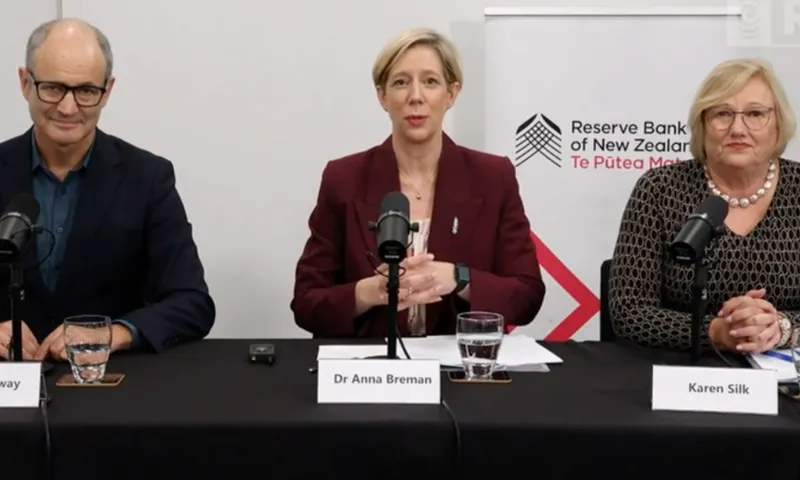
The Reserve Bank didn’t raise interest rates this week but it is only a matter of time before it does. Economists predict increases in September or December, and retail mortgage rates are already up in anticipation.
Monetary policy is tightening, inflation is rising, government spending is stuck, consumer confidence is weakening, and none of these things seem likely to change.
This isn’t the end of the world. The sky isn’t falling, the economy is still growing. Economists say we aren’t likely to experience another recession unless we literally run out of fuel reserves, but they now expect fewer new jobs and pay rises this year.
It’s another disappointing year of New Zealand’s economy failing to live up to its pre-pandemic potential and its people falling a little further behind.
Dan Brunskill
Dan Brunskill is a freelance journalist based in Brussels. He previously covered economics for Interest.co.nz from parliament's press gallery and financial markets for BusinessDesk.


