Ngāi Tahu vs Santana: the latest chapter in the Bendigo gold mine saga, explained

Money, money, money. (Design: The Spinoff).
Accusations of backroom demands have prompted political outrage. What’s going on?
As hearings on Santana Minerals’ controversial application to build four massive open-pit mines near Bendigo in Central Otago draw to a close, focus has shifted to the Australian company’s relationship with Kā Rūnaka, which represents four hapū of Ngāi Tahu. In a letter recently submitted to the fast-track approvals panel, which is considering the application, chair of Santana Minerals Peter Cook alleged Kā Rūnaka had effectively sought payment in the vicinity of $180 million in return for its approval of the project.
The project is reportedly set to add $4.5 billion in GDP, $6bn in export revenue and over $1bn in taxes over nine years of operation. This includes the creation of more than 800 direct and indirect jobs for the region. But it “comes with considerable environmental risk”, and has attracted fierce opposition from the likes of actor Sam Neill.
What’s the issue?
Last month, the Otago Daily Times reported Santana had offered to establish an annual iwi capability and participation fund worth $500,000 for every year of sustainable gold production. However, it is alleged Kā Rūnaka referred Santana to a larger amount paid out as compensation for the reconsenting of the Waitaki hydropower scheme, reportedly worth $180m.
“You [Kā Rūnaka] indicated that you expect a payment [from Santana] of similar magnitude, that is in the order of $180m, as monetary compensation,” Cook wrote in a letter to Kā Rūnaka, which was also submitted to the fast-track approvals panel.
Further to this, Cook claimed Kā Rūnaka had earlier requested to be given a “substantial stake” of ownership in the mine, with an option to purchase more shares in the future. He then claimed this shifted to a preference for direct ownership through payment for shares.
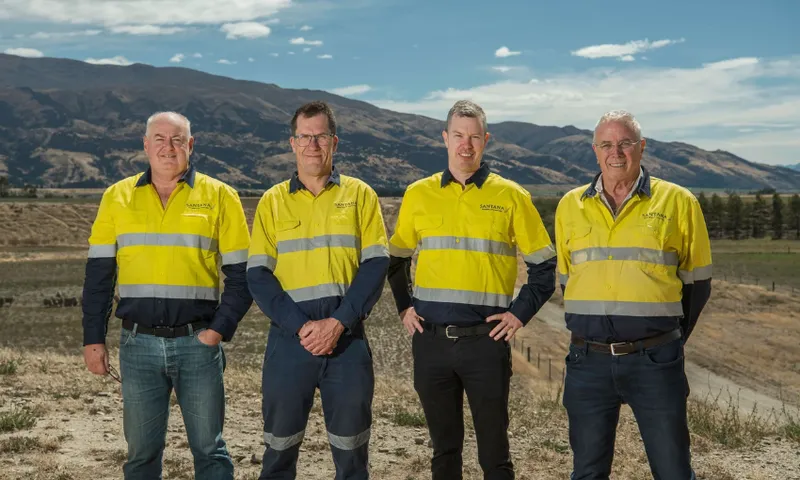
After being directed to the $180m hydropower scheme payout, Cook allegedly told Kā Rūnaka paying such an amount was “not commercially feasible” for Santana Minerals and the company could also not be “seen to be paying for a non-objection” to the application.
So the hapū were happy for the project to proceed as long as they were paid out?
The meeting referred to in Cook’s letter is said to have been an off-the-cuff conversation at Dunedin Airport on March 26 between him and leaders of Kā Rūnaka. While his letter insinuates Ngāi Tahu was seeking payment for approval, Kā Rūnaka has responded saying their position was “misrepresented”.
In a response to questions from The Spinoff, a Kā Rūnaka spokesperson said, “We have not sought a 20% stake in the company with an option to purchase more and then $180 million in return for their blessing of the mine. This positioning seems like it is designed to try to diminish our mana and role as kaitiaki – a responsibility we take very seriously. Our focus has been, and remains, on the environmental and cultural standards this whenua demands. That includes robust mitigations and remediations – not as concessions, but as obligations. The stewardship of this place for our mokopuna is not a negotiating position.”
How do we know who’s telling the truth?
Only those directly involved in the conversations will know what the full story is. Otherwise, all we really have to go on is a bunch of hearsay and unverifiable claims. Unless either party can produce a papertrail or verifiable recording of some kind that indisputably supports their position, it will likely continue to be a back-and-forth argument.
Has Kā Rūnaka always been against the project?
As far as public records show, yes. Reports from this January indicate that Kā Rūnaka had submitted to the panel opposing the mining project for various reasons. These include allegations of poor planning, major environmental risks, and a lack of adequate engagement with mana whenua. This was reiterated at a hearing at Ōtakou marae last week. The group has publicly stated it believes projects such as the mine do have the potential to work, but only if proper processes are followed and it is involved from the beginning.
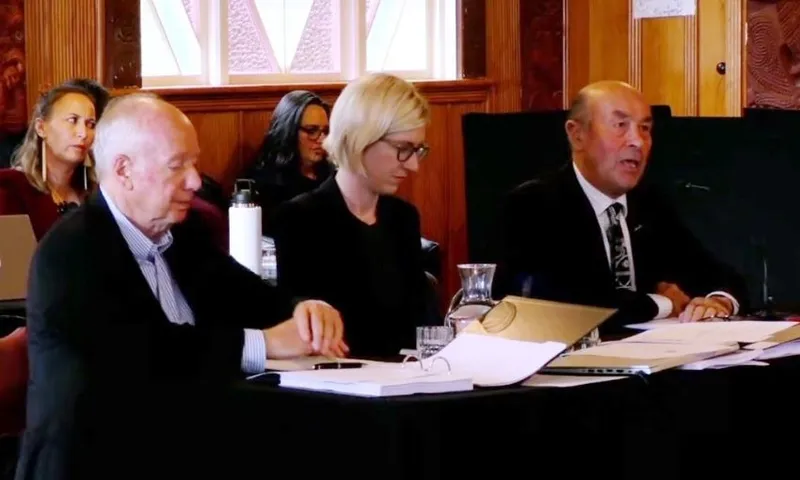
However, Santana Minerals disputed claims around a lack of engagement, saying it had been engaged with the five papatipu rūnaka from the wider Otago region since at least 2017. The company said it had met its iwi engagement reporting obligations under its mineral exploration permit, held field visits with iwi, and had drafted a protocol of engagement with the rūnanga.
“Subsequently in February 2021, iwi communicated to Matakanui Gold Limited [a Santana subsidiary] that they would prefer not to formalise the protocol of engagement,” Santana wrote in its substantive application.
Following this, Santana says various meetings were held and a process agreement was eventually signed with Kā Rūnaka in August 2024. Kā Rūnaka was also invited to provide a cultural impact assessment on the project, which it did.
Does the opinion of Kā Rūnaka even matter? Isn’t the project on private property?
This is what a lot of people have been asking. Section 53 (2)(b) and (c) of the Fast Track Approvals Act states that applicants must seek comments from any relevant iwi authorities and any relevant Treaty settlement entities when making an application under the act. Because Ngai Tāhu and the collective of hapū represented by Kā Rūnaka have interests in the Clutha River / Mata-Au and surrounding whenua, they must be invited to comment.
How much weight their comments carry is a decision for the panel.
What do politicians think?
Six ministers have provided feedback on the project, with Māori development minister Tama Potaka explicitly supporting it.
Act MP Simon Court, who is the under-secretary for RMA reform and the party’s spokesperson for energy and resources, infrastructure and climate change, has told media “any Tom, Dick, or Hone can show up and object” to a fast-track application.
He said as part of the RMA reforms, Act is working to limit the ability to object to an application to “only people directly impacted by proposals”. As Ngāi Tahu was listed as an affected entity on this fast-track application, it’s unclear if such a change would prevent iwi from objecting to similar applications in the future.
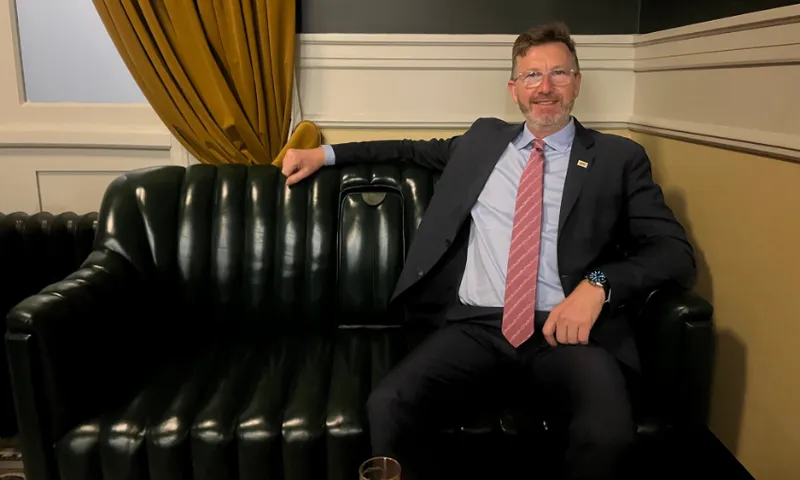
“When a seven-figure payout on a hydro project is cited as a benchmark, you start to see how this works. The price gets set, expectations grow, and before long it’s built into the system,” Court said in response to the Ngāi Tahu allegations, in a press release.
Minister for regional development and minister for resources Shane Jones has also been critical of opposition to the mine, particularly that of Kā Rūnaka and Neill.
“This is why our country’s settled in debt… We need to be liberated from all of this woke-identity riddled rubbish that passes for environmental law,” Jones recently said on Duncan Garner’s Editor In Chief podcast.
What happens next?
Expert panel hearings will take place over next four weeks, followed by two weeks of condensed deliberations. The panel will then deliberate its final decision, which is due on October 29 this year. On Wednesday, the company secured approval from the Overseas Investment Office to purchase the land for the project, though this is conditional on receiving the remaining fast-track resource consents. If those approvals are granted, Santana is targeting first gold production in early 2028.
This story was updated at 3pm with comments from Kā Rūnaka

Liam Rātana
Liam Rātana (Ngāti Wairupe/Ngāti Kurī) is editor of The Spinoff's Ātea section. He is passionate about indigenous and minority issues. Liam enjoys cooking, poetry, photography, and exploring the outdoors.


