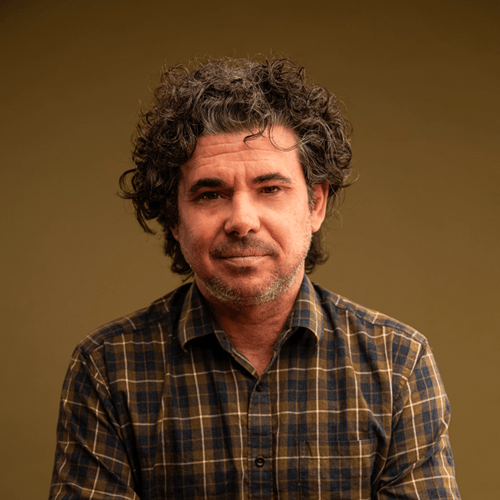
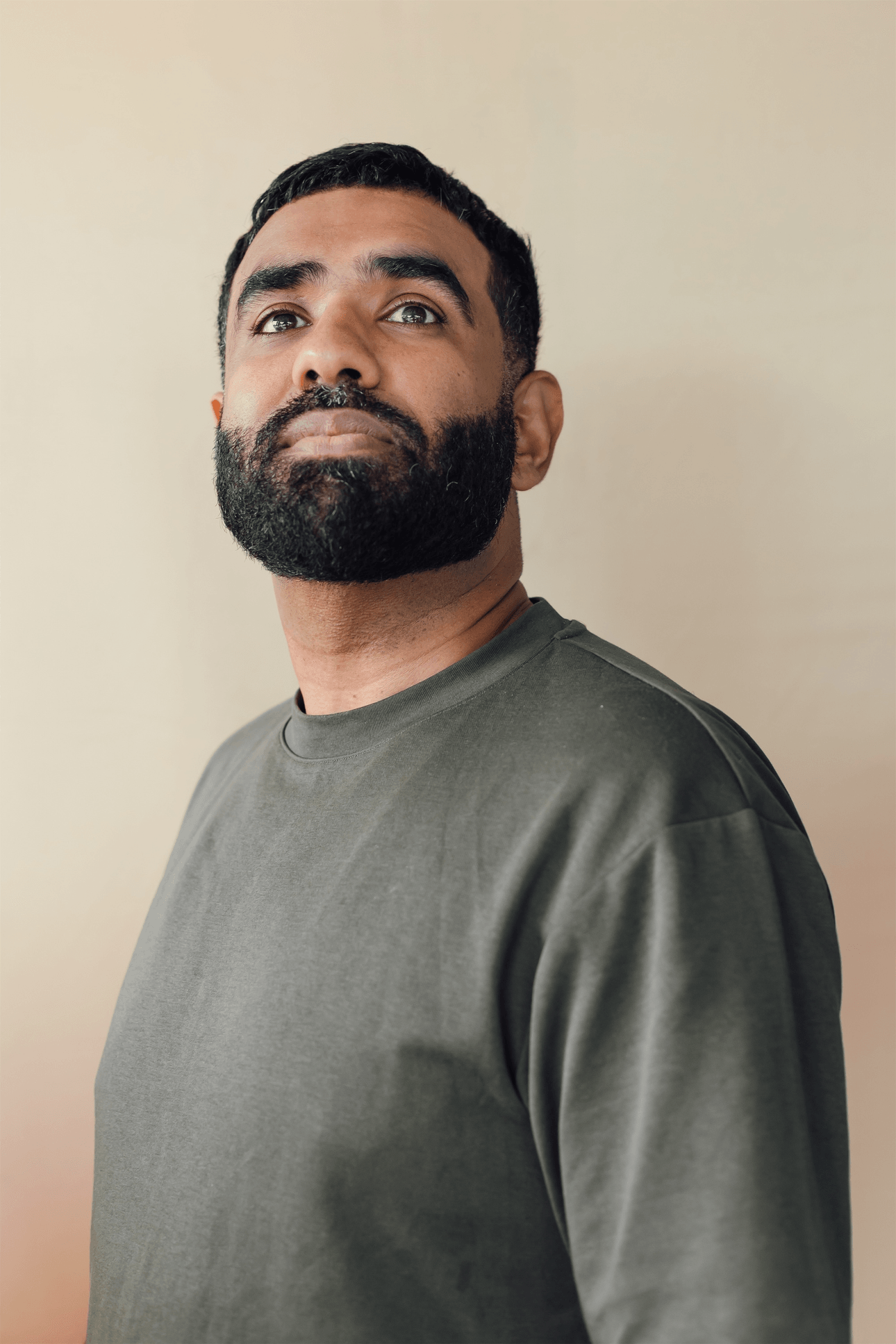


In this excerpt from his frank, funny and often poignant memoir, Pax Assadi relives his painful first lesson in love.
I was 18 when I met someone who would forever change my understanding of love, heartbreak and the distance between romantic gestures and stalker behaviour.
It happened at a Bahá’í youth conference – gatherings where young Bahá’ís from across a country come together to connect, learn and – let’s be honest – they also serve as a prime location for romance to bloom under the guise of spiritual development.
Among the attendees at this particular conference was a group of Australians who had travelled to New Zealand to meet new people and experience our culture. The special someone was part of this group – a young woman a few years older than me who wasn’t actually Bahá’í herself but had been invited to the event by a close friend.
The conference was being held at King’s College in Auckland, one of those prestigious schools that felt incredibly grand to someone like me who’d grown up attending humble public schools all my life. About 200 Bahá’í youth and young people from the wider community who had an interest in learning about spiritual ideas had gathered for the weekend, including the 20 or so visitors from Australia who carried themselves with the particular confidence that comes from being the exotic guests at a local gathering.
These events always felt like a mixture of excitement and nerves: excitement about meeting new people and nerves about whether I was destined to say something stupid during the breakout sessions. The programme was packed with keynote speeches and workshops covering topics such as “Unity in Diversity”, “Adopting a Service-Oriented Approach to Life” and “The Importance of Prayer and Meditation”, which at 18 felt like the most profound concepts anyone had ever presented to me.

It was during one of the breaks between sessions that I was introduced to this someone by a mutual Australian friend. We were standing in that awkward cluster that forms when someone says: “Oh, you two should meet,” and then immediately walks away, leaving you to figure out how to turn a forced introduction into an actual conversation.
But something kind of magical happened and we hit it off immediately. Her energy was different from the carefully spiritual atmosphere that usually dominated these conferences. She was engaging with the material seriously, but she also had this way of making observations that were both thoughtful and crack-up.
We talked through the lunch break, sitting on the stone steps outside the main hall, sharing stories about our different cities and the particular challenges of being young and trying to make our way through this big, complicated world. She asked questions that made me feel like I was the most interesting person she’d ever met and, when the afternoon sessions resumed, I found myself looking forward to the next break more than I was paying attention to the actual programme.
We agreed to stay in touch after the conference, and I was beyond excited. We stayed true to that promise, talking constantly for just over a month – long phone calls, endless emails, messages that kept me up until 3am. In my naïve 18-year-old brain, this was it. I had found “The One”. I believed I was going to marry this person I’d known for a month and had spent maybe 72 hours with in person. It made no logical sense, but when has love ever consulted logic?
Convinced of my destiny, I decided to tell my parents. And this is where the story takes a turn that has shaped how I think about love, family and the scars that history leaves on our hearts.
My father, as a Bahá’í in Iran, had experienced systematic persecution that few communities worldwide endure. To this day, Bahá’ís in Iran aren’t allowed to attend university, register businesses or openly practise their faith. They face imprisonment without due process, their homes are ransacked and their children denied education – all for the crime of believing in a religion the government has decided is a threat. My father carried these experiences in his body, in his worldview, in his reflexive responses to certain situations.
When I told my parents about this girl I was “serious about”, they were initially cautious but open to listening. They knew their son was young and not really ready for anything serious. But when it came out that she was from a Muslim family, I was met with an immediate, non-negotiable, no.
Before you judge my parents – and I spent years doing exactly that – you need to understand something. They are very aware of their prejudice and appreciate that it’s wrong. But my father’s traumatic experiences in Iran had created neural pathways of fear and mistrust that decades of living peacefully in New Zealand couldn’t completely rewire. It’s not my place to expect them to just “get over” persecution that has shaped their fundamental understanding of safety and threat.
Understanding this now doesn’t mean it didn’t devastate me then. And I made what I now recognise to be a catastrophically poor decision: I told her about my parents’ response.
Of course, she broke it off. Why wouldn’t she? She wasn’t angry at my parents – she was mature enough to realise that starting a relationship against such fundamental family opposition wasn’t building on solid ground. She was right, far more level-headed than I could be at the time. But that didn’t make the heartbreak any less real.
For months, I carried this ache – not only for losing her, but also for feeling caught between my family’s love and my own heart. I felt like I had to choose between honouring my parents’ trauma and following my feelings, and I was too young to understand that maybe some choices don’t have clean resolutions.
So, a few months later, I made another brilliant decision. I decided to fly to Australia to attend their Bahá’í youth conference. My official reason was cultural exchange and spiritual growth. My actual reason was a desperate hope that I might see her again.
After the conference, I stayed for a couple of nights with some Bahá’í friends who lived in the same city as her. That’s when I conceived what I believed was the romantic gesture to end all romantic gestures: I would go to her house unannounced and declare my love. I had seen this work in movies countless times. Cinema had taught me that persistence in the face of rejection was romantic, that grand gestures could overcome any obstacle, that love conquered all.

A friend with a car agreed to drive me – a 40-minute journey across the city to a suburb I’d googled but never seen. As we pulled up to her street, my heart pounded with anticipation and terror. This was it. This was my moment to fight for love.
I knocked on her door. No answer. I knocked again. Nothing. I knocked on her door for the third time, my knuckles starting to hurt a little from the wooden door. The sound echoed inside the house; I felt like I could hear it bouncing off the walls, but again there were no signs of life. I pressed my ear to the door, which in hindsight was such a dumb thing to do as a young brown man in that probably mostly white neighbourhood. But I needed to know that there was no one home rather than that they had just chosen not to answer.
The neighbourhood was impossibly quiet for the middle of the day, punctuated by the occasional bird call and the distant sound of a lawnmower in the far-off distance. I sat down on the front step, which was concrete and immediately uncomfortable. The sun was already getting hot, and I could feel sweat starting to form under my arms. I’d worn a nice shirt for this grand occasion, and now I was sitting on a doorstep feeling like a big old dick.
My phone had no credit for international calls, so I couldn’t even call my friend to come back to pick me up. In hindsight, I should have asked my friend to wait in the car while I knocked. Then, if there was no answer, I could have just left with said friend. It would have solved a lot of this. So why didn’t I do that? Your guess is as good as mine, amigo.
In desperation, I messaged her, knowing it would ruin the surprise and the romantic nature of what I was attempting, but I was out of ideas. No reply. I messaged again. No reply. I messaged again and again and again. No response for hours. I sat on her doorstep, then paced the street, then sat on a nearby kerb, cycling through anxiety and a growing awareness that I might have made a terrible mistake. I was genuinely stranded in this cul-de-sac, dependent on the kindness of someone who had already asked me to leave her alone. I’d flown to another country to prove my romantic commitment, and now I’d become trapped by my own grand gesture.
More time passed. I watched the shadows move across the yard, saw neighbours occasionally drive past, probably wondering why this teenager was camped out on someone’s front porch. At one point, an elderly woman from across the street came out to get her mail and stared at me for a solid 30 seconds before going back inside. I wondered if she would call the police.
Honestly, I don’t quite remember how I got back to my friend’s house. My brain has seemingly deleted that part of the memory for various shame-based reasons. What I do remember is that later that night she finally messaged me back. She had been out with her family in a rural area doing a bushwalk, completely out of phone reception. Which meant when she returned to civilisation she was greeted with an influx of increasingly desperate messages from someone she had already asked to move on.
She asked me – kindly but firmly – to never do that again and to stop contacting her. The shame I felt was unlike anything I’d experienced before. It was the shame of realising that what I thought was romantic was actually invasive, that my grand gesture was really a violation of someone’s boundaries – that I had become the person in the story who couldn’t take no for an answer.
I learned something important that day about the difference between persistence and harassment, between romantic gestures and disrespecting someone’s choices. I learned that love, real love, means accepting when someone doesn’t want to be with you, even if it breaks your heart.
Years have passed. We’re both happily married to our respective partners and both have children of our own. We’ve reconnected briefly over social media – cordial, respectful exchanges that acknowledge our shared history without dwelling on it. There’s a peace in knowing that what felt like the end of the world at 18 was actually just the end of a chapter, in learning that heartbreak doesn’t kill you and that sometimes the most loving thing you can do is to let someone go.
If I could go back and talk to my 18-year-old self sitting on that doorstep in Australia, I would tell him that his heart isn’t wrong for feeling so much, but love isn’t about holding on at all costs. I would tell him that his parents aren’t villains, that trauma is complex and that understanding someone’s reasons doesn’t mean you have to agree with their choices. Mostly, I would tell him that the feeling of devastation won’t last forever, and that the capacity to love so deeply – even naively – is actually a gift, as long as he learns to love with respect and boundaries.
Mortified by Pax Assadi (Penguin NZ) is available to purchase at Unity Books.