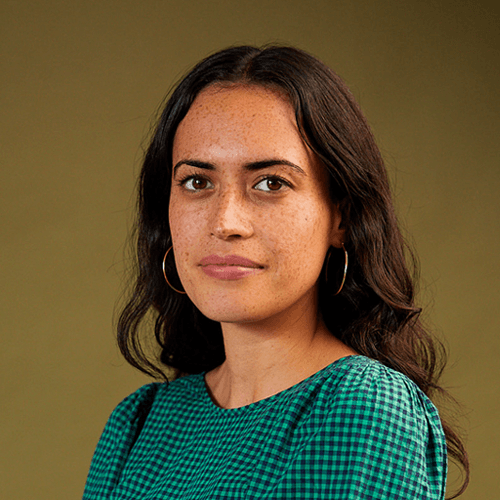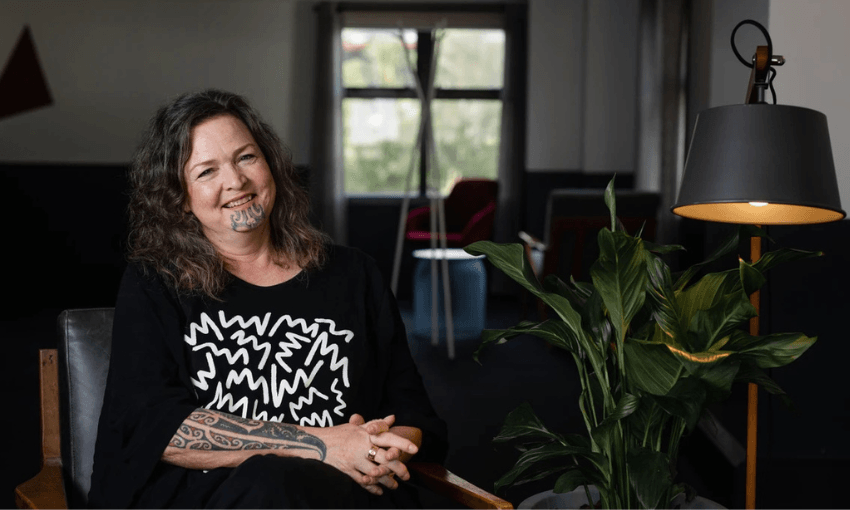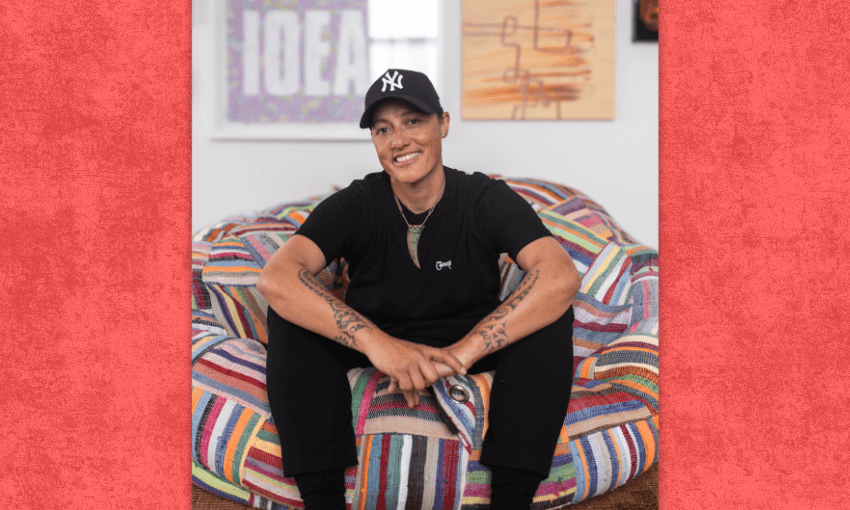
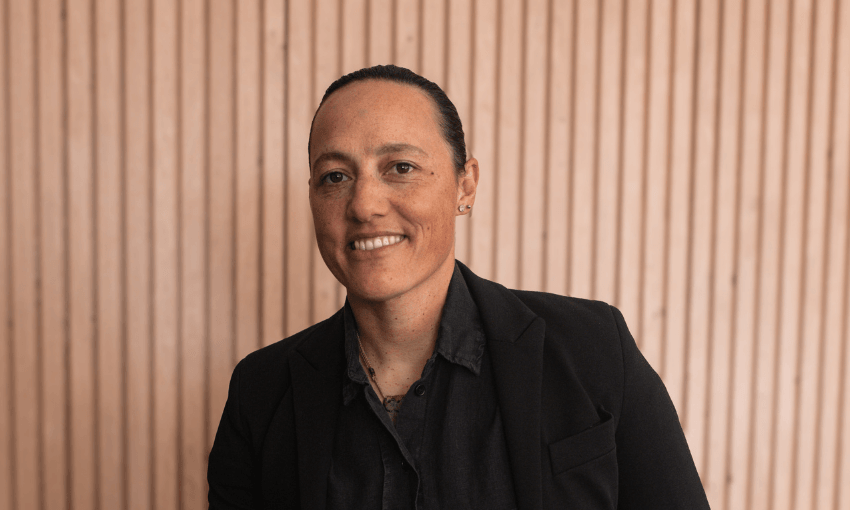


In this excerpt from her memoir Go Hard or Go Home, Kiri Allan details the health crisis that shifted the course of her life forever.
I came to the attention of most mainstream New Zealanders on 5 March 2021, a day that there was a potential tsunami about to hit our shores. My phone had been ringing since 3 am and I saw the calls around 4 am. My team and I were in the office before 5 am. The night before, however, I had been out having a drink because I had just found out I likely had cancer. I was scared because, like anyone, the “C” word had a profound impact on me given I wasn’t expecting it. So I was with my peers and told one or two that first thing in the morning, at 9 am, I had to have a biopsy, but there was a reasonable chance I could have cancer in my cervix.
First, I didn’t really know what a cervix was, let alone what it meant to have cancer in it. I googled cervix later and, for those who aren’t too familiar either, it’s the gateway between the vagina and the womb. But at 4 am, when I picked up those calls, the biopsy and cervical cancer issues left my thoughts completely.
Now was the time to be focused on saving people’s lives. My office knew I had an appointment at 9 am at the hospital (few knew what it was for but they all knew it was an important one). So while I did all the media rounds that morning, we were tossing up whether or not I could make the hospital appointment. Ultimately, it was my SPS (Senior Private Secretary) Maria Davis who said, “Get in the car and go,” and that was that. Wearing my National Emergency Management Agency jacket, I took off to the hospital to get the tests done.
I did quite a few interviews at the hospital while I was waiting around but there was nothing quite like the one I did while I had my legs up in the metal stirrups, while the team was doing a biopsy – it was with Kathryn Ryan on RNZ, giving an update on where things were at with the tsunami situation. By that time, most of coastal New Zealand in the line of sight of the tsunami had evacuated and whole schools had clambered up hills to ensure safety, and my job was to provide the assurance to New Zealanders as to how NEMA was monitoring likely impacts. We were fortunate – no one was injured or suffered. I later went on to John Campbell’s show where the word “skux” was used to describe the jacket I had been wearing that day. It’s funny the things you remember in such times.
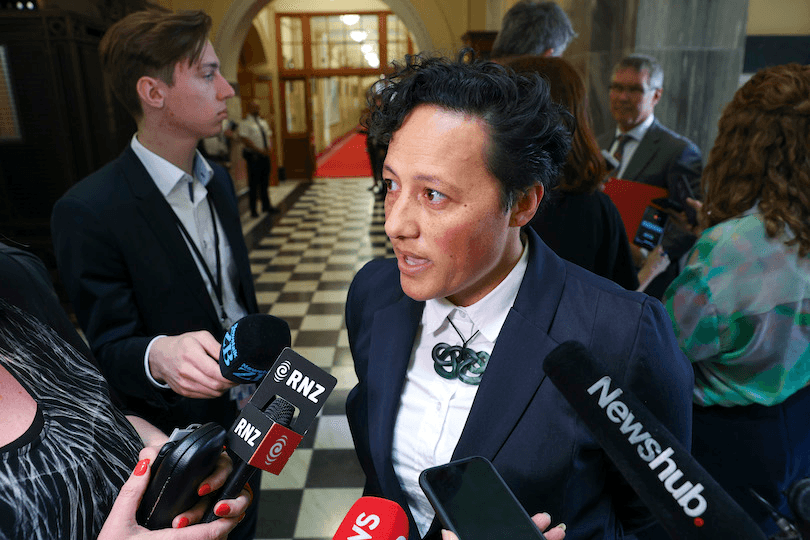
Jacinda Ardern and I were walking into a joint media stand-up after the biopsy and someone took a photo of my hand up in the air while I was talking to her. Afterwards, there were questions about what I was saying to her, mainly circulating as a meme on social media. I was telling her about the RNZ interview: “I was holding my headphone mic up above my head while they were doing the biopsy, so I could be clearly heard on the interview.” We were cracking up.
The signs of some kind of illness had been there for a little while. I had a chronically sore back that, no matter how much I massaged it, never got better. And then I started to menstruate – constantly. I was once on a conservation trip to Kaikōura with a staff member and my menstruation was so bad that I couldn’t make it to the bathroom without what felt like my entire insides coming out into my pants. We had to make an emergency stop to pick up pads and all sorts of things that night. But I think that was a turning point when I realised I wasn’t OK.
I had been to see my regular GP a few times. I was given menstruation medication to help assist with its impacts but there wasn’t much further enquiry beyond that. It was after the Kaikōura trip when I realised I had to talk to someone and my new colleague and next-door neighbour on the executive wing of the Beehive was Dr Ayesha Verrall. Having just come from the medical profession into politics, I asked Ayesha if I could have a quick chat. Giving her the rundown of the symptoms, she pleaded with me, “Kiri, this does not sound normal. Promise me you will go and get tested tomorrow.” She was incredibly firm with me and I knew she wasn’t messing around. So, I booked an appointment for a scan at Fertility Associates, who had the right scanning machines, and went the next day.
I’m convinced Ayesha saved my life that day. That scan showed a round ball in my cervix but the specialists weren’t too concerned with it. They thought it was likely a cyst because it was so round in its shape. But they couldn’t rule out the chance of cancer, too. They recommended that I go to the women’s clinic at Wellington Hospital the next day and undertake more substantive tests. A few tests and a few more weeks later, I was in the Auckland Airport on my way to speak at an event with two former prime ministers, Helen Clark and Sir John Key, for an evening focused on kiwi conservation. I had a Department of Conservation private secretary with me and, as we were getting off the flight and heading to the awaiting ministerial car, I received a call from the hospital. I had been expecting it, knowing the results were coming in shortly, but I was feeling pretty relaxed about it all. The doctor on the phone said something pretty straight to the point, like, “I’m sorry to tell you but you have cervical cancer and we will need to make an appointment straight away to assess you.”
I was ducked off to the side of the airport, just before the gates into the main part of the domestic terminal, and burst into tears. Knowing something serious was up, my private secretary took me directly to the car. I first called Natalie and then my mother. I was weeping the entire time. The private secretary managed me out of all events, found out my parents lived in Auckland and took me straight there. Within hours, Natalie and my first cousin Chelsea were with me at my mum and dad’s apartment, all wondering what the hell happens next. I was enrolled in the Wellington DHB – simply because if I got sick, it was easier to swiftly go from work to the doctors.
From the day I entered the women’s clinic at Wellington Hospital, they wrapped me up. The public health system, for me, was incredible, though I know that isn’t the experience for everyone. It just happened to be that one of the most knowledgeable people on cervical cancer in New Zealand worked at the Wellington Hospital. The first lot of discussions were about whether we could operate and just take the cancerous cells out, essentially through a hysterectomy. It turned out the tumour was too large and I would have to go through a full radiation and chemotherapy process, including brachytherapy, a pretty gnarly and intensive internal radiation therapy. The time period for the treatment was about six months, give or take, and I would be in radiation treatment every day and chemotherapy treatment every week. All of this also meant, and I had not prepared for this mentally, that at 37 my ability to reproduce would cease immediately. There were brief discussions around taking eggs out through Fertility Associates but that would have meant a significant delay in the commencement of my cancer treatment. Without so much as a day passing, I surrendered my ability to reproduce forever.

I was in my first year of being a minister – conservation and emergency management were my major portfolios but, as I’ve said, I was also working with David Parker on the RMA reforms, some of the most critical reforms of the Sixth Labour Government. I had to hand over my portfolios and take leave for the duration of the treatment. I was barely in the saddle, six months into the role, and wanting to leave a significant mark. I had gone into politics to make laws, change laws and direct policy. I was now in a position to do that, inside cabinet with broad-reaching portfolios.
There was a substantial grieving period I had to go through in order to let this part of my life go. My work had always been the marker of my identity. Now I was being forced to give that up. My ministerial warrants were dished out to other cabinet ministers and I was out of the Beehive, just like that. When I commenced treatment, I had no idea what kind of ride I was about to begin.
Go Hard or Go Home by Kiri Allan ($40, Penguin NZ) is available to purchase at Unity Books.