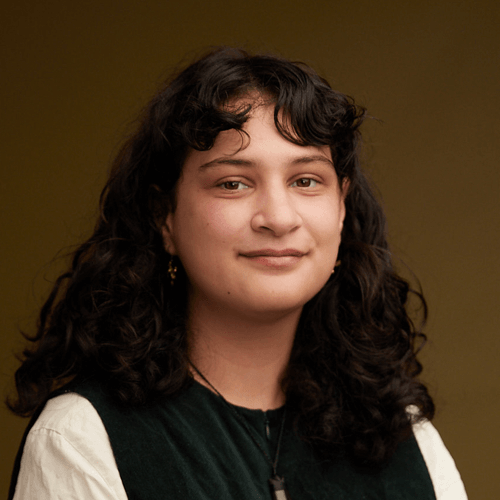
As Cook Islands language week draws to a close, Ātea editor Liam Rātana reminisces about his time spent living in Rarotonga and what it taught him about language.
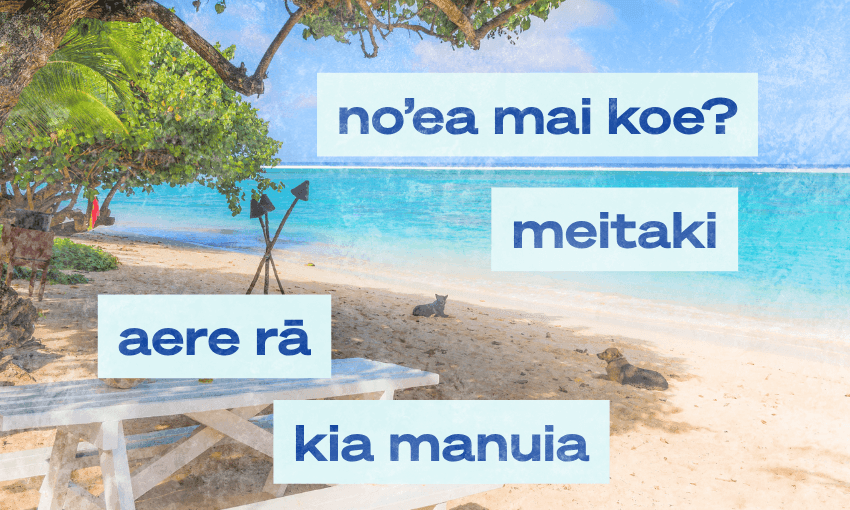
There I was, sitting on a tropical beach sinking beers, white sand wedged between my toes. A row of wooden picnic tables was packed full of Rarotonga locals enjoying their Friday night. As the sun slowly set on the northwestern horizon behind us and with liquid courage flowing through my veins, I began speaking my kūmara Māori to a colleague in front of me.
“Kua ngaro te reo i roto i ngā rangatahi, nē? The language is lost amongst the children, eh?” I asked him.
With his bloodshot eyes and curly long grey hair, my friend looked at me drunkenly and replied: “Āe, kua ngaro.” He began talking about the impact social media was having on the local children and their growing preference to speak English rather than Cook Islands Māori. As we sat there and spoke in our native tongues – me jumping between New Zealand Māori and Cook Islands Māori – we entered a world that can only be understood through the lens of te reo Māori.
All around us, the old drunk men’s tongues flew in their native language. The beer flowed as quickly as the kupu. There were few, if any, circumstances I had encountered in my life where reo Māori felt so free. It was beautiful.
Sure, I had been around reo Māori at the marae, and heard it in many whaikōrero, but seldom had I found myself in a social setting where reo Māori was spoken so naturally. The odd person at the table still spoke some English, but the majority preferred reo Māori and they spoke so naturally and colloquially, slurring their kupu as the drinks went down.
It opened my eyes to what life was once like for us as Māori in New Zealand, when our language wasn’t confined to the marae or formal settings, when it was the default. That wasn’t too long ago. Even after the cogs of colonisation literally beat the language out of us, pockets of Māori across the country continued to use te reo in everyday conversation. But there’s a ripple effect. The fewer people who can converse in the language, the fewer people those that do speak have to talk to, so they use it less. As time went by, English forced its way into even the most remote Māori communities. Now, there are few, if any, communities where Māori is the preferred language.

The impact of this shift is profound. Other than those in full immersion schools, children seldom hear their native tongue in everyday settings. Despite ongoing efforts to normalise te reo Māori, English is the dominant force – from radio to television to the local dairy.
During my nearly three years living in Rarotonga, I gained an appreciation of the difference between native speakers, second-language speakers and those still learning. As a majority of the reo I had heard as an adult in New Zealand was restricted to formal occasions, such as pōwhiri and whaikōrero, the nature of the language I learned was formal and proper. It distorted my view of what te reo Māori was.
Living on an island surrounded by native speakers opened my eyes to colloquial reo Māori. Vowels and syllables blended seamlessly. Words were shortened or chopped together effortlessly. It was the language as it would have been spoken by their ancestors – by my ancestors.
I had experienced pockets of this with the old people on the marae growing up, but never seen it so widespread amongst a population before. My heart yearned for the same back home.
Almost a decade on , I am yet to experience a night like that here in New Zealand. There are more speakers of te reo Māori than ever before, but the language still remains mostly confined to certain pockets.
As a second-language learner, I try my best to emulate the tangi of the language from my native far north. But like many second-language learners, and those who have learnt te reo Māori outside of their tribal rohe, I speak a bastardised, multi-tribal dialect version of the language. Wherever possible, I try to speak te reo Māori in everyday situations, though I’ve found that my ego and fear of judgment can be barriers. But I think back to that night on the beach, speaking my broken mix of New Zealand and Cook Islands Māori and realise the only way to become comfortable is through practice.
Now I have my own child, who is growing up learning English, Cook Islands Māori, and New Zealand Māori. Fortunately, his grandmother is a native speaker of Cook Islands Māori, and she regularly converses with other native speakers in their mother tongue. While it might not be my tribal dialect of te reo Māori, I’m glad my son gets to hear the language being spoken in the same way I did while living in Rarotonga. I hope he grows up to speak the reo as naturally and freely as those drunken men on that beach.