Māori politics just got even more interesting

John Tamihere, Mariameno Kapa-Kingi, and Hone Harawira. (Design: The Spinoff).
With Te Pāti Māori splintering, a new party in the north and the possible reappearance of a familiar face, the battle for the Māori seats is set to be one for the ages.
At the end of last year, I wrote that the time was ripe for a second Māori political party to emerge. This week, that premonition came to fruition with the announcement that Te Tai Tokerau MP Mariameno Kapa-Kingi was leaving Te Pāti Māori and forming a new political party, Te Tai Tokerau Party.
Given the party’s name – which one government minister suggested may fall foul of Electoral Commission rules – it’s no surprise that its focus is on Kapa-Kingi’s electorate of Te Tai Tokerau. In an interview with Julian Wilcox on The Hui on Monday, Kapa-Kingi said this was the approach she and her team decided was best for them, and it opens a door for what Wilcox labelled “mana motuhake” politics – decision-making controlled at a regional level, without a need to submit to national leadership.
It’s the leadership of Te Pāti Māori that pushed Kapa-Kingi out of the party, particularly the party’s president John Tamihere. The growing rift between the two – and their families – has played out very publicly over the last 18 months.
After the high court ruled Kapa-Kingi’s expulsion from Te Pāti Māori was invalid, she said the party’s leadership failed to meet her demands, which included the resignation of Tamihere from his role as party president, the reinstatement of Te Tai Tonga MP Tākuta Ferris into the party following his expulsion, and a public apology.
In this week’s interview on The Hui, Kapa-Kingi said the party’s leadership model enabled misogyny and bullying, adding she “couldn’t possibly continue to work with that, nor should any other woman or anyone else that has self-worth”.
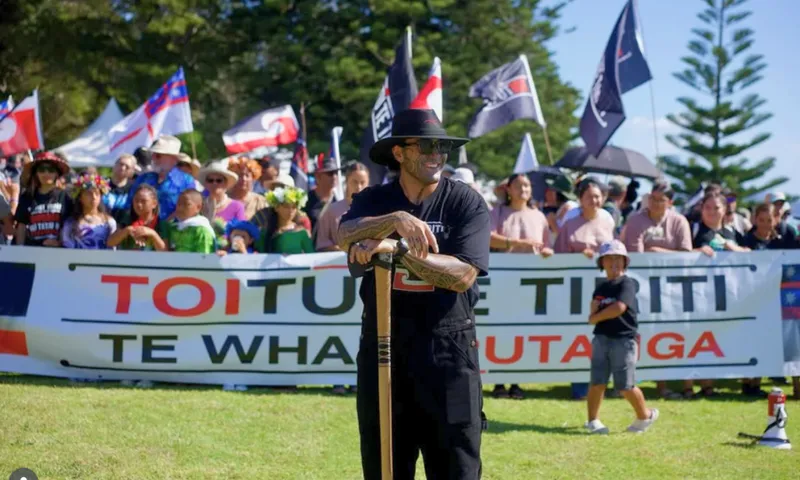
Te Tai Tokerau Party enters the fray less than six months out from an election. Beyond her whānau, which includes the high-profile Eru Kapa-Kingi – a leader of the Toitū Te Tiriti movement who enjoys a great level of influence with rangatahi voters, but posted on social media yesterday that he wasn’t “running for anything” – it’s not clear if Kapa-Kingi has other supporters behind the scenes or is seeking other candidates to join her new party.
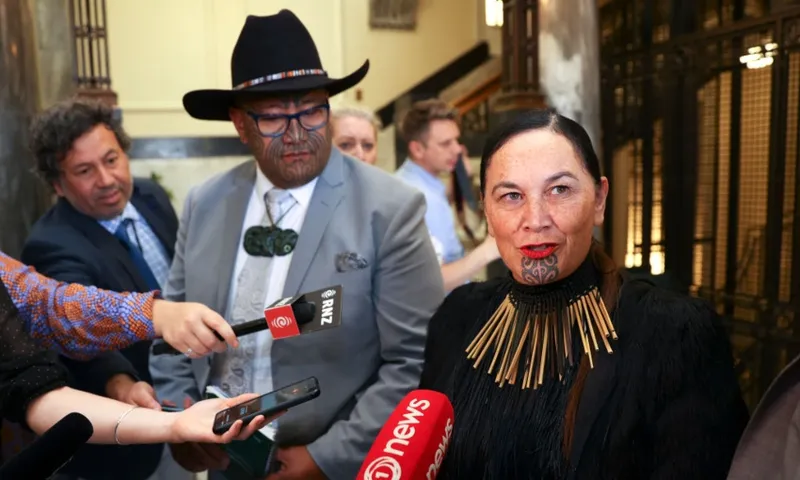
Meanwhile, attempting to thwart any speculation about the future of its remaining MPs following the announcement of Kapa-Kingi’s new party, Te Pāti Māori sent out a press release saying it would contest all seven Māori electorates and had five candidates confirmed: co-leaders Debbie Ngarewa-Packer and Rawiri Waititi, newcomer Haley Maxwell and current MPs Oriini Kaipara and Hana-Rawhiti Maipi-Clarke.
But later that day, a Stuff story quoted Oriini Kaipara – who entered parliament after winning the Tāmaki Makaurau byelection in September last year, then publicly supported Kapa-Kingi during her conflict with the party – as saying she was still considering her options. The party and Kaipara then denied the comments came from Kaipara, blaming a new communications adviser. “I remain a committed member of Te Pāti Māori,” Kaipara posted on social media.
Maipi-Clarke, meanwhile, has kept a low profile during the ongoing saga. She met with her constituents in Rangiriri in November last year to discuss her political future, deciding to stick with Te Pāti Māori while criticising the party’s leadership, Ferris and Kapa-Kingi. In this week’s interview with The Hui, Kapa-Kingi referenced former Te Pāti Māori president Tukoroirangi Morgan’s proposal for the establishment of a “tikanga party”. Morgan is an influential leader within Tainui and likely a trusted adviser to Maipi-Clarke. While Tamihere claimed in a recent interview with Whakaata Māori that Waikato-Tainui “is a fortress seat” for the party, he does not speak for the Waikato-Tainui electorate or the Kīngitanga.
With Ferris confirming he intends to stand as an independent in Te Tai Tonga and Kapa-Kingi establishing Te Tai Tokerau Party in the north, Te Pāti Māori is scrambling to find two willing candidates to battle the incumbents. This task will be made even more difficult with the respective electorate committees in disarray. Last week, it was reported the entire Te Tai Tonga electorate committee had resigned from Te Pāti Māori.
In Te Tai Tokerau, the electorate committee has also resigned. Former Te Tai Tokerau MP Hone Harawira – who left Te Pāti Māori to form the now defunct Mana Party in 2011, and lost the seat to Labour’s Kelvin Davis at the 2014 election – is reportedly a potential candidate to contest the electorate for Te Pāti Māori.
If anything is clear, it’s that the Māori electorates are wide open. Te Tai Tokerau will be hotly contested between Kapa-Kingi, Green MP Hūhana Lyndon, Labour MP Willow-Jean Prime, and whoever Te Pāti Māori eventually puts forward. Te Tai Tonga has two strong candidates confirmed so far in Tākuta Ferris and Labour candidate Mananui Ramsden.
Te Pāti Māori co-leader Rawiri Waititi has a fight on his hands for Waiariki, with Green Party candidate and former Te Pāti Māori lawyer Tania Waikato putting her hand up alongside Labour candidate Toni Boynton. His co-leader Ngarewa-Packer will take on Labour’s candidate Te Puoho Katene for Te Tai Hauāuru.
In Ikaroa-Rāwhiti – the only Māori seat Te Pāti Māori failed to win last election – Labour’s Cushla Tangaere-Manuel will take on Te Pāti Māori candidate Haley Maxwell and Green Party candidate Heather Te Au-Skipworth, who previously stood in the electorate for Te Pāti Māori.
The latest Te Pāti Māori fracas will have Labour Māori caucus co-chair Willie Jackson licking his lips. After losing all but one Māori seat at the last election, Jackson is hopeful Labour can appear as a stable option amid the mess.
“They’re looking quite steady today, aren’t they?” Jackson said of Te Pāti Māori, according to Stuff. “They weren’t looking too steady yesterday.”
The chaos could benefit Labour in more than one way. Māori are strategic voters, and Te Pāti Māori has often lent into this. The creation of an overhang in parliament through Te Pāti Māori winning more electorate seats than its share of the party vote entitles it to is often portrayed as the only way to change the government. But with Labour polling well and the possibility of an independent Ferris and Kapa-Kingi claiming their respective electorates, there may be no need for a left bloc coalition to include Te Pāti Māori, assuming it returns to parliament. Māori voters will be aware of this when they head to the polls in November.
This will be a welcome scenario for Labour leader Chris Hipkins, who has recently attempted to distance his party from the chaos of Te Pāti Māori, hoping to remain appealing to the critical swing voter cohort. It also allows Kapa-Kingi to remain politically fluid, potentially even supporting a National-led government if the opportunity arises.
On face value, the establishment of Te Tai Tokerau Party may seem relatively insignificant – an electorate MP stepping out to start a party focused on an electorate. However, its formation could cause a shift in the dynamics of Māori politics. How it all plays out depends on which way the votes go on November 7.

Liam Rātana
Liam Rātana (Ngāti Wairupe/Ngāti Kurī) is editor of The Spinoff's Ātea section. He is passionate about indigenous and minority issues. Liam enjoys cooking, poetry, photography, and exploring the outdoors.


