Māori should be the kingmakers at the next election – but we need to vote

Māori voters could decide the election, if they voted. (Design: Tina Tiller).
Made with the support of

The power lies with the people. Whether we harness it is up to us.
As a young Māori man, I was disillusioned with politics. I didn’t see why I should care about a system that kept Māori oppressed. Statistics only supported my view that the Westminster system did not benefit Māori. I believed – and still do believe – that our political system was never meant to serve Māori.
A large part of my disenfranchisement stemmed from the success of former prime minister John Key, who was the leader of the country for the entirety of my teenage years. For me, Key was the epitome of the type of person the system was designed to serve. He was affluent, always well dressed, and Pākehā. People like him benefited from participating in politics – not people like me. Key and his counterparts had a firm grip on the political control of Aotearoa, so why would I bother validating this system and the illusion of choice by voting in an election? It was counterintuitive to my belief system.
Nearly 170,000, or 30% of eligible voters of Māori descent did not vote at the last election (compared to 21% for non-Māori). The number of Māori who did not is 5% of the total voting population and translates to around six or seven seats in parliament. Based on recent election results, this is enough to act as a kingmaker block, easily flipping the balance of power from one governing coalition to another. But these 170,000 people didn’t vote, their voices and influence instead going unheard, and I understand why.
Many Māori feel like I once did. They’re disillusioned, disenfranchised, disengaged with the system. A lot of us don’t see ourselves reflected in politicians and don’t believe the system serves us in any way. It’s not meant to. Most of us have better things to worry about than civic engagement, analysing policies and party lists. Left wing or right wing, political parties belong to the same bird. The world is run by men who use laws for tools, and we feel as though we don’t have a say on who controls those laws.
Now, we have another (arguably not as good) version of Key in power. An affluent male of European descent controlling what many Māori have coined the three-headed taniwha, or coalition government. In amongst the plethora of anti-Māori policies and stances taken by the taniwha, is a move to disallow voters to enrol to vote any later than two weeks before the election.
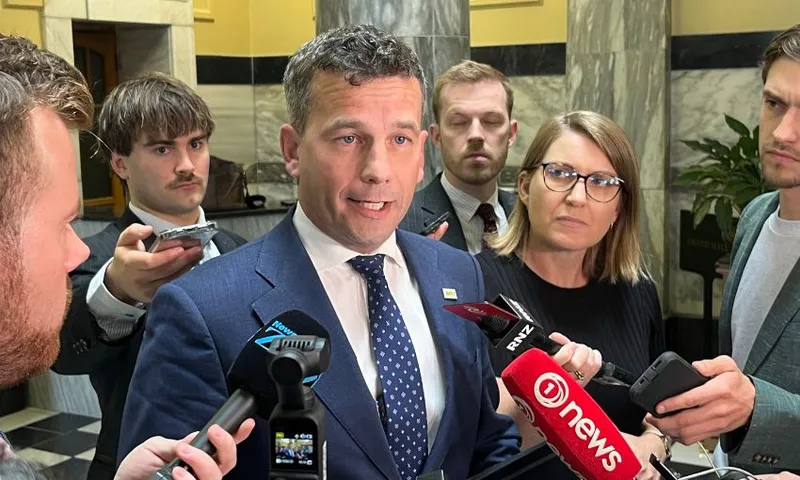
“I’m a bit sick of dropkicks who can’t get their lives organised to follow the law,” said Act Party leader David Seymour last July when the changes were announced.
Many of those “dropkicks” (i.e. the 100,000 people who enrolled within the voting period in 2023) Seymour refers to are young and Māori. Data from the Electoral Commission shows that special votes – where people enrol or update their details within the voting period – are more likely to come from areas with larger proportions of Māori, Asian and Pasifika communities. We also know younger voters and voters on the Māori roll have higher odds of casting a special vote. Approximately 8,000 eligible voters of Mãori descent aged 18 or 19 enrolled for the first time, or updated their details, during the voting period in 2023.
The changes to the Electoral Act were billed by justice minister Paul Goldsmith as attempting to minimise the amount of time spent counting votes. But detractors say the changes are a blatant attempt to minimise the number of votes the opposition gets. Goldsmith even admitted the changes probably wouldn’t significantly speed up the process. “At this stage, we’re still planning for 20 days,” he said to the media at the time. That’s the same amount of time as the 2023 election.
Historically, special votes benefit parties on the left. By banning the ability for people to enrol to vote any later than 13 days before the election, combined with the abolition of prisoner voting rights, the government could be accused of methodically attempting to maximise its chances of reelection in November. With the government discriminately disempowering Māori voters, why would we want to engage at all?
During my time at university, I began learning more about our nation’s history – the systematic process of colonisation and enforcement of a foreign system of law and politics. There seems to be a hesitancy to view ourselves as a colony of Britain. But this denies our nation’s history. There are many unsavoury aspects of colonisation that stir up feelings of shame and guilt, but we are not responsible for the actions of our forefathers.
What we are responsible for is acknowledging the implications of their actions, the privileges and entitlements that come from those actions, and actively seeking to remedy the harm they caused. This is true for both Māori and non-Māori.
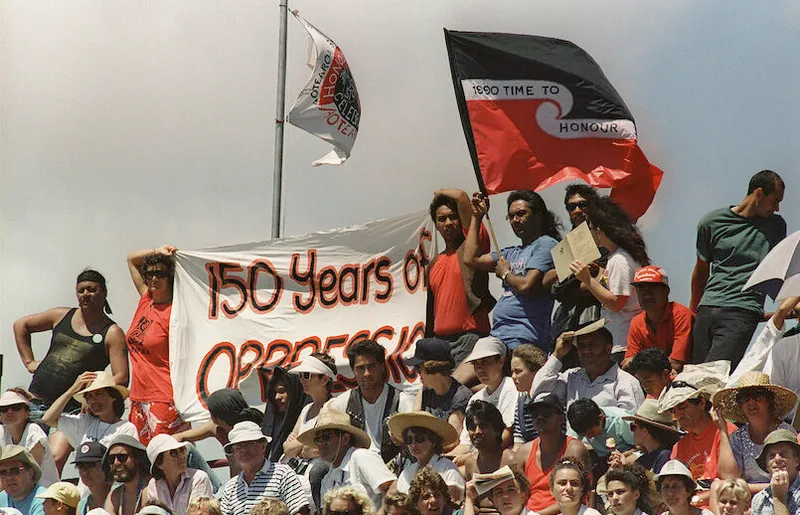
As Māori, we must actively work to undo the harm caused by the colonisation of our nation. If we do not consciously strive for the betterment of our people, for the advancement of a system of laws and politics better suited for our needs and beliefs, then we allow our subconscious to become accepting of our present reality, therefore allowing ongoing oppression.
Voting – participating in the system – is a way we can work towards the liberation of our people. By choosing not to vote, by not engaging in the system, we allow others to decide who governs this country. We allow others to decide how our tax dollars are spent, the laws and policies we abide by, and the parameters of our existence in our land.
I understand why many don’t care. I still struggle some days to face the realities of the fabric of our society. But I want change. While choosing where to cast my vote often feels like choosing the lesser evil, I recognise that unless I engage with the system, I am allowing my subconscious to accept my present reality. I ain’t accepting it.

Liam Rātana
Liam Rātana (Ngāti Wairupe/Ngāti Kurī) is editor of The Spinoff's Ātea section. He is passionate about indigenous and minority issues. Liam enjoys cooking, poetry, photography, and exploring the outdoors.


